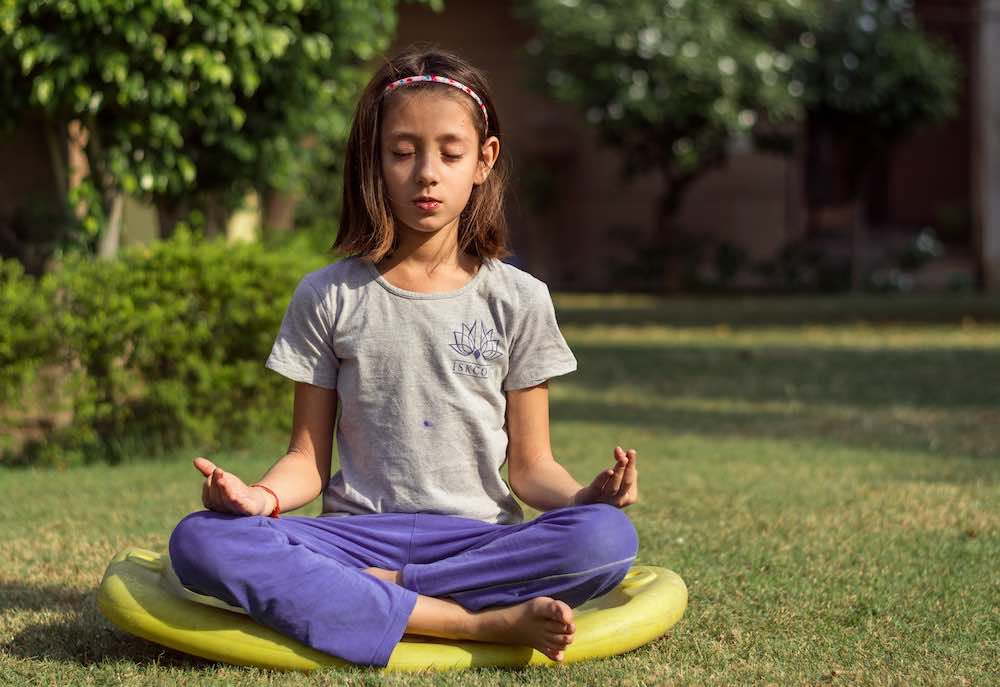
6 Types of Meditation to Master | Meditation Techniques

Different types of meditation

Concentration meditation on breathing is a foundation of meditation practice. However, there are a few more techniques or types of meditation you can add to it to make practice your own.

Daniel Goleman and Richard J. Davidson in their amazing book “The Science of Meditation” suggested the following three different types of meditation: attentional (that’s what we suggested as our basic meditation practice), constructive (see our loving-kindness practice) and deconstructive (see our vipassana instructions or tailored practices to help with depression, PTSD and anxiety).

The following tools simply allow you to curiously attend to meditation practice depending on your need at the present moment. For example, for some fidgety types a movement meditation may be needed, for those who are too harsh on themselves – compassionate practice, and so on.

Madonna Gauding in her book “The Meditation Bible” suggested that all techniques could be somehow classified as focusing, thinking, visualizing or experiencing. Clearly, she means our concentration meditation on breathing as a good example of focusing practice, whereas thinking and experiencing are major characteristics of vipassana meditation. You can use a visualizing technique as an additional tool to your own meditation practice.

List of additional meditation techniques

Please have a look at our list of auxiliary meditation techniques and we welcome your feedback. What works for you? How do you combine different elements for yourself?

Body scan – you can incorporate this into your daily practice directly at the beginning of the meditation after you’ve settled your body and mind.

Meditation begins by asking us to rest our minds in our bodies, as we rest our bodies on a cushion. And to pay deliberate attention to, rather than ignore, the shifting sensations of the physical organism.

These sensations can be subtle, but by spending time with them we start to see two important things:

1) the inner experience is changing incessantly;

2) we are driven out of the present moment by our likes and dislikes (taken from “Advice not given” by Dr Mark Epstein).

Noting technique. Every time thoughts and feelings carry you away from breathing, it is beneficial to make a mental note about it. After that, you can non-judgmentally put a mark whether that was a feeling or thinking. Note whether it was positive, negative or neutral.

Movement meditation. You can be mindful not only when waiting and standing, but when walking or extending this practice over a more prolonged time. For that, you need to establish a space outside or a path and make time for an undisturbed waking practice.

Acceptance (of pain) and compassion – it starts from yourself and then extends to your family, friends, acquaintances, people you do not like or indifferent to and then the whole world.

Compassion to yourself is an incredibly valuable skill to train. Many people are resigned to the way they speak to themselves. We can take our stories seriously, but not to take them for granted. “Just because you think it, doesn’t make it true.” (Mark Epstein “Advice not given”)

Breathing anchor helps to train compassion

You realize that you are not your thoughts. They come and go and you don’t nee top push yourself for that.

Dr Epstein in the same book agreed with the above. ‘Meditation suggests that we stay with our raw material of a given experience longer than we used to, and question our secondary add-ons. One’s story never changes if it is simply ignored; it just lies in wait, ready to return with the vengeance. You can take responsibility for the way you are talking to yourself, not to give thoughts a free pass. When one learns to observe the addictive and self-perpetuating nature of many of our thoughts, their dominance diminishes. Refreshed by this discovery, the mind senses relief.’

Eating and drinking meditation – being completely present at the moment you need to fully experience the sensations, realise how you like them and simply be.   

Yoga meditation – combines still poses and also vinyasa practice when you combine it with mindful movement.

6 types of meditation you can master today

Meditation techniques further develop your meditation practice

As you can see, this short list of additional meditation techniques is nothing extraordinary. Yet it offers you a possibility to approach meditation with a different standpoint or even from a beginner’s view. It’s very valuable as you will develop your practice your own way.  It allows you to cultivate your mind how you need it yourself. No-one can do it for you. You will find simplicity and a lot of beauty in this practice and we welcome you to develop it.

Meditation for Kids & Mindful Games

Meditation is so simple, it can be practised by children from a very young age. Knowing how many valuable benefits meditation brings, it’s highly recommended for parents to introduce their children to meditation early.

Imagine, meditation for kids could help them to sustain attention better, it helps with their learning efforts. They, in general, become more compassionate and caring. Wouldn’t be awesome to cultivate their minds in this way?

You can also consider meditating together. Working with children is a difficult job and mindfulness can play a valuable role in parent guidance. Parents and caregivers become more compassionate and loving with their children. They also develop their awareness skills, so they see their own behaviour more objectively. Parents can learn how to set restrictions and various limits more skilfully.

Start with Concentration Meditation on Breathing

There is no reason why your child could not master and practice our concentration meditation on breathing. You can help them with guidance and reassurance that it is OK to be distracted. But they can learn to focus better with time. Their life will become richer and more emotionally stable.

Kids could be fidgety and demand variety in order for them to be engaged. That is why there are several books around on how to make their meditation practice less monotonous and more varied.

Here are some of the meditation exercises you can try with your kids: 

Mindful Magician

Ask kids to move attention from different pictures or objects that they visualise. Use imagery that makes them feel safe, happy and peaceful.

When your kids are safe and happy, they want the whole world including animals to live peacefully and happy. 

Magic Body Scan

Our typical body scan can be magical if you ask kids to do it with curiosity and almost as they touch their body parts with a magic wand, almost like they want to feel this magic energy.

Body scan could also be fun if you ask kids to imagine they are slowly smothering their bodies with chocolate. They start with their faces and continue all the way down to the toes. It is fun, they will stop and concentrate on the very small body parts of theirs. This particular body scan method is coming from Zen tradition and it is being used for hundreds of years.

Kids are able to forget their worries and get out of their own selves – this gives their egos a well-deserved rest.

Mindful Carpet

First of all, ask kids to imagine a magical carpet that floats in a blue sky, they can simply relax and feel the air, observe a big lake and a tree from above, land next to it and feel warm. They can imagine playing with their pets and toys on that carpet. Ask them to visualise the journey and feel playful with this exercise.

Happiness ‘Right Here, Right Now’

Ask kids to make a collage of things that make them happy. They can also draw. In case they need prompts, you can suggest sweets, the things that make them happy short term. Or their friends or parents, something more long term. Kids should feel energised and full of warmth.

Group Meditation ‘Wishes’

If you are meditating with your kids, you can form a small group. Suggest visualizing a ball and prompt to fill it with loving and kind wishes for anything or anyone in the world. Ask what would they wish for their pets or friends or teachers. You can connect not only with their creativity but develop kindness as well.

We invite you to try a very simple meditation for kids today and should you have any questions, please shoot us a message.

Meditation Books, Apps and Centers: Long Read Review

This quite lengthy review covers a vast number of meditation books and apps on mindfulness and meditation, but also some trusted meditation centres and tools you may find useful. 

Before you start, just a quick note that there is nothing you need in order for you to start meditating. Just allocate a certain amount of time and get familiar with a basic meditation practice (you can look up our instructions for meditation that concentrates on breathing here). 

Yet many people find meditation apps useful because they provide guided audio meditation sessions, but also some helpful reminders.

Whether you are a beginner in meditation practice or an experienced one, it is great to have a go at some meditation books written by renowned scientists or simply followers of spiritual traditions. 

As Ahimsa Meditation is completely secular, we do not focus on a particular religion or even Buddhist tradition in this review of meditation books and apps. It means that we urge you to approach meditation practice with your own common sense. 

Meditation Apps:

Headspace

It is very easy to begin your meditation practice with Headspace. Simply choose their easy Take10 program, which is also free, and start on your meditation journey. They have a few really straightforward videos explaining meditation for a novice – from an observing guy sitting on a bench and watching the traffic to a cloudy sky that is blue when the clouds are gone. This, in essence, what makes Headspace truly great, it simplifies the practice and makes it accessible for everyone.

They charge yearly and also for a lifetime subscription for the app. Do your Take10 and then decide! You won’t be disappointed for at least a few years of practice with them – there are great sets of meditation sessions on anxiety, creativity, relationships and focus just to name a few. 

Calm

One of the first ones, together with Headspace, this app went on a huge transformation recently. It was really very basic at the very start, but now it has basic practice (also free, but limited to 5 sessions), some further guidance and then a premium section where you need to be a paid member in order to gain access. It costs under £50 for a year and less than £8 for a month. Pay for this app instead of several cups of coffee and you are sorted. They have sounds and music channel too if that’s what will help you most to advance on your meditation journey. 

Mindfulness 

A varied collection of meditation teachings, sessions, and guidance. It is not as cohesive as Headspace and Calm (with the previous ones to have a clear structure and a unified approach and even the voice-over), but they attracted a few really renowned meditation teachers and authors who are sharing their best practices. You need to pay to gain access to more premium sessions but there is some free content too. 

Oak

A totally free app that offers practices to begin meditating, powerful breathing exercises and to get some help with sleep. It’s just it – very straightforward and easy. There is a progress tracker too, so you know how many hours you’ve dedicated to your practice so far. For a very basic practice and a beginner – these are very helpful guided meditations.

Insight Timer

A vast collection, or shall we call it a marketplace of meditations, music, and guidance. This app incorporates the work of hundreds of teachers who upload their content for you to check and use. You can start with a free course on meditation (7 days), engage in their community and then crack on with 15000 guided meditations available. A bit much? Maybe, but it gives you a very broad perspective on different teachers and schools. You can also sign up for a course, but you’ll need to pay for a full version of the app then (they offer a 7-day trial for you to check it out).

Buddhify

A very basic app, they offer similar structure with some free sessions and then gradually advancing for you to subscribe. It is not very structured or advanced and in our opinion, you’d be better with one of the previous three. 

Omvana

Similar review as for Buddhify, it did not manage to wow us in any shape or form. Most probably it needs some more development and fine-tuning to find its audience. 

10% Happier

Nice app, but unfortunately we found it off-putting to sign up before we can get any idea what’s going on on the inside. This app is made for a NY Times bestselling author Dan Harris and is called the same as his book. 

They do not aim to overexcited anyone’s expectations by saying that meditation will change their lives. Yet just 10% happier would be great, don’t you think? Well, that’s where the focus ends, they did not offer anything new or more convenient, however, it is great to have it as a companion for the book if you are reading it. 

There are more apps that serve as timers, yoga guides, sleep aid, and breathing exercises. They incorporate meditation practices heavily however they lack the depth and focus of the previous 6 we’ve reviewed. 

Meditation Books and Mindfulness Guides:

“Whenever You Go, There You Are” by Jon Kabat Zinn

Written by pioneer and a father of Mindfulness-Based Stress Reduction (MBSR) practice, this book is a concise guide on how to practice and how to get your own ‘home’ in life. It is a bestselling classic, not too wordy and very well-worth your time. 

“The Miracle of Mindfulness” by Thich Nhat Hahn

If you do not know Thich Nhat Hahn, you should remember this name. He is a prominent figure in the world of meditation and even though his Zen tradition has its particular aspects to it, it is simple and very cheerful. He talks about the importance of half-smile in our life and that we can make more and more mindfulness moments in our life. That would be a miracle for all of us. 

“10% Happier” by Dan Harris

An author who wanted to simplify and somewhat de-mystify mindfulness, he decided not to portray it as an impossible task. It is not about nirvana or any kind of magical states of mind, it is about getting at least 10% happier. And it is wonderful. It is written in a very engaging format.

“Meditation for Beginners” by Jack Kornfield

Written by a priest who teaches mindfulness meditation now, it is a great beginner manual to meditation. It is very simple and focuses on the very basics of meditation practice.

“Meditation and Mindfulness” by Andy Puddicombe

Andy is a founder of Headspace and it says a lot! Being an ex-Buddist monk, he knows his stuff. He has got several books published and a very engaging TED talk, so feel free to buy one of his guides, watch his talk or download Headspace app. His first title was called “Get some headspace”

“Full Catastrophe Living” by Jon Kabat Zinn

Coming back to Jon Kabat Zinn, and this time it is his most detailed and descriptive work that can easily intimidate anyone with its over 600 pages. However he writes in a very plain English format, showcases some stories but it is all very down to details on meditation practice and how it is important to look directly into the pains and suffering that everyday life brings. True acceptance of that brings inner peace and that if the essence of Full Catastrophe Living – bold, brave, somewhat fearless, but also compassionate, kind and peaceful.

It is important to change your entire paradigm on how you see wholeness and healing. This book, which is a cornerstone of every MBSR course, explains in detail about how you can look differently into healing your mind and body by means of meditation, but also mindful yoga, consumption, and nutrition as well. The main focus of this book is meditation, but Jon covers it from a very holistic mindset. Highly recommended read.

“How to Meditate” by Pema Chodron

We love Pema and her works. Our favourite, that goes slightly off our meditation topic is ‘When Things Fall Apart’. She talks about how crisis reveals a true character within and how it is all a signal to grow. However, we do recommend reading her meditation guide too, having such a compassionate and warm teacher is truly beneficial. 

“Search Inside Yourself” by Chade-Meng Tan

Now, if you look at the book’s cover you think that it has some connections with Google, it has a very similar colour scheme. You won’t be far from the truth actually. You will be reading a book that is, in a nutshell, a course that is being taught and delivered in Google. The book showcases how it is done and why the results it brings and much more. Delivered by Google employee for other Googlers, it is a good case study on how businesses can benefit from mindfulness meditation too. It is clearly shown that it is easy. 

“Mindfulness” by Mark Williams and Danny Penman

This book is actually a course, you can follow their 8-week program on how to start meditating and form this as your habit. It speaks to people leading very busy lifestyles and in need to slowing down and getting some grips over their own life. It’s a slightly rigid program, that’s what we’ve heard as a feedback, but a very credible resource if you want another perspective on getting into a meditation practice. 

“Why Meditate?” by Richard Matthieu

A scientist turned Buddhist monk, Mr. Matthieu is not a novice to meditation practice. He has also been named as the happiest person on Earth, funny, isn’t it? His approach to teaching meditation for beginners is to fully explain why they need to do it. It is a very straightforward guide, so feel free to flick it. It’s fun and also engaging. 

“Mindfulness” by Joseph Goldstein

A basic guide to mindfulness by Joseph Goldstein who is an expert in mindfulness meditation and runs is own retreats. He is very well known in American meditation centres and people who are practicing for a while. It means you can gain a lot from his experience. 

“Frazzled” by Ruby Wax

Do you remember ‘Ab Fab’ with Pasty and Eddina? Well, you should remember Ruby too, she was mostly behind the scenes but she is a brilliant comedian.

What’s more, she has suffered from her own mental health issues. She then pursued a degree in neuroscience and learned first hand about the most recent research in mindfulness. Her work is hilarious but also very useful.

She covers a 6-week mindfulness course and in her very witty way describes how one approaches meditation for the first time. It’s not a guide per se (though it’s called a Mindfulness Guide for the Frazzled), but a very entertaining read. 

“The Science of Meditation” by Daniel Goleman and Richard Davidson

This is an ultimate scientific guide to meditation. If you want a critical but informative piece of work on mindfulness meditation, this is your book. They have quote Aristotle who said that we are not by nature virtuous but we can become so through the right effort. In his view, that effort is self-monitoring, the ongoing practice of noting our thoughts and acts. It’s the beginning of vipassana practice. 

They’ve also suggested a few practices crucial to facilitate a change to a better, calmer and more emotionally stable you:

  • ethical stance (moral guidelines, inner compass),
  • altruistic intention (practice for the benefits of others),
  • grounded faith (a mindset that a particular path has value and will lead you to the transformation you seek),
  • personalised guidance (a knowledgeable teacher who coaches),
  • devotion,
  • community (supportive circle of friends on the path),
  • supportive culture (recognition of virtues at attention and compassion),
  • the potential for altered traits (liberation). 

We can talk about this book for hours. If you need scientific evidence and guidance, here is your book on meditation. 

“Zen Mind, Beginner’s Mind” by Shunryu Suzuki

It’s one of the most read books on Zen Buddhism, but it doesn’t insist you follow that tradition. In fact, it doesn’t mention it much at all. On the contrary, it is a bible of simplicity and minimalism. It describes a very straightforward meditation practice and underlines frugality. 

Many people found it very easy to get on with meditation with this book. 

“The Miracle of Mindfulness” by Thich Nhat Hahn

If you can picture a man wearing his Buddhist robes, sitting under a plum tree, this would be Thich Nhat Hahn probably. He is a Vietnamese monk, who has established a centre called Plum Village located in France. He since became one of the most prominent authors on mindfulness and the art of living a happy life. His half-smile is infectious, his simple instructions are easy to follow and his dedication is second to none. This book tells a story of him finding his way and helping others to overcome oppression and hardship. 

“Real Happiness: The Power of Meditation” by Sharon Salzberg

You will find Sharon in US retreats and teaching mindfulness. This book is her contribution to the flow of mindfulness meditation. She teaches from her heart and it shows. It is bubbly and engaging, cheerful and enthusiastic. 

“Radical Acceptance” by Tara Brach

A very sharp piece of work that covers compassion, loving-kindness, and acceptance when it comes to meditation practice. Some can say that you need to have a bit of experience meditating in order to fully appreciate this work. Evidently, Tara brings a very warm and hearty attitude and this is infectious. 

“Advice not Given” by Mark Epstein

Here is the work of a medical practitioner who is a long-term meditator as well. He has written a few books before but this one specifically focuses on getting out of your own mind in order to find an increased inner peace. Dr. Epstein emphasizes the importance of paying attention to day to day actions. He urges self-observation, which could be precursors of insight. Treat this book not a piece of advice but rather as a story or a talk that will trigger some interesting insights in you. 

To give you a small preview of what kind of contemplation is available, here are a few quotes:

“Even the most disturbing material loses its hold when successfully observed without attachment or aversion. 

We can meet the challenges with equanimity, not make them go away. 

Awareness and openness manifests in the willingness to be surprised.

Mindfulness gives the freedom to act differently.

Instead of being right, let go! Stop being the prisoner of your ego.”

“Mindfulness for Health” by Vidyamala Burch and Danny Penman

As the title suggests, a health-focused book that is based on the Mindfulness-Based Stress Reduction Program. It is one of the first top-notch programs that were released as a book and an accompanied CD with guided meditations. It has been one of the top mindfulness books and guides for many years. With a rise of apps and more interactive programs, it is losing its modern feel.

“The Meditation Bible” by Madonna Gauding

Mental peace and having less emotional reactivity are mentioned as benefits of meditation practice. This book also focuses a lot on the benefits of meditation. You can learn how meditating on breath lowers your blood pressure, how it slows down your heart rate and eases your anxiety. Meditation is recommended as a complementary practice or alternative medical treatment. It can help to heal from various illnesses such as cancer and heart disease. The author stated that it can help manage pain and prevent illnesses by helping you stay physically balanced and healthy. It creates contentment, peace, and joy. It promotes longevity. 

“Against the stream” by Noah Levine

It is a book for rebels. You won’t find much of the usual calm or tranquillity here, instead be prepared for a straightforward and sometimes blunt truth. He said that ‘The real revolutionary is committed to nonviolence. The Buddha’s radical stance of nonviolence is a wise and practical path to personal and societal change.’

Just to give you a preview of what you can find in this rather short book, here is a 4-fold Manifesto that Noah suggested: defy the lies, serve the truth, beware of teachers and question everything.

“The Heart of the Buddha’s Teaching” by Thich Nhat Hanh

If you want to dig deeper into teachings of Buddha but do it in a rather secular way, so it will have less of rituals and glitter but more of substance, this is your book. 

Thich Nhat Hahn in his usual calm and delicate manner explains the very core of Buddhist teachings. He does it in a way that transcends specific traditions that are present now and sometimes divide Buddhists. 

He says that it is all teaching us to realise suffering as suffering and to transform our suffering into mindfulness, compassion, peace, and liberation.

You can make parallels with lifestyle too: each person should critically assess what’s good for them, do it with awareness and wisdom and take in what’s accepted by them wholeheartedly.

We first aim to understand it for ourselves, listen to “teachers”, engage with similar minded to find our own meaning and fully benefit from it by putting principles into practice. This all awakens a true self.

Meditation “The Buddhist Way of Tranquillity and Insight” by Kamalashila

When you have learned the basics of meditation practice, you can dig deeper with this book. It goes much more in detail about possible obstacles of meditation and how to work with them. There is a particular bit in this book that is beautiful, it tells us how to live in full colour.

We would like to quote:

“The key to deepening, and broadening, our mind is the development of reflexive consciousness or self-awareness. This is the state of being aware that we are aware and of knowing that we know. Reflexive consciousness is what brings colour and depth – and sometimes pain too – into our lives. Sometimes we can feel when this dimension is missing – life lacks its usual colour and interest, and our experience seems to be painted in unrelieved shades of grey.

It may be that at such times we would really prefer not to be self-aware; sometimes we feel that awareness is all too painful, and so we retreat into ourselves or deliberately distract ourselves. But at those times when we do fully acknowledge our own existence, we start living in full, glorious colour. The colours we experience may sometimes be harsh, but they can also be beautiful. It is in these moments of reflexive awareness that we are fully alive and fully ourselves.”

“Notes on a nervous planet” by Matt Haig

Matt Haig has written ‘Reasons to Stay Alive’, ‘Humans’ and more. His recent book showcases how deep we are in the crisis called stress. 

Here is a quote he made in his book “There is only one corner of the universe you can be certain of improving, and that’s your own self”, said by Aldous Huxley. So true, wanting is lacking. The more we want, the more we drip ourselves away.

We also love Matt’s saying “When depression slugs over me I close my eyes and enter the bank of good days and think of sunshine and laughter and turtles. I try to remember how possible the impossible can sometimes be”. 

“Tibetan Book of Living and Dying” by Sogyal Rinpoche

A prominent Tibetan teacher said that “Fear of death and ignorance of afterlife are fuelling that destruction of our environment that is threatening all our lives”. He wants us to know that the key to finding a happy balance in modern lives is simplicity.

This book is not easy to read. It showcases those moments of our lives when we say goodbye to our loved ones, but then this moment will come for every one of us. There are a lot of aspects of this book that showcases specific Tibetan beliefs. Yet apart from that, it is an invitation to realize the truth that we all die. It is a liberating thought, and when fully accepted, it can transform your life. 

It shows then that we may idealise our freedoms, but when it comes to our habits, we are completely enslaved.

“Sane” by Emma Young

In research published in 2013, Benson and his team found that meditation doesn’t just change brain activity, blood pressure and reports of how stressed people feel. It changes the activity of certain genes. And it does it so within minutes. Even first-timers show an increase in the activity of genes involved in the function of mitochondria and secretion of insulin (which regulates blood glucose levels). There is also a drop in the activity of genes involved in triggering potentially damaging inflammation (linked to depression) and stress-related pathways. Benson investigated that the duration of individual meditation should be 10-20 minutes a day. 

This book can teach you to manage your everyday response to stress and aid some relaxation too. Emma suggested that in meditation, you can mentally say ‘peace’ on exhalation and then return to it with ‘oh, well’ when the mind wanders. You accept your imperfections and let go of your self-critique for a while. It is very liberating. 

“The Happy Brain” by Dean Burnett

Consider this quote from this book: “Drinking, smoking or unhealthy foods are bad because they can cause you harm, and so make you unhappy. But if you are unhappy anyway, what have you go to lose?” 

Indeed, people regularly do things that damage their bodies and brains. They are often harming someone else too. This is an important message from Mr. Burnett. This book covers more on neuroscience than just happiness, so be prepared to get some scientific proof o what he says. 

“The Happiness Trap” by Russ Harris

Mr. Harris describes ‘Acceptance and Commitment Therapy’ that was previously developed by Steven Hayes. It is based upon 6 core principles to develop ‘psychological flexibility’: defusion, expansion, connection, the observing self, values, and committed action. 

It is a great book about clarifying and connecting with your values. It’s an essential step for making your life meaningful. Values provide direction for your life and motivate to make important changes. You then take committed with ease – an action that is based on values. You take it, again and again, no matter how many times you fail. 

“Meditation is not what you think” by Jon Kabat-Zinn

Let us quote Mr. Kabat Zinn with his definition of mindfulness first: “Mindfulness is the awareness that arises from paying attention on purpose, in the present moment, and non-judgementally”. 

Jon is a pioneer of mindfulness research and his Mindfulness-Based Stress Reduction program is second to none. He is an author of multiple books which are simply great as they are serving different purposes. What stroke us the most in this book is his contemplation of peace. 

“Peace is not farther than this very moment. Peace is something that we can bring about if we actually learn to wake up a bit more as individuals and a lot more as species. If we can learn to be fully what we actually already are, to reside in the inherent potential of what is possible for us being human. There is no way to peace; peace is the way.”

He wanted to get a very important message across to people who are confused about what meditation is. He said that ‘meditation is a way of being; a way of seeing; a way of knowing, even a way of loving. Meditation is not relaxation spelled differently. It is not a way to control one’s thoughts. Meditation is not about trying to get anywhere else’.

This understanding of meditation is empowering and at the same time gives us a lot of freedom.

If you are thinking about getting your first substantial book on mindfulness meditation, get this one.  

“Get some headspace” by Andy Puddicombe

You have seen our recommendation for Andy’s more recent book, but this one is where his meditation app got hold of thousands of people – it is a very simple introduction to meditation practice. Find his easy similes and guidance here.

On top of that, he has quoted a few pieces of scientific research on meditation such as:

Neuroscientists at the University of Wisconsin found that after 8 weeks of mindfulness practice, participants experienced a significant change in the activity from the right to left. It corresponded with the increased feelings of happiness and well-being. 

University of Massachusetts Medical School: studied the effects of mindfulness-based meditation on a group of people suffering from generalised anxiety disorder. An incredible 90% of the participants documented a significant reduction in anxiety and depression, following just 8 weeks of learning. 3 years after, in a follow-up, they found that these improvements had been maintained. 

“Attention Revolution” by Alan Wallace

Mr. Wallace is a prominent teacher and practitioner and his work on attention is very worth reading simply because we see how many children grow up and develop attention deficit disorder (ADD). This book suggests methods and provides with tools for every adult to start re-learning the attention skill. See more on the benefits to train your attention with meditation in our article here.

“Siddhartha’s Brain” by James Kingsland

Meet Siddhartha, or Buddha to you and me, a teacher for millions of Buddhists around the world. Mr. Kingsland’s book depicts a story how it all began, but he goes further on to showcase why it is important on the global scale right now.

He says that the aim of mindful meditation is to cultivate non-judgemental awareness of the present moment. He insists that a broader programme for promoting happiness and contentment needs compassion, both for oneself and others, and ethical behaviour. 

His book quotes Mr. Jackson who said that ‘we are in the grip of what epidemiologists call “the happiness paradox”: life satisfaction decrease whilst living standards rise, growth in advanced economies’ (“Prosperity without growth”, 2011, Earthscan, p.40).

Research suggests that ahead of physical health, employment and freedom from poverty, mental health is the most important determinant of happiness in the developed countries. Worldwide, nearly a million people commit suicide every year (WHO, 2003 “Investing in mental health”) 

These are very important reasons that you start practicing meditation today.

“Practical Zen” by Julian Daizan Skinner with Sarah Blades

If you want to broaden your horizon in terms of different practices, here is a book that focuses on Zen Buddhism. Yet don’t be alarmed, the authors focus on baseline practices, very secular and targeting health-related topics. Find a few straightforward practices, instructions and get on with your Zen meditation practice easily. 

They have also quoted quite a lot of research down in these areas of mindfulness and health.

American Medical Association noted that stress is implicated in 60-90% of physician visits (Avey H. Et al., 2003, ‘Health care providers’ training, perceptions and practices regarding stress and health outcomes’, Journal of the National Medical Association 95,9,833, 836-845)

Prolonged exposure to stress hormones (especially cortisol) destroys healthy muscles, bones, cells, and weakens the immune system.

Awareness is important because the unconscious stress can lead to poor sleep, indigestion, chronic head and backaches, heart attacks. When our health deteriorates, we become more fearful and the situation becomes a vicious circle.

On the opposite side, avoidance mechanisms include denial, distractions (including ‘busyness’ and workaholism), shopping, alcohol, drugs, gambling, exercise (beneficial and excessive) and food (overeating and undereating). In this away, awarenesses heals. Read more in this book. 

“21 Lessons for the 21st Century” by Yuval Noah Harari

Change is always stressful and the hectic world of the 21st century has produced a global epidemic of stress (A. Williams in New York Times 10/06/17 – “Prozac Nation is Now the United States of Xanax”). He says that the world needs far more effective stress reduction techniques – ranging from drugs through neuro-feedback to meditation – to prevent the Sapiens mind from snapping. By 2050 a ‘useless’ class might emerge not merely because of an absolute lack of jobs or lack of relevant education, but also because of insufficient mental stamina. 

We are building a nasty world. He says ‘the economic system pressures me to expand and diversify my investment portfolio, but it gives me zero incentives to expand and diversify my compassion. So I strive to understand the mysteries of stock exchange while making far less effort to understand the deep causes of suffering”. 

Consider his quote that “we are researching and developing human abilities mainly according to the immediate needs of the economic and political system, rather to our own long term needs as conscious beings”. In a wide-spread example: “My boss wants me to answer emails as quickly as possible but he has little interest in my ability to taste and appreciate my lunch”.

You will love his straightforward explanation of world violence too.

“Every violent act in the world begins with a violent desire in somebody’s mind, which disturbs that person’s own peace and happiness before it disturbs the peace and happiness of anyone else. People seldom steal unless they first develop a lot of greed and envy in their minds. People don’t usually murder unless they first generate anger and hatred.”

We invite you to read his book and especially his chapter on meditation. He practices vipassana insight meditation. He then claims that “I realised that the deepest source of my suffering is in the patterns of my own mind”. We can only hope that all our visitors and supporters can join this prominent historian too. He said that ‘in principle, meditation is any method for direct observation of one’s own mind’.

As he focuses a lot on the power of AI and algorithms, he adds that ‘we had better understand our minds before the algorithms make our minds up for us‘. Powerful stuff and a highly recommended book. 

“Beyond religion” by Dalai Lama

There are dozens of books written by Dalai Lama. We suggest to check the one as it provides guidance on secular ethics:

  • Recognition of our shared humanity and our shared aspiration to happiness and avoidance of suffering
  • Understanding of interdependence as a key feature of human reality, including our biological reality as social animals. 

He quotes a very prominent scientist Charles Darwin: “the love for all living creatures is the noblest attribute of man”.

Dalai Lama says that ‘it’s from compassionate concern for the welfare of others that all our ethical values and principles arise, including justice’. He suggests the following practices to an ethical living: focused attention, present moment awareness, training in compassion and loving-kindness, equanimity and dealing with difficult emotions. In just one example of greed, he invites you to reflect on it, develop an awareness of it, realise how it feels and apply an antidote of generosity.  

E-Books on Meditation and Beyond (Meditation Books in Digital Format Only)

Nonviolence Meditation

This is our first version of a book on meditation, nonviolence, nutrition, and lifestyle that consolidates all the scientific literature on meditation we’ve collected and analyzed. It contains a very straightforward account of what is meditation (meditation definition and meaning). You can find out why everybody should meditate and how to approach meditation for beginners. We have included our tailored practices of meditation for anxiety, depression, and PTSD there as well. You can develop your meditation practice with our insight meditation (vipassana) instructions.

It gives an outline of what we call a Nutrition of Nonviolence – a plant-based whole-foods nutrition approach and framework, which finally makes sense. We finish by discussing our evolution and progress, and how it should all work for us and not against us. Being a non-profit, we will allocate all profits from sales to our promotional activities to get more people to meditate. We help to find an increased inner peace and contribute to a world of nonviolence. Thank you for your support.

You can find it on Amazon.com, Amazon.co.uk, and other local Amazon stores, but also available on iBooks.

Magazines on and around Meditation and Mindfulness:

Breathe

A lifestyle magazine that also has an app, so you can subscribe and read it in a digital format wherever you are. It is all about living a less stressful life, breathing, yoga, meditation and all things hygge. It is sometimes a bit wordy and not very straight to the point, but will suit for a leisurely read during your relaxing weekend.

Mindful

A very targeted magazine about mindfulness meditation with a few guided practices available. Also has an app, so you can subscribe and read articles on your phone and tablet. We loved how detailed but straight-to-the-point they are. Great guidance to meditation practice.

Meditation Centers:

Dhamma.org – find a list of different centers around the world 

Insight Meditation – a very popular and information meditation center in the US

Spirit Rock – another renowned center in the US

Dharma.org –  a center with a busy retreat schedule, Insight Meditation Society with a base in Massachusetts, USA.

Amaravati – a monastery in the UK that provides retreats and also a lot of free literature on Buddhism and meditation practice.

Finally, we hope you have enjoyed this review on meditation books, apps and centres. You are hopefully found it helpful when choosing how to advance or simply learn how to meditate. We invite you to use our own Ahimsa Meditation free instructions on how to meditate and check out our article on the benefits of meditation.

Please join us by subscribing to our news and articles. Support our non-profit by your kind donation. Thank you

Why It Is Important to Train Attention With Meditation

Let’s talk about attention today, shall we? Our main question is the importance to train attention. We will discuss how to do it by means of mindfulness meditation.

Attention crisis

Have you noticed that many of the job openings advertise the necessity to be good at multitasking? It has been going on for years and many of us think that it is a skill worth developing. It cannot be far from the truth – multitasking is harmful to our brain and it results in attention deficit disorder. 

On top of that, we constantly feel that we lack the time and when we finally get our few hours of ‘me time’, we may fixate on doing things that actually do not matter so much to us. This ‘busyness’ and constant pre-occupation negatively affect our ability to focus and sustain attention.

Something opposite to a development happens afterwards. We are not able to work productively, it becomes more difficult to get things done, and what’s more, we stop taking pleasure from what we are doing. 

Untrained attention becomes a cause of many modern diseases

We stop paying attention to our physical health, what we’re eating and how we are consuming food. As a result, we are getting sicker.

We are not attentive to our mental health and we let stress rule our world. As a result, our anxiety levels are rising.

We do not pay attention to our relationships. As a result, partnerships break up and our world is as single as ever.

We all could be more attentive to our inner values and meaning of our lives. We could live happier simply knowing we are creating a better life for all.

Finally, we could definitely pay attention to wider society and all sentient beings – our world needs better environmental protection and we should care much better for animal welfare. 

The very concept of attention

Attention re-establishes and strengthens the connection. Connection leads to greater regulation, which leads to a state of dynamic order. It is a signature of ease, of well-being, of health (as opposed to disease). For this to take place, attention has to be nourished and maintained by intention. 

Attention Deficit Disorder (ADD) is a serious dis-regulation in the process of attention. We can also see more often people developing attention deficit hyperactivity disorder (ADHD).

Learning how to train and refine our ability to pay attention and to sustain attention may be a lifeline back to what is most meaningful in our lives (taken from Jon Kabat-Zinn “Meditation is not what you think”).

Another great work on attention was carried out by Alan Wallace PhD, who wrote a book called ‘The Attention Revolution’. He said: ‘Investigation into the nature of the mind is meditation and truly effective meditation is impossible without focused attention. The untrained mind oscillates between agitation and dullness, between restlessness and boredom. When we train attention, it has a profound impact on the character and ethical behaviour. Purification of the mind requires training in 3 things: ethics, attention and contemplative insight’. 

Meditation to train attention

We can see that attention and meditation go hand in hand. If you’ve tried our concentration meditation on breathing instructions, it was very difficult to sustain attention whilst counting your breaths. Yet it trains your mind and with time it re-learns how to pay attention. Attention allows us to develop meditation practice too. After we are comfortable with meditation practice for beginners, we can start developing vipassana meditation (insight meditation), which may bring us contemplative insights indeed. You can use elements of insight meditation to help with anxiety, depression and PTSD (you can find our tailored meditation programs on the Courses page).

On a physical level, studies have also confirmed that amygdala shows dampened activity after just 30 hours of Mindfulness-Based Stress Reduction practice. It can be as substantial as 50% down from baseline. It means that lessening of the brain’s stress reactions will eventually result in an improved ability to regulate attention (taken from “The Science of Meditation” by Daniel Goleman and Richard J. Davidson).   

A complex system of attention and our ego

Our health, both physical, mental and emotional, is quite a complex system. 

What happens when we start paying close attention to something or someone is that our own sense of self just vanishes. No fixation on it anymore. This letting go of your ego is very beneficial for your mental health.

This state of awareness, when we are able to pay attention, help us to cultivate curiosity, reflection, honesty and open-mindedness in our life views. 

We at Ahimsa Meditation are convinced that this interconnectedness of mental health and meditation benefits, plant-based nutrition and nonviolence serve us a lot of good when we are attentive to ourselves, but also to our relationships and all sentient beings. This ability to pay attention can energize our ethical action, so we are inclined to act for the benefit of all interconnected lives. 

train attention with mindfulness meditation

Start developing and training your attention with our meditation for beginners

We invite everyone to start your meditation practice and gradually train attention and cultivate your mind. Meditation for kids is another gentle exercise every parent can add to their child routine. Increased attention will make everyone’s life more colourful, full of more harmonious relationships and joy.  

Evolution and Nonviolence: Meditation Practice and Plant-Based Nutrition

We have never lived better in our humankind history. We enjoy rapid technological progress along with decreased poverty, longer life spans and increased comfort virtually in every aspect of our lives. 

Yet it seems that we are overlooking the quality of life whilst striving to make it longer, i.e. going for quantity. 

Stress and Lifestyle Diseases

It means that we live longer, but we live sicker, humans develop more and more lifestyle diseases. Think of obesity, high blood pressure, heart diseases and type 2 diabetes that are now the major causes of human deaths. 

On top of that, our pace of life, increased stress levels and overstimulation trigger a variety of mental health conditions. These we still do not really know how to address. 

Both physical and mental health issues trigger an increase in violence to yourselves and others, which usually results in drugs use, crime or anti-social behaviour.   

If we go even further from our individual concerns, we see a much bigger picture of our polluted environment, inefficient use of land and resources, growing inequality where rich are getting richer whilst poor people are getting poorer and we still cannot feed over 800 million people on our planet. 

Overconsumption is not only mindless and damaging to everyone one of and the planet, but it also feeds those rich pharmaceutical and big food businesses that employ manipulative marketing techniques to pollute our minds and nature. 

All of these factors contribute to overall mental and physical dis-ease and trigger an increase in violence, crime, armed conflicts and cruelty to one another and nature.

Wanting is lacking. The more we want, the more we drip ourselves away. That’s why this concept of nonviolence evolution is so important. The less we want, the more we can enjoy and be kind to ourselves and others. 

Meditation practice helps us to cultivate nonviolence and therefore is a foundation of the well-being of humans, all living beings and our environment

There is a multitude of studies showcasing benefits to your physical and mental health that come from training your mind by means of meditation.

Meditation practice has the ability to help all of us to:

  • Lessen the anxiety;
  • Overcome past emotional traumas and pain;
  • Deal with attention deficit;
  • Cope with anger and manage the response to everyday stress factors.

Meditation transforms four neural pathways:

  • Reaction to disturbing events, stress and recovery;
  • Compassion and empathy;
  • Attention (retrains our habits of focus);
  • Our very sense of self.

Would you enjoy a more strong immune system, lessen inflammation and blood pressure? Or maybe lower cortisol levels, slower breath rate, and ability to cope with chronic diseases like cancer? Some would be happy to get help to overcome drug or alcohol addictions. 

Evolution Should Work For Us not Against!

Our human progress and development up to date ensure that we have all the possibilities to strive on plant-based whole foods nutrition, live simpler and kinder lives and eradicate hunger and cruelty. It hasn’t been possible before and we appreciate the work and the challenges of our ancestors, but we have a needed capacity and tools for this change now.

We live in an era with its critically important issues of pollution and environmental damage, mental health decline and poor nutrition. Yet at the same time, we enjoy technological progress that allows us to grow and transport food all over the world. It means that we can stop slaughtering animals and enjoy healthier nutrition based on plant foods all year round. Compassion to all living beings extends to communities, cooperation between nations and a humane co-habitation with animals.

Surely, our progress and evolution should work for us and for others too. No one needs to be intentionally killed for food. Have a look at our Nutrition of Nonviolence article to explore how you can switch to plant-based whole foods today.  

Antonia Macaro said: “Our values and ethics are taking us (evolution-wise) beyond animal self-preservation”.   

What is there for you and me? Why do we all need to adopt this compassionate approach to our evolution? 

We can all reap enormous benefits in our physical, emotional, mental and social lives:

  • More peaceful living for all, harmonious communities and understanding between all of us;
  • Lower stress levels of everyone, increase kindness and compassion;
  • Lower crime, pollution, world hunger;
  • Less suffering and eliminate killing of innocent living beings and especially farmed animals;
  • Get healthier, both mentally and physically, regulate your emotional state and enjoy better relationships;
  • Promote and enjoy ethical living and moderate consumption by means of living in an economy of ‘enough’.

We simply increase well-being for all living beings.

Meditation is a practice that helps to train or cultivate our minds

Evidently, it helps you to get back to mindful states more often and you benefit from it by being calmer, more composed and joyful.  

Yet you, of course, fail sometimes, your mind will jump somewhere during meditation and that’s ok too. Be more imperfect. Evolution happens through mistakes. Being kind to ourselves and being kind to the planet is, ultimately, the same thing. Being kind is being selfishly nonviolent. 

You can think of meditation as something similar to attending a gym for your mind. It is a gradual process and the benefits are almost immediate and long-lasting. Meditation is by definition increasingly important on a personal, interpersonal and even global scale.

See more about meditation benefits and start meditating today with our basic instructions on concentration meditation on breathing. 

Mindfulness Meditation for Depression

What is depression?

Depression, or depressive disorder, is a serious mental health issue that causes increased feelings of sadness and loss of interest in activities that were once enjoyed. A person who suffers from depression may have feelings of severe despondency and dejection.

Unfortunately, our current busy lifestyle and manic schedules do create unrealistic expectations, enormous stress and a feeling that we constantly lack something. The latter means that we feel ‘broken’, we seek something in order to fix us, to stop lacking something. This comes back to a so-called ‘rat race’, burnout and sometimes results in severe forms of depression.

Yet it is not just all down to stress, we are being hurt in a physical way too. Our current nutrition patterns are abysmal. Depression is a common symptom of eating disorders, that was confirmed by scientists Thompson and Trattner-Sherman back in 1993.

Let us explore how mindfulness meditation for depression can massively help everyone suffering from mild depression

The benefits of mindfulness meditation for anxiety and depression

A study at the John Hopkins University School of Medicine and published in JAMA Int Medicine showed that meditation can provide a level of relief from symptoms of anxiety and depression similar to that of antidepressant drugs.

When it comes to mental health, mindfulness is an integral part of the treatment of various psychological disorders such as anxiety, depression, post-traumatic stress disorder (PTSD), borderline personality disorder and more (as quoted in “The rough guide to mindfulness” by Albert Tobler and Susann Herrmann).

So, how looks like the mindful way through depression guided meditation practices? You can focus on stress and fatigue, make a connection with activity and the mood, cultivate intention to foster a de-centered perspective, to deepen insight into the nature of the mind (as suggested in ‘Mindfulness-Based Cognitive Therapy book by Rebecca Crane).

Matt Haig suggested a few ideas that can serve you as meditation themes in your contemplative practice.

Here are a few ideas:

  • Awareness and self-observation – ‘Who am I?’
  • Wholeness (we simply fight feelings of lacking something or some kind of deficiency)
  • The world is subjective
  • Less is more
  • You already know what’s significant
  • Acceptance seems to be key. We don’t need to distance ourselves from ourselves.

This is so true, we are not as kind to our own selves as we could be. Let’s try and do so more often!

Guided mindfulness meditation depression

This mindfulness meditation practice that targets depression, in particular. It is based on the principle of ‘egolessness’, or simply the fact that everything changes including your ego and thoughts, so you need to cut yourself some slack.

Mindfulness meditation exercises for depression are aimed to let go of your ego even slightly, and there would be less of ‘me’ and ’my’ in your thoughts. It means you start to learn that your thoughts are just your thoughts, not the reality or even a valid reason to suffer. These two major concepts of impermanence and letting go of your ego are two major meditation themes that will help you overcome depression. Practicing mindfulness meditation for anxiety and depression is really easy and you can try it right now.

Use these simple instructions for a concentration meditation on breathing with elements of vipassana meditation directed at dealing with depression:


  • Find a quiet place and set your alarm for an initial 10 minutes (more if you feel comfortable to start with a longer session).
  • Sit cross-legged on a floor (use a mat and a cushion to level your hips with your knees), place your arms on your lap. Only sit on a firm chair if the cross-legged position is very uncomfortable. In general, your posture should be fairly relaxed but not sluggish, so you won’t meditate yourself to sleep. Full lotus is the most stable and firm posture, but you can adopt half-lotus or a simple cross-legged position too.
  • Take a few really deep breaths as so other people would be likely to hear you breathing. It should make you feel relaxed fairly quickly.
  • Close your eyes and start paying attention to sounds, smells, posture, and breathing. Simply make a mental note on what you are observing. No need to judge it or dwell on it.
  • Pay attention to how your body feels. Start doing so by scanning your body from top to bottom and notice how even the smallest parts of your body feel. Don’t try to change anything or judge. It’s all good, you are being attentive, that’s it.
  • Move the focus of your attention to your breathing. Do not try to change it, just let it be. No judgment please, do not allow to be violent towards yourself. Notice where in your body your breathing starts, how it flows and how it ends. To help you settle with this pattern, you can start counting your breaths from 1 to 10 and then revert back to 1. If your attention shifts to something else, notice the very fact of this happening. Then gently get your mind to count the breaths again and again. These ‘jumps’ happen all the time, so be kind to yourself. The more skillful you become, the less monkey-like your mind learns to be. Every single time your mind gets back to counting breaths, it also gets stronger. This, in effect, gives your mind a proper training.
  • When you have established a good concentration on breathing, invite your mind to contemplate yourself. Ask yourself ‘Who am I?’
  • Be gentle, do not rush things. With time, you will come across manifestations of your own ego and notice some preconceptions that are simply not true. You will learn how to be kind to yourself. What’s more, you will realize that there is no such thing as a constant and non-changing self. As everything changes, and you can contemplate on that too, so do you like everyone else. What it means is that with meditation you can become a better you.
  • No stress though, your first achievement is to realize that you do not lack anything major. Yes, you may want to learn a skill or two, but that doesn’t make you an unwholesome person. Your critical thoughts that are constantly there in your mind are not you. It means you do not need to associate them with you. Your self is constantly changing, so are those thoughts. Note those thoughts. Think about them in as a third person: ‘Ah yes, there are thoughts about uncle Jeff’ or ‘Oh, there is some pain in a left knee’. There is no ‘me’ or ‘mine’ in this noting technique, simply acknowledging the fact. Guess what, if you master this simple thing, everything will come and go easier than before. Your depression will subside too. It is not even ‘your’ depression – those are just thoughts that appeared and then went away. Why do you need to suffer because of that?
  • Continue breathing, contemplating and noting for your set amount of time. When finished, allow your mind to rest for 30 seconds with no focus on anything at all. Just observe and let it simply flow.

Finish by making a mental note how you feel now, what you are going to do next and open your eyes.

It is enough for you to spend 15 minutes a day in the morning or in the evening or even in the afternoon for mindfulness meditation exercises for depression. For complete relaxation, you can also include special meditation music.

Music-video for  mindfulness meditation for depression


You have just completed a session of mind training or cultivation that specifically targeting depression.

The more you become comfortable with this noting technique, the more you will be able to let go of your ego. It is important to overcome your depression. Getting over yourself and realizing an ever-changing nature of things that results in so-called ‘non-self’ is difficult. Yet it is so liberating!

We wish you a good meditation practice. Share this guide with your friends who might need it and we are more than happy to guide you and answer any questions.

Mindfulness Meditation to Help with PTSD

PTSD, Meditation, and Psychotechnology

Post-Traumatic Stress Disorder (PTSD) is a mental health issue that some people develop after they have been exposed to a shocking event in their life. It can be it life-threatening situation, combat, incarceration, natural disaster, sexual assault or similar. 

The US. Department of Veteran Affairs stated that 8 out of 100 veterans clearly experience PTSD. They have stated that it is normal to have upsetting memories and feeling. However, if they last over a few months, it is time to get help. Majority of people diagnosed with PTSD are prescribed psychotherapy which is 53% effective and medication which is 46% effective on average. Meditation for PTSD is growing popularity too. 

We at Ahimsa Meditation refer to mindfulness meditation as psycho-technology. It is a practice to help people suffering from the first symptoms of PTSD to cope with it and potentially fully recover before it goes any further. Though it is also very effective as a complementary practice to help sufferers who are taking medication or attending psychotherapy sessions. 

Scientists agree that mindfulness meditation helps with PTSD

Meditation can help with common mental health issues like OCD, PTSD, panic attacks (from “The Effortless Mind” by Will Williams, founder of World Meditation Day).

Researchers from Maharishi International University taught meditation to prisoners with a standard prison program as a comparison. They found that 4 months later the prisoners doing meditation showed fewer symptoms of trauma, anxiety, depression; they also slept better and perceived their days as less stressful (from S. Nidich et al., “Reduced trauma symptoms and perceived stress in male prison inmates through Transcendental Meditation Program” in Permanente Journal 2016; doi.org/10.7812/TPP/116-007)

Prison Mindfulness Institute offers a 6 weeks mindfulness course dedicated to nurturing inner peace and more effective rehabilitation for prisoners and ex-convicts. Resettlement programs in the United Kingdom prisons also feature mindfulness as a pathway to effective rehabilitation after incarceration. Meditation for PTSD is a growing area of interest in the US, UK and worldwide.

It is not surprising that both ex-military, police force and prisoners are recipients of mindfulness meditation practice sessions specially designed to help or in some cases even prevent PTSD. See more information and scientific references on meditation practice benefits.

Mental health is important and mindfulness is an integral part of the treatment of various psychological disorders such as anxiety, depression, post-traumatic stress disorder (PTSD), borderline personality disorder and more (from “The rough guide to mindfulness” by Albert Tobler and Susann Herrmann).

Mental muscle training

Mindfulness training may indeed build up the “mental muscle” in these brain regions in people who are trying to change addictive behaviors. In this way, they are able to notice cravings and related self-referential thinking patterns, allowing them to ‘ride this wave’ of experience rather than being sucked into it. 

Randomized control trials demonstrated improvement through mindfulness training for a long list of conditions: coping with diabetes, cancer, chronic pain, work stress, chronic fatigue syndrome, stress eating, HIV quality of life, smoking cessation, hot flashes, insomnia, substance use disorder. (From “Mindfulness and Psychotherapy” 2nd Edition by C. Germer, R. Siegel, P. Fulton.)

For PTSD and everyone’s suffering from traumatic experiences in the past, we introduce an element of ‘clarification of values’ mediation to extend a participant’s circle of compassion and nonviolence. This is done by means of mindfulness meditation.

Mindfulness meditation invites your fear for tea

Trauma-related and PTSD themed mindfulness meditation simply wants to invite fear for tea. You just have a chat, look at it, observe and simply accept.

You can think about as ‘what we cannot hold, we cannot process, what we cannot process, we cannot transform. What we cannot transform, we cannot transform haunts us’.

With post-traumatic stress disorder, Ahimsa Meditation would like to focus on two characteristics that would be great to contemplate during your practice to help deal with your PTSD. These are:

  • impermanence, which allows anyone to stop being reluctant to accept that everything is changing all the time;
  • suffering or unsatisfaction that occurs as a result of clinging to our day-to-day desires.

How do you employ mindfulness meditation for PTSD?

Practising meditation for PTSD is really easy and you can try it right now with these simple instructions for a concentration meditation on breathing with elements of vipassana meditation directed at post-traumatic stress disorder:

  • Find a quiet place and set your alarm for an initial 10 minutes (more if you feel comfortable to start with a longer session).
  • Sit cross-legged on a floor (use a mat and a cushion to level your hips with your knees), place your arms on your lap. Only sit on a firm chair if the cross-legged position is very uncomfortable. In general, your posture should be fairly relaxed but not sluggish, so you won’t meditate yourself to sleep. Surely, the full lotus is the most stable and firm posture, yet you can adopt half-lotus or a simple cross-legged position too.
  • Take a few really deep breaths as so other people would be likely to hear you breathing. It should make you feel relaxed fairly quickly.
  • Close your eyes and start paying attention to sounds, smells, your posture, and breathing. Simply make a mental note on what you are observing. No need to judge it or dwell on it.
  • Pay attention to how your body feels. Start doing so by scanning your body from top to bottom and notice how even the smallest parts of your body feel. Don’t try to change anything or judge. It’s all good, you are being attentive, that’s it.
  • Move the focus of your attention to your breathing. Do not try to change it, just let it be. No judgment please, do not allow to be violent towards yourself. Notice where in your body your breathing starts, how it flows and how it ends. To help you settle with this pattern, you can start counting your breaths from 1 to 10 and then revert back to 1. If your attention shifts to something else, notice the very fact of this happening and then gently get your mind to count the breaths again and again. Yet these ‘jumps’ happen all the time, so be kind to yourself. The more skillful you become, the less monkey-like your mind learns to be. Every single time your mind gets back to counting breaths, it also gets stronger. This, in effect, gives your mind a proper training.
  • When you have established a good concentration on breathing, invite your mind to contemplate on the fact that all things change; it is just the way of life. Think about life and death, but also about these traumatic experiences that get you where you are now. These will change too.  This is impermanence in your life. Accept it and relieve yourself from the pressure of stress factors. They will come and go too.  
  • Obviously, these stress factors come with unsatisfaction and sometimes suffering. It happens because you cling to positive states, and quite naturally averse to things that cause you pain. You want to get rid of your traumatic experience and get back to happy memories. Yet the issue is that it doesn’t usually help. Yet it only creates more stress. If you look directly at your trauma and try and make friends with it, you can contemplate whether you can simply let go of your attachment to that trauma. This will definitely alleviate your stress. If you cannot just let go of it, simply say  ‘yes I accept my [your own traumatic experience goes here], and that’s why I feel stressed’. You acknowledge your suffering and, paradoxically, it will subside. You will feel it less and with time it will disappear. 
  • These two very specific but open contemplation themes are going to change on a daily basis. Things change, so is your meditation practice. Yet with time, you will become familiar with both of these characteristics and your level of stress will gradually lessen. You will accept these as the universal truth. Everyone experiences dissatisfaction and all things are impermanent. Your full acceptance and absence of clinging are key to lower your stress.  
  • Your inner values can give you an emotional boost. Contemplate about what they are for you. Why do you wake up in the morning? Is it something that you do, how you serve others, how you connect with other people? How do you help your kids or maybe your customers? Re-connect with your inner values, feel the power of them. Contemplate them during your meditation.
  • Continue for your set amount of time. When finished, allow your mind to rest for 30 seconds with no focus on anything at all. Just observe and let it simply flow.
  • Finish by making a mental note how you feel now, what you are going to do next and open your eyes.

You have just completed a session of mind training or cultivation that specifically targeting PTSD. 

If you allow awareness to embrace your doubt, your unhappiness, your confusion, your anxiety, your pain, these mental states cease to be ‘yours’. They revert to being recognized as merely ‘weather patterns’ in the mind and body (from “Falling Awake” by Kabat-Zinn).

meditation for PTSD

Be aware of your trauma and your stress will lessen

Surely, this awareness or self-observation will help you to come to terms to whatever was giving you that much stress. It is a gradual process. It is a journey, but it is so much worth doing. Try it today or forward this guide to people who may need it.

We aim to engage with ex-military, police force, ex-prisoners and victims of violence or sexual abuse to help them overcome this enormous trauma. Mindfulness meditation for PTSD works well in conjunction with therapy and rehabilitation programs.  Connect with us, support us and let’s cultivate inner peace together. 

Meditation to Reduce Anxiety

Meditation has been known since ancient times as a good way to be alone with yourself and leave problems aside. Meditation includes complete physical and psychological relaxation and helps control stress and emotions. This training method will defeat depression, insomnia, fatigue and other problems associated with emotional stress. The physical health of a person suffers from emotional stress, natural processes in the body are disrupted. Meditation will also help to cope with similar failures in the work of internal organs. When a person gets rid of anxiety and stress, the body directs all its forces to self-healing.

The benefits of anti-anxiety meditation

Meditation in stress is aimed at combating anxious thoughts and focusing on your own body. The relaxation process affects the following processes:

  • reduces blood pressure;
  • reduces stress hormone production;
  • improves blood circulation;
  • normalizes the rhythm of the heart and breathing;
  • improves concentration; uplifting;
  • helps focus on good events and forget about sorrows and disappointments;
  • relieves depression and chronic fatigue;
  • gives self-confidence.

It happens that the problems were crushed so badly that the idea arises to start taking sedative drugs. But do not rush into such a decision, because any drugs have adverse reactions, and are not suitable for everyone.

Meditation relieves fear and anxiety, as it is a natural sedative for the body. During relaxation, relaxation occurs in all parts of the body and internal organs. The flow of blood to the vessels improves, the cells are saturated with oxygen, the heart begins to work in a normal rhythm, breathing becomes calm – all this reduces nervous tension and helps to correct the emotional state.

How to practice meditation to calm anxiety

meditation for social anxiety

Practicing meditation is really easy and you can try it right now with these simple instructions for a concentration meditation on breathing:

  • Meditation for anxiety starts when you find a quiet place and set your alarm for an initial 10 minutes (more if you feel comfortable to start with a longer session).
  • Sit cross-legged on a floor (use a mat and a cushion to level your hips with your knees), place your arms on your lap. Only sit on a firm chair if the cross-legged position is very uncomfortable. In general, your posture should be fairly relaxed but not sluggish, so you won’t meditate yourself to sleep. Full lotus is the most stable and firm posture, but you can adopt half-lotus or a simple cross-legged position too.
  • Take a few really deep breaths as so other people would be likely to hear you breathing. It should make you feel relaxed fairly quickly.
  • Close your eyes and start paying attention to sounds, smells, posture and breathing. Simply make a mental note on what you are observing. No need to judge it or dwell on it.
  • Pay attention to how your body feels. Start doing so by scanning your body from top to bottom and notice how even the smallest parts of your body feel. Don’t try to change anything or judge. It’s all good, you are being attentive, that’s it.
  • Move the focus of your attention to your breathing. Do not try to change it, just let it be. No judgment please, do not allow to be violent towards yourself. Notice where in your body your breathing starts, how it flows and how it ends. To help you settle with this pattern, you can start counting your breaths from 1 to 10 and then revert back to 1. If your attention shifts to something else, notice the very fact of this happening and then gently get your mind to count the breaths again and again. These ‘jumps’ happen all the time, so be kind to yourself. The more skillful you become, the less monkey-like your mind learns to be. Every single time your mind gets back to counting breaths, it also gets stronger. This, in effect, gives your mind a proper training.
  • When you have established a good concentration on breathing, invite your mind to contemplate on the fact that all things change; it is just the way of life. Think about life and death, how are your thoughts are coming and going. This is what it’s called impermanence. Accept it and relieve yourself from the pressure of stress factors. They will come and go too.
  • Obviously, these stress factors come with dissatisfaction and sometimes suffering. It happens because you cling to positive states, and quite naturally averse to things that cause you pain. You can contemplate whether you can simply let go of your attachment to that stressor. This will definitely alleviate your stress and relieve anxiety. Yet if you cannot do it, by simply accepting that ‘yes I cling to that, and that’s why I feel anxious’ you acknowledge your suffering and, paradoxically, it will subside. You will feel it less and with time it will disappear.
  • These two very specific but open contemplation themes are going to change on a daily basis. Things change, so is your meditation practice. Yet with time, you will become familiar with both of these characteristics and your level of anxiety will gradually lessen with this meditation for anxiety practice. You will accept these universal truths: everyone experiences dissatisfaction and all things are impermanent. Your full acceptance and absence of clinging are key to lower your anxiety with meditation.
  • Continue for your set amount of time. When finished, allow your mind to rest for 30 seconds with no focus on anything at all. Just observe and let it simply flow.
  • Finish by making a mental note how you feel now, what you are going to do next and open your eyes.

You have just completed a session of mind training or cultivation that specifically targeting anxiety.

Anxiety can be one of the obstacles to meditation. It can be a part of restlessness that creates a barrier to meditation practice. But don’t be alarmed. If you do not judge yourself for being restless at some point during meditation but simply acknowledge the fact, it will actually lessen your anxiety. It’s a paradox, but also a fact.

At the end of the practice, work with breath holdings:

  • deep breath – a delay of 5-10 seconds. – exhale.
  • inhalation – a delay of 15-20 seconds. – exhale. + circular rotation of the shoulders – exhale.
  • inhalation – delay of 15-20 seconds. + fast circular rotation with shoulders – exhalation. Relaxation. Stay in this state, feel the emptiness and silence inside, the lack of emotions. You just have it.

Meditation techniques for anxiety and Depression

There are three known methods for relieving depression and anxiety:

  1. The technique is based on the alternate relaxation of all muscle groups – a person consciously relaxes the body, starting from the legs and mentally compares this state with the voltage that was a minute ago. The technique is effective and in nature resembles shavasana.
  2. The technique is based on visual images – quiet and protected places where a person would feel calm and confident. You can move on and visualize the taste, smell, sensation of a loved one nearby.
  3. The technique of fear and anxiety in the form of meditation consists of repeating phrases (affirmations) that give self-confidence, vitality and will.

By practicing exercises from anxiety and stress in the evening, a person is freed from physical and mental stress, acquires balance and balance. This meditation is for calming nerves, psychological relaxation, increasing control over stress and emotions. When you get rid of all the negative influences, your body will direct all its forces to self-healing.

Mantras Against Stress and Anxiety Mantras are certain words or a whole text that is repeated during meditation. Mantras are used in many religious denominations. They help to better concentrate on meditation. Mantras must be chanted. The main syllable used in mantras is “ohm”. There are various conditions, depression and stress from various situations.

meditation mantras for anxiety

Example of quick meditation for anxiety

The whole posture as a whole gives us a sense of peace, creates a calm zone inside the Heart Center for heart prana. In emotional terms, this meditation allows you to clearly see your relationship with yourself and with other people. If someone upset you at home or at work, meditate for 3-15 minutes before making a decision. Then proceed. In the physiological aspect, meditation improves lung and heart function.

Pose: Sit in a simple pose, make an incomplete jalandhara bandha (throat lock).

Eyes: closed or ajar 1/10, the gaze is directed straight ahead.

Mudra: Grasp the left palm, right. The thumb of the left-hand lies crosswise on the right thumb. Place your hands in the area of ​​the heart.

Breathing: Focus on the flow of breath. Consciously control your breathing at every stage. Slowly take a deep breath through both nostrils. Hold your breath for as long as possible by lifting your chest. Then slowly, gradually, evenly exhale completely and again hold your breath as long as possible.

Time: from 3 to 31 minutes. For practice concentration and rejuvenation, do 31 minutes.

Completion: forcefully inhale and exhale 3 times. Relax.

Scientific Research on the Effect of Meditation on Anxiety

Few more studies to deepen your understanding of how mindfulness meditation helps to overcome anxiety:

  • Study at the John Hopkins University School of Medicine and published in JAMA Int Medicine showed that meditation can provide a level of relief from symptoms of anxiety and depression similar to that of antidepressant drugs. Peace and happiness, no prescription needed. (from Suze Yalof Schwartz “Unplug”)
  • A study showed a slowing of breathing after just 8 weeks of mindfulness meditation practice: 1.6 breaths slower. It means 2000 extra breaths for non-meditators per day; 800000 a year! These extra breaths are physiologically taxing and can exact a health toll as time goes on. As practice continues and breathing becomes slower, the body adjusts its physiological set point for its respiratory rate accordingly. That’s a good thing. While chronic rapid breathing signifies ongoing anxiety, a slower breath rate indicates reduced autonomic activity, better mood and salutary health. (from J. Wielgosz et al., “Long Term Mindfulness Training is Associated with Reliable Differences in Resting Respiration Rate”, Scientific Reports 6, 2016)
  • Researchers from Maharishi International University taught meditation to prisoners with a standard prison program as a comparison. They found that 4 months later the prisoners doing meditation showed fewer symptoms of trauma, anxiety, depression; they also slept better and perceived their days as less stressful (from S. Nidich et al., “Reduced trauma symptoms and perceived stress in male prison inmates through Transcendental Meditation Program” Permanente Journal 2016; doi.org/10.7812/TPP/116-007)

Loving – Kindness Meditation Practice (Metta)

When you are comfortable with basic meditation instructions, meta-awareness, self-acceptance and letting go of your ego, it is recommended that you incorporate loving-kindness (metta) practice into your meditation.  

Ahimsa Meditation hopes that we all can spend some time actively practising nonviolence in your mind.

We can all send wishes of health, happiness, safety and peace to yourself and then to your family and close friends.

We can then extend it to our pets and people you know less. You can follow by sending these wishes to people we have difficulties with. Finish by sending loving – kindness to all living beings. 

This is the very essence of loving-kindness meditation. You start reflecting on your own well-being, health, happiness, safety, peace and nonviolent life. Then gradually extend it to all circles of your life to include people and living beings you do not like or do not even know. It is a wonderfully warm and pleasant state of mind that you will develop.   

Similarly, your loving-kindness practice can be practised longer with deeper appreciation and gratitude to everyone in your life including friends and family, pets, acquaintances, but also difficult people and the entire world.

loving kindness meditation instructions

Loving-Kindness meditation practice instructions

Therefore, if you want to structure this meditation into steps, there are the following ones that are included in your Metta Bhavana meditation:

  • Preparing for meditation by doing a body scan and dedicating some time on concentration on breathing;
  • Concentrating your attention on yourself;
  • Calling to mind a good friend of yours;
  • Thinking of a neutral person (someone you do not know much);
  • Turning your attention to a difficult person (a true challenge is to think about them with equanimity);
  • Concentrating on all four people (simply spread your loving kindness feelings and thoughts to everyone);
  • Allowing your metta to expand outward (and then spread it to the whole world of sentient beings – give your kindness to people in distress, oppressed farmed animals and so on).

How to develop your loving – kindness meditation practice (metta)

You can contemplate on the four beneficial states of mind: loving-kindness, compassion, sympathetic joy and equanimity. It is beneficial to start with loving-kindness and gradually ‘work’ towards feeling a total equanimity. In that way, you will feel calm and emotionally stable. 

Acceptance and compassion practice begins from contemplating and wishing well for yourself. Then the practice extends to your family, friends, acquaintances, people you do not like or indifferent to and then the whole world.

Why metta or loving-kindness meditation is important for all of us?

Metta meditation transforms hatred into love, it develops compassion, sympathetic joy and equanimity. These are regarded as immeasurable characteristics by Buddhists.

Loving-kindness meditation practice brings a lot of benefits:

  • you may enjoy a much better sleep;
  • you may gain love and appreciation from other living beings;
  • your practice helps to protect everyone from violence and violent outbreaks;
  • your focus and swift concentration of mind improve;
  • you smile more, have better moods and therefore good looks;
  • you contemplate not only on good things; as you bring to mind difficult people in your life, you look directly to a reality of your life, therefore many kinds of insights are possible.

We all want well-being. It is about living a rich, full and meaningful life. Peace in our lives represents true acceptance. This unites all living beings and you can send kindness to them all too.

Insight Meditation Practice: Vipassana Meditation

How to Practice Vipassana Meditation 

A big leap in the development of your meditation practice lies with vipassana meditation or, as it is sometimes called, insight meditation practice, which is going a bit further from concentrating on the breath.

The general structure of vipassana meditation practice resembles already familiar meditation practice on concentration on breathing. 

At Ahimsa Meditation we invite to contemplate on nonviolence, its meaning and how it feels inside of the body. With time, this knowledge becomes more comfortable as we invite to approach it with self-acceptance and curiosity. As a result, these contemplations give way to various insights. 

Everyone can deepen their vipassana meditation practice by contemplating such universal truths as impermanence, the importance of letting go of our ego and the existence of never-ending unsatisfactory feelings caused by various desires. These characteristics of our lives are universal because we all experience them. Here at Ahimsa Meditation, we invite everyone to accept them fully.   

Here is our step by step guidance on vipassana meditation:

  • Find a quiet place and set your alarm for an initial 10 minutes (more if you feel comfortable to start with a longer session).
  • Sit cross-legged on a floor (use a mat and a cushion to level your hips with your knees), place your arms on your lap. Only sit on a firm chair if the cross-legged position is very uncomfortable. In general, your posture should be fairly relaxed but not sluggish, so you won’t meditate yourself to sleep. Full lotus is the most stable and firm posture, but you can adopt half-lotus or a simple cross-legged position too. 
  • Take a few really deep breaths as so other people would be likely to hear you breathing. As a result, it should make you feel relaxed fairly quickly.
  • Close your eyes and start paying attention to sounds, smells, your posture, and breathing. Simply make a mental note on what you are observing. No need to judge it or dwell on it.
  • Pay attention to how your body feels. Start doing so by scanning your body from top to bottom and notice how even the smallest parts of your body feel. Don’t try to change anything or judge. It’s all good, you are being attentive, that’s it. 
  • Move the focus of your attention to your breathing. Do not try to change it, just let it be. No judgment, please. Notice where in your body your breathing starts, how it flows and how it ends. To help you settle with this pattern, you can start counting your breaths from 1 to 10 and then revert back to 1. 
  • If your attention shifts to something else, notice the very fact of this happening and then gently get your mind to count the breaths again and again. These ‘jumps’ happen all the time, so be kind to yourself. The more skillful you become, the less monkey-like your mind learns to be. Yet every single time your mind gets back to counting breaths, it also gets stronger. This, in effect, gives your mind a proper training. 
  • When you have established a good concentration on your breathing, ask yourself what nonviolence means to you. Is it the millions of saved lives, is it your own better physical and mental health state or something else? Reflect on your thoughts, do not judge them, just contemplate as it is. Look at these questions with curiosity and acceptance. You can ride the wave of nonviolence when it is a storm in your mind, but equally, you can appreciate when your mind is still. Spend as much time as you feel comfortable contemplating peaceful and nonviolent living for yourself, your family, society and all living beings. As a result, your reflections might trigger some emotions in your body. Can you feel them as physical sensations? Note where you feel them and try to make friends with those feelings, they might be both pleasant or disturbing.
  • Other important themes of contemplation include an understanding of constant impermanence, non-existence of a fixed self and suffering that arises because we cling to things and do not want to let go. Surely, these themes can further enhance our nonviolence values. We understand how interconnected we all are and how harming others we ultimately harm ourselves. This flow of change and the absence of a fixed self is clearly recognized by noticing our fleeting thoughts and emotions. Simply placing a fix note as ‘there is thinking’ or ‘there is feeling’, no need to judge it or to do anything. They will simply pass as you let go. It is all about cultivating an awareness of reality ‘as it is’.
  • Continue for your set amount of time. When finished, allow your mind to rest for 30 seconds with no focus on anything at all. Above all, just observe and let it simply flow. 
  • Finish by making a mental note of how you feel now and open your eyes. You have just completed an insight meditation session.

Vipassana Meditation: Collect Your Insights

Some people find it useful to get a piece of paper and a pen nearby, so they can write down their insights or simply a flow of thoughts after their meditation practice. Yet this is completely optional. Obviously, such a brain ‘dump’ can sometimes help with either letting go or to develop meta-awareness.

Noting technique is very helpful for those who are just developing their vipassana practice. Every time you are being carried away from breathing by your thoughts and feelings, it is beneficial to make a mental note about it and to put a mark whether that was a feeling or thinking and whether it was positive, negative or neutral. In other words, you are not there to evaluate it, but simply be aware of an underlying feeling or thought processes. 

vipassana meditation: insight meditation practice instructions

Why Vipassana Practice by Ahimsa Meditation?

Vipassana meditation enables us to realize a very curious paradox in Buddhist psychology: the more fully we can embrace the unhappiness, the deeper and more abiding our sense of well-being. (from Mindfulness and Psychotherapy” 2nd Edition by C. Germer, R. Siegel, P. Fulton.)                      

In this sense, we are being on the journey for the well-being of ourselves and others through a clearer outlook on reality. Therefore, our meditation practice becomes to look like cleaning the eyes from dust.   

There is no right or wrong in meditation practice and there is no aim either. It is a journey for each one of us to cultivate wholesome seeds in our minds. Quite naturally, these seeds will grow and your life becomes calm, kind, peaceful, full of gratitude and virtue.

Similarly, letting go of our ego, ‘specialness’, realizing how impermanent all things are and that we suffer from time to time, allow us to live in true freedom and at home with ourselves and others. In other words, it is a way to true nonviolence that starts from every one of you. 

Obviously, the beauty of vipassana is in its simplicity. Nonviolence in the world starts with learning how to be more kind to yourself. Be selfish with allocating time for your meditation practice. Use our downloadable vipassana meditation instructions you can get from our Courses page here.

Know that by learning how to practice vipassana meditation you are working towards a bigger goal of self-improvement and self-realization. In conclusion, you can bring kindness and compassion to the world.  

Free Access to Meditation Guide & Courses

You have Successfully Subscribed!