Meditation: Entrepreneurial Mindset

We have spoken with so many people who are early on their entrepreneurial journey. They are stressed out, report lack of energy and complain about having no time to eat properly.

All these things can negatively affect new businesses and people around small business owners too.

Surely, these symptoms of an overworked person can also describe a modern-day office worker. Pressure for a constant business growth, increased demands from peers and multitude of marketing messages that are stimulating us to consume.

It doesn’t matter whether you are an entrepreneur or an employee, all these triggers lead to feelings of personal deficiency and lowering down our confidence levels.

Tired of your ‘I’m never enough’ feelings?

We’ve teamed up with Peace of Mind School to help entrepreneurs to get enough peace of mind, overcome extreme busyness and stress. They feature a simple but straightforward peace of mind course online and the course book just went live (Kindle format and in print) on Amazon.

Using this course and your free time allocated to some self-discovery, you can learn how to fight excessive business and stress. This course also showcases how to live healthily but without strenuous diets.

It is very useful for business people as when you are stressed out, you can’t focus or pay attention to what matters most. YOu cannot make best possible business decisions. Yet almost all successful people know where exactly to pay attention. As a result, when you are stressed out for a long time, you start hating what you are doing. Prolonged exposure to stress changes your neural pathways. It all ends up with your business or career path to feel like an impossible climb.

Consider enrolling to this course or simply buying this peace of mind coursebook on Amazon (UK version is here) so you can reclaim your feeling of Enough and enjoy your life journey.

Peace of Mind School is on the mission to empower your entrepreneurship, business, body and mind. We love this!

With this course book you can easily create a plan for your peace of mind.


How to Breathe Correctly: in Meditation and Beyond

What does correct breathing mean?

Do you think it is a bit of a joke that breathing needs a separate how-to? Our automatic actions, like walking or breathing, by definition, don’t get much attention from our part. But automaticity does not guarantee that an action is carried out in an appropriate (and healthy) way. When something is unconscious, we are unable to assess its appropriateness, and, subsequently, we cannot change the way we act.

How to breathe correctly while meditating

Meditation takes an unconscious act (breathing) and takes it to the surface of consciousness. By focusing on our breath, we also gain control over our thoughts and feelings. Correct breathing exercises are “active ingredients” of meditation. This is why it’s extremely important to learn the difference between unhealthy and healthy ways of breathing. Not only will you be able to meditate properly, but you’ll also learn how to recognize when your “breathing technique” is bad. By regaining control over your breath, you’ll be able to attain the state of peace and tranquility even in the most stressful situations
But let’s first see what are the “trademarks” of bad breathing.

Examples of improper breathing

First of all, bad breathing is almost always shallow. Shallow breathing has numerous detrimental consequences. For instance, when your breath is shallow, chances are that your brain doesn’t get enough oxygen (and, inversely, your body gets too much CO2). Your body recognizes these changes as stress-related signals and initiates numerous compensatory activities that are meant to make up for these detrimental changes. Needless to say, if your body is forced to cope with shallow breathing for too long, at one point the stress will become overwhelming, and compensatory activities (increased activity of the thyroid and adrenal glands) will no longer help. Quite the contrary. Increased activity of adrenal glands is a typical somatic response in almost all stressful situations, and this kind of response usually helps you to overcome the challenge. However, when the stressful situation lasts for too long (or when we are unable to deal with it), the increased activity of adrenal glands puts too much strain on your body. This type of maladaptive reaction is observed in some stress-related psychopathological syndromes like Post-Traumatic Stress Disorder (PTSD). Just so you know, you can check our targeted meditation practice to help with PTSD here.

How improper breathing affects health

Shallow breath is linked with negative emotions like fear, feeling threatened, nervousness, and anxiety. The list goes on and on, but these are the most dangerous (and negative) emotions linked with shallow breathing.

Bad breathing correlates with bad posture, which is, of course, another topic. However, your breathing method is most surely unhealthy if you, for example, have the so-called “forward head”, which is essentially the way you hold your head while you’re using your mobile phone. You can try this for yourself, as a little experiment: Just bend your head forward as much as you can, and you’ll see that it’s extremely hard to breathe in this position.

What is it proper breathing technique

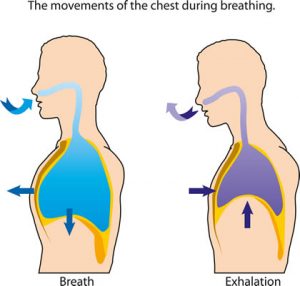
Deep diaphragmatic breathing isn’t only beneficial for the mind. Some studies have shown numerous physiological changes that can be ascribed to diaphragmatic breathing therapy. For instance, diaphragmatic causes a significant increase in O2, while decreasing the amounts of CO2 in the body. In other words, the psychological effect of proper diaphragmatic breathing cannot be analyzed separately from its physiological reactions.

how to breathe correctly while meditating

There are numerous ways to practice diaphragmatic breathing. First of all, you’d want to perform breathing exercises in several positions. The efficiency of supine, lateral decubitus, sitting, and standing positions has been empirically proven (Wellington et al. 2012). After you make yourself comfortable (in one of these positions) take, a slow, deep breath, while paying attention to the movement of your belly.

correct deep breathing techniques


Diaphragmatic breathing is characterized by slow, constant ascendance and descent of your abdomen, so make sure to pay attention to this important aspect. After inhaling deeply through your nose, slowly exhale, by pushing out all the air from your lungs. Don’t force anything. Diaphragmatic breathing is steady, slow, and relaxed. You can also put a hand on your belly so that you get tactile feedback.


Guide how to breathe correctly

It is now believed that various yogic breathing exercises achieve their effect thanks to diaphragmatic breathing. One such yogic technique is called pranayama, which is, essentially, a term that designates our ability to control the breath. Prana, life’s vital force, is increased thanks to pranayama exercises. However, these yogic breathing exercises have some special characteristics, like yogic poses.

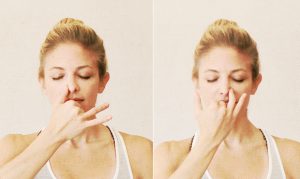
One of the alternate correct way to breathe is nostril breathing, another yogic technique that has so many psychological and physiological benefits that we won’t even try to mention them all.

We will only give you a guide on proper inhale and exhale techniques through the nose:

1. First, you should place one of your hands on your knee (if you are left-handed, put your right hand on your right knee. The opposite goes for right-handed individuals)


2. Lift one of your hands (left for left-handed, right for right-handed), towards your nose.

close one of your nostrils

3. After exhaling (make sure to empty your lungs) close one of your nostrils with your thumb (right nostril if you use your right hand… you get the idea).

4. Inhale deeply through the open nostril.

correct breathing

5. Then close this nostril and inhale deeply through the other nostril.

6. Repeat this circle for about 5 minutes (i. e. inhaling through one, then the other nostril).

In conclusion, the proper way to breathe diaphragmic will do wonders for your mental and physical health. Developing it is not rocket science, but a gradual process to move away from shallow patterns to deeper ones. With time, your meditation practice but also everyday life would benefit from better breathing.

Have a very good practice, everyone!

Meditation for Stress | Mindful Stress Management  

Stress: who is to blame?

Without taking much time to introduce the topic, it’s very clear that we all live with much more stress than ever before. We have seen the emergence of Big Food, Big Pharma and other big businesses that make us sicker, poorer and very stressed. What’s incredible, they do it at our expense too!

Yet it should be another way around. Inded, we are developing so many tools and human progress should allow us to live better. See our article on Evolution, Nonviolence, and Meditation if you want to learn more about this.  Meditation for stress should be that ultivate tool how we can combat stress effectively. Let’s dig deeper.

Many so-called biohackers recommend using magnesium supplements to get a better night sleep. It helps to calm down that exhausted nervous system. In many cases, this does work really well. You can start with a very low dosage of magnesium (best to use is in the powder form), say 50 or 100 mg and then slowly increase up to 400-500 mg. It is safe to use but you will see how much is enough for you. 

This is all great, but it falls down to a current healthcare approach. All it does is treating the effects, but not the cause. 

What we need instead is to pay attention to what’s causing your stress and working on it. You sometimes cannot change the circumstances or actual events, but you can change your response to them. 

We can rewire ourselves to be less responsive to everyday stress factors and choose to live a more serene life.

Why are we so stressed?

There are so many reasons why we are increasingly stressed.

A prominent Buddhist monk and author of a vast amount of books on meditation, Thich Nhat Hahn said that ‘having 6 sense organs, toxins can come not only through mouth’. According to him, we feel anxious or worn out being stressed because of devastation, cravings for possessions, sex or advertising – we are in contact with toxins.

Our issues with employment could be a huge stress factor. Unemployed job seekers showed reduced destructive self-talk that floods us with thoughts of hopelessness and depression. It means that the way how we relate to our gloomy self-talk has a direct impact on our health. 

Prolonged exposure to stress hormones (especially cortisol) destroys healthy muscles, bones and cells. It also weakens the immune system. Julian Daizan Skinner and Sarah Blades in their ‘Practical Zen’ book have quoted the American Medical Association: ‘stress is implicated in 60-90% of physician visits’. This has been documented by Avey H. et al., 2003, ‘Health care providers’ training, perceptions and practices regarding stress and health outcomes’, Journal of the National Medical Association 95,9,833, 836-845.

It’s huge! Stress destroys your health and also a reason for the majority of your doctor visits. 

Nutrition and stress

Our nutrition is another cause of stress. Let’s hear from Dr. Dean Ornish, who has conducted a lot of scientific research. He has helped many people to reverse diseases that were triggered by their lifestyle choices. He said that “for the last 36 years my colleagues at the non-profit Preventive Medicine Research Institute and the University of California have conducted research proving the power of a whole-foods, plant-based diet in combination with stress management techniques, moderate exercises like walking and love and intimacy. In addition to preventing many chronic diseases, these comprehensive lifestyle changes can often stop and reverse the progression of illnesses. This includes coronary heart disease, early-stage prostatic cancer, and type 2 diabetes”. 

Have a look for some tips on how you can change your nutrition for the better in our Nutrition of Nonviolence course

Have you also noticed that in this world of connected devices and the ultra-speed Internet, we are being really disconnected with each other? Chinese people actually celebrate Single’s Day. It became a big shopping event for them. 

Loneliness spurs high levels of pro-inflammatory genes. Various stress reduction programs can not only lower these levels but also lessen the feeling of being lonely. (J.D. Creswell et al., “Mindfulness-based stress reduction training reduce loneliness and pro-inflammatory gene expression in older adults: a small randomized control trial” Brain, Behaviour and Immunity 26 (2012).

Is mindfulness meditation for stress effective?

One of the core benefits to meditation and mindfulness is an ability to cope with anger and manage the response to everyday stress factors.

Dan Buettner in his ‘Blue Zones’ book said that there is a theme amongst all people who live longer than 100 years. The key factors are a plant-based diet and effective stress management.

Meditation can also reduce high levels of the stress hormone cortisol and resulting toxic belly fat. See Jennifer Daubenmier et al., “Mindfulness Intervention for Stress Eating to Reduce Cortisol and Abdominal Fat Among Overweight and Obese Women: an exploratory randomized controlled study”, Journal of Obesity (2011): 651936.

One study even found that 8-week meditation class tripled the amount of weight lost by a group of elderly women when compared with those who did not use similar techniques. (Eirini Christaki et al., “Stress Management Can Facilitate Weight Loss in Greek Overweight and Obese Women: A Pilot Study” Journal of Human Nutrition and Dietetics 26, 2 (July 2013): Supplement 132-39). See more at “Meditate your weight” by Tiffany Cruikshank.

Meditation lessens your stress on a genetic level too

In research published in 2013, Benson and his team found that meditation doesn’t just change brain activity, blood pressure and reports of how stressed people feel. It changes the activity of certain genes. And it does it so within minutes. Even first-timers show an increase in the activity of genes involved in the function of mitochondria and secretion of insulin (which regulates blood glucose levels). There is also a drop in the activity of genes involved in triggering potentially damaging inflammation (linked to depression) and stress-related pathways. Benson investigated that the duration of individual meditation should be 10-20 minutes a day. (Taken from Emma Young book called “Sane”)

This is where we are coming to a very trendy topic of genetic research. 

There is evidence that meditation practice even slows the effects of the ageing process. Mindfulness may have an effect on the length of telomeres which are the protective caps at the ends of chromosomes. It reduces stress and stress arousal. Meditation fostering positive states of mind may bring about hormonal changes, which may promote telomere maintenance. See more on this in “The rough guide to mindfulness” by Albert Tobler and Susann Herrmann.

Yet let’s not hide behind our genes. What we can do here and now if to become more compassionate and kind to ourselves. Meditation trains one really important mindfulness skill: loving-kindness and compassion. Just have a look what V. Burcha nd D. Penman wrote in their book “Mindfulness for Health”: “Cultivate self-acceptance and care towards yourself and others. This reveals the similarities and connections between us all, dissolving stress and reactivity so that life becomes warm and wholesome once again”.

How long do you need to practice meditation for stress?

We have shown already in our meditation articles and especially the one that describes the benefits of meditation practice that you will see changes just after a continuous daily meditation practice of just 15-20 minutes.

Doctors Goleman and Davidson insist that it needs to be regular. They said that a large drop in cortisol under stress seems to kick in with continuous practice. It means that it’s easier to handle life’s upsets. 

In their book, “The Science of Meditation”, they have also provided why you should aim to make it a regular practice. They quoted a research paper that said that ‘the long term meditators achieved the best results in the reduction of cortisol levels’. The study observed long term meditators who all practiced vipassana and loving-kindness meditation over a period of at least 3 years. They engaged in a daily practice of at least 30 minutes and a few intensive meditation retreats. Each was matched on age and sex with a non-meditative volunteer to create a comparison group. They also gave saliva samples for cortisol levels. See more in Melissa A Rozenkratz et al., “Reduced stress and inflammatory responsiveness in experienced meditators compared to a matched healthy control group” Psychoneuroimmunology 68.

meditation for stress

Holistic mindfulness to help with stress

Clearly, it is a matter of combining your efforts. You can do your body much better by switching to a plant-based diet. You can cultivate your mind and become more emotionally stable by means of mindfulness meditation. All of this enables you to be kinder and more compassionate to yourself, but also manage your stress better.

Buddhists were writing about it all along. Have a look at the work of Ajahn Amaro “A Holistic Mindfulness”. He said that Buddhism provides guidelines for behavior and speech that might help you to reduce stress and live more comfortably. He talks about holistic mindfulness by means of meditation and ethical living. You do not need to be religious to live like that. Simply extend your circle of compassion to all living beings (including yourself) and become disciplined in your daily meditation practice.

It Is Too Much | When Enough Is Enough

It is too much…

Let us ask you a quick question.

Have you ever been in a situation when you felt it is just too much of everything?

Surely it can be too much with work, other people, mounting stress, and simply a lot of things going on. You simply cannot go on like this anymore. It is when enough is enough. The awareness of it is the first step. Can you imagine there are millions of people who are subjected to acute stress on a daily basis without actually giving it any thought? They probably think it is simply ok to feel that overwhelmed and have that much on their plate all the time. Sounds crazy, isn’t it?

Yet according to many research studies, our life becomes more and more complex, hectic and full of chores that we need to do. Multitasking is not a skill to learn to be productive, it is a myth. It is actually a very unhealthy one – it really harms our mental health.

What to do and how to cope with this?

It is very important to have a tool at hand because this ‘it is too much’ feeling can arise quickly like a storm and then you are simply smitten.

What does one need to learn to skillfully cope with this?

Let’s get to the very basic semantics here. When we say that ‘it is too much’, we mean that these additional jobs, monies, and tasks are simply way above what we can handle. It is very probable that we do not need to do all that at all. Yes, we might earn less money or have a slightly more frugal lifestyle. Yet we may be a lot happier.

This is where the whole concept of enough comes into play. First, after realizing that it is too much, you simply say that you’ve had enough of this busyness and craziness. Enough is enough.

When is enough enough

Though to actually figure out how to get out of this vicious circle you need to find your own point of enough. It is that point where you are content. Feel that you are enough as an individual (why would you think anything different anyways?) and you have enough (money, place to live, clothes to wear, you name it). You can simply enjoy the present being in a very comfortable sense of enough. You have enough and you are enough. Clearly, you do not lack anything.

To progress further on your journey, you can employ meditation techniques. They will help you to center and feel at peace, they will guide you to the universal truths of impermanence, non-self and unsatisfactory conditions. When you contemplate on these, you cultivate your mind and feel this enormous pressure of constant busyness lifting off your shoulders. That’s when you re-discover your inner values and they start guiding you to your own point of enough. What’s enough for you? It’s very probable that you already have much more than that and you can start serving others instead of engaging in never ending rat race of more and more wealth.

What can you do if you feel that it is enough?

Be kind to yourself. Say that everyone feels like that once in a while. And that’s ok. We live in a very busy world.

Though it is a bit of a lame excuse. We choose how to live our lives. Or at least we should.

So why not you take some time for yourself and start meditating.

First, learn our basic practice of concentration meditation on breathing. Try our loving-kindness meditation (Metta) and see whether you start feeling more at ease with everything and everyone with it. Make progress with your practice with our vipassana meditation instructions. This is where you gain insights and further develop yourself and your mind based on your own intrinsic values.

when is enough enough

That’s how your life becomes a life of enough, a place where you are content, happy and peaceful. You will want others to feel the same. Let us know!

Meditation to Reduce Anxiety

Meditation has been known since ancient times as a good way to be alone with yourself and leave problems aside. Meditation includes complete physical and psychological relaxation and helps control stress and emotions. This training method will defeat depression, insomnia, fatigue and other problems associated with emotional stress. The physical health of a person suffers from emotional stress, natural processes in the body are disrupted. Meditation will also help to cope with similar failures in the work of internal organs. When a person gets rid of anxiety and stress, the body directs all its forces to self-healing.

The benefits of anti-anxiety meditation

Meditation in stress is aimed at combating anxious thoughts and focusing on your own body. The relaxation process affects the following processes:

  • reduces blood pressure;
  • reduces stress hormone production;
  • improves blood circulation;
  • normalizes the rhythm of the heart and breathing;
  • improves concentration; uplifting;
  • helps focus on good events and forget about sorrows and disappointments;
  • relieves depression and chronic fatigue;
  • gives self-confidence.

It happens that the problems were crushed so badly that the idea arises to start taking sedative drugs. But do not rush into such a decision, because any drugs have adverse reactions, and are not suitable for everyone.

Meditation relieves fear and anxiety, as it is a natural sedative for the body. During relaxation, relaxation occurs in all parts of the body and internal organs. The flow of blood to the vessels improves, the cells are saturated with oxygen, the heart begins to work in a normal rhythm, breathing becomes calm – all this reduces nervous tension and helps to correct the emotional state.

How to practice meditation to calm anxiety

meditation for social anxiety

Practicing meditation is really easy and you can try it right now with these simple instructions for a concentration meditation on breathing:

  • Meditation for anxiety starts when you find a quiet place and set your alarm for an initial 10 minutes (more if you feel comfortable to start with a longer session).
  • Sit cross-legged on a floor (use a mat and a cushion to level your hips with your knees), place your arms on your lap. Only sit on a firm chair if the cross-legged position is very uncomfortable. In general, your posture should be fairly relaxed but not sluggish, so you won’t meditate yourself to sleep. Full lotus is the most stable and firm posture, but you can adopt half-lotus or a simple cross-legged position too.
  • Take a few really deep breaths as so other people would be likely to hear you breathing. It should make you feel relaxed fairly quickly.
  • Close your eyes and start paying attention to sounds, smells, posture and breathing. Simply make a mental note on what you are observing. No need to judge it or dwell on it.
  • Pay attention to how your body feels. Start doing so by scanning your body from top to bottom and notice how even the smallest parts of your body feel. Don’t try to change anything or judge. It’s all good, you are being attentive, that’s it.
  • Move the focus of your attention to your breathing. Do not try to change it, just let it be. No judgment please, do not allow to be violent towards yourself. Notice where in your body your breathing starts, how it flows and how it ends. To help you settle with this pattern, you can start counting your breaths from 1 to 10 and then revert back to 1. If your attention shifts to something else, notice the very fact of this happening and then gently get your mind to count the breaths again and again. These ‘jumps’ happen all the time, so be kind to yourself. The more skillful you become, the less monkey-like your mind learns to be. Every single time your mind gets back to counting breaths, it also gets stronger. This, in effect, gives your mind a proper training.
  • When you have established a good concentration on breathing, invite your mind to contemplate on the fact that all things change; it is just the way of life. Think about life and death, how are your thoughts are coming and going. This is what it’s called impermanence. Accept it and relieve yourself from the pressure of stress factors. They will come and go too.
  • Obviously, these stress factors come with dissatisfaction and sometimes suffering. It happens because you cling to positive states, and quite naturally averse to things that cause you pain. You can contemplate whether you can simply let go of your attachment to that stressor. This will definitely alleviate your stress and relieve anxiety. Yet if you cannot do it, by simply accepting that ‘yes I cling to that, and that’s why I feel anxious’ you acknowledge your suffering and, paradoxically, it will subside. You will feel it less and with time it will disappear.
  • These two very specific but open contemplation themes are going to change on a daily basis. Things change, so is your meditation practice. Yet with time, you will become familiar with both of these characteristics and your level of anxiety will gradually lessen with this meditation for anxiety practice. You will accept these universal truths: everyone experiences dissatisfaction and all things are impermanent. Your full acceptance and absence of clinging are key to lower your anxiety with meditation.
  • Continue for your set amount of time. When finished, allow your mind to rest for 30 seconds with no focus on anything at all. Just observe and let it simply flow.
  • Finish by making a mental note how you feel now, what you are going to do next and open your eyes.

You have just completed a session of mind training or cultivation that specifically targeting anxiety.

Anxiety can be one of the obstacles to meditation. It can be a part of restlessness that creates a barrier to meditation practice. But don’t be alarmed. If you do not judge yourself for being restless at some point during meditation but simply acknowledge the fact, it will actually lessen your anxiety. It’s a paradox, but also a fact.

At the end of the practice, work with breath holdings:

  • deep breath – a delay of 5-10 seconds. – exhale.
  • inhalation – a delay of 15-20 seconds. – exhale. + circular rotation of the shoulders – exhale.
  • inhalation – delay of 15-20 seconds. + fast circular rotation with shoulders – exhalation. Relaxation. Stay in this state, feel the emptiness and silence inside, the lack of emotions. You just have it.

Meditation techniques for anxiety and Depression

There are three known methods for relieving depression and anxiety:

  1. The technique is based on the alternate relaxation of all muscle groups – a person consciously relaxes the body, starting from the legs and mentally compares this state with the voltage that was a minute ago. The technique is effective and in nature resembles shavasana.
  2. The technique is based on visual images – quiet and protected places where a person would feel calm and confident. You can move on and visualize the taste, smell, sensation of a loved one nearby.
  3. The technique of fear and anxiety in the form of meditation consists of repeating phrases (affirmations) that give self-confidence, vitality and will.

By practicing exercises from anxiety and stress in the evening, a person is freed from physical and mental stress, acquires balance and balance. This meditation is for calming nerves, psychological relaxation, increasing control over stress and emotions. When you get rid of all the negative influences, your body will direct all its forces to self-healing.

Mantras Against Stress and Anxiety Mantras are certain words or a whole text that is repeated during meditation. Mantras are used in many religious denominations. They help to better concentrate on meditation. Mantras must be chanted. The main syllable used in mantras is “ohm”. There are various conditions, depression and stress from various situations.

meditation mantras for anxiety

Example of quick meditation for anxiety

The whole posture as a whole gives us a sense of peace, creates a calm zone inside the Heart Center for heart prana. In emotional terms, this meditation allows you to clearly see your relationship with yourself and with other people. If someone upset you at home or at work, meditate for 3-15 minutes before making a decision. Then proceed. In the physiological aspect, meditation improves lung and heart function.

Pose: Sit in a simple pose, make an incomplete jalandhara bandha (throat lock).

Eyes: closed or ajar 1/10, the gaze is directed straight ahead.

Mudra: Grasp the left palm, right. The thumb of the left-hand lies crosswise on the right thumb. Place your hands in the area of ​​the heart.

Breathing: Focus on the flow of breath. Consciously control your breathing at every stage. Slowly take a deep breath through both nostrils. Hold your breath for as long as possible by lifting your chest. Then slowly, gradually, evenly exhale completely and again hold your breath as long as possible.

Time: from 3 to 31 minutes. For practice concentration and rejuvenation, do 31 minutes.

Completion: forcefully inhale and exhale 3 times. Relax.

Scientific Research on the Effect of Meditation on Anxiety

Few more studies to deepen your understanding of how mindfulness meditation helps to overcome anxiety:

  • Study at the John Hopkins University School of Medicine and published in JAMA Int Medicine showed that meditation can provide a level of relief from symptoms of anxiety and depression similar to that of antidepressant drugs. Peace and happiness, no prescription needed. (from Suze Yalof Schwartz “Unplug”)
  • A study showed a slowing of breathing after just 8 weeks of mindfulness meditation practice: 1.6 breaths slower. It means 2000 extra breaths for non-meditators per day; 800000 a year! These extra breaths are physiologically taxing and can exact a health toll as time goes on. As practice continues and breathing becomes slower, the body adjusts its physiological set point for its respiratory rate accordingly. That’s a good thing. While chronic rapid breathing signifies ongoing anxiety, a slower breath rate indicates reduced autonomic activity, better mood and salutary health. (from J. Wielgosz et al., “Long Term Mindfulness Training is Associated with Reliable Differences in Resting Respiration Rate”, Scientific Reports 6, 2016)
  • Researchers from Maharishi International University taught meditation to prisoners with a standard prison program as a comparison. They found that 4 months later the prisoners doing meditation showed fewer symptoms of trauma, anxiety, depression; they also slept better and perceived their days as less stressful (from S. Nidich et al., “Reduced trauma symptoms and perceived stress in male prison inmates through Transcendental Meditation Program” Permanente Journal 2016; doi.org/10.7812/TPP/116-007)

Benefits of Meditation Practice

Meditation is a training process in training the mind to concentrate and direct thoughts.

Someone uses meditation as a means to better know themselves and their surroundings. For others, meditation is a method to reduce stress and learn to be happy. Meditation offers countless different benefits to your body, mind and spirit. The rest that you get during meditation is much deeper than the rest during the deepest sleep. The deeper you relax, the more dynamic your activity becomes.

Physical benefits of meditation

Learning meditation and mindfulness techniques and regularly practicing it assists our kids ’education and supports their efforts. Students can boost their mental working capacity and they would be able to prepare for the exams more effectively.

Meditation effects on the brain

Meditation tunes brain waves to the alpha rhythm that heals. The mind becomes fresh, refined and in excellent condition.

If you use it on regular practice, meditation benefits for the brain will be as:

  • your anxiety and anxiety are reduced
  • increased emotional stability
  • improving creativity
  • the state of joy prevails
  • intuitive abilities develop
  • you gain clarity and peace of mind
  • problems lose their significance even before they enter your life

Meditation sharpens the mind by focusing on and expanding it through relaxation. Meditation helps you realize that the state of happiness is determined precisely by your inner mood, your position.

Benefits of daily meditation for cerebral hemispheres

One of the important effects of meditation is the balanced functioning of both cerebral hemispheres. Meditation has a great advantage over other types of practices in that with their help you can balance the work of the left and right hemispheres – this will add order to your life.

Usually, the activity of one of the hemispheres predominates. So, for more analytically oriented people, the left hemisphere dominates, which is responsible for logical thinking, verbal processes, and for those who are called artistic natures, the right hemisphere prevails. It is capable of intuitive perception of the outside world, and therefore it is associated, first of all, with creative processes, such as drawing, playing instruments, writing. Classes in energy and spiritual practices also belong to the right-hemisphere, because they are associated with the development of imagination, visualization ability, and other similar abilities.

Mindfulness meditation benefits for emotional background

benefits of daily meditation


Reducing stress is the most common reason people try to meditate. Usually, mental and physical stress causes an increase in the level of the hormone cortisol. This leads to sleep disturbance, depression and anxiety, high blood pressure, fatigue, and clouded thinking.


Chronic stress leads to inflammatory diseases. A study of mindfulness meditation found that regular practice of meditation reduces stress and eliminates the inflammatory processes it causes.

A large drop in cortisol under stress seems to kick in with continuous practice, so it’s easier to handle life’s upsets.

Benefits of daily meditation for the body

Meditation brings changes on a physical level – each cell of your body is filled with prana (vital energy). When the level of prana in the body increases, this leads to an increase in joy, calmness, and enthusiasm.

Physical effects of meditation on the body:

  • lowers high blood pressure
  • reduces the level of lactate (lactic acid) in the blood, eliminating anxiety attacks
  • reduces pain associated with stress, such as headache (tensional), ulcer, insomnia, muscle, and joint pain
  • increases the production of serotonin, which is responsible for good mood and social behavior
  • strengthens the immune system
  • increases energy level, because you get access to an internal energy source

Benefits of morning meditation in sleeping

It is known that meditation helps to regulate sleep and after you begin to meditate, you can get enough sleep in less time. Meditation provides at least short-term improvements, even for beginner meditators. For long practitioners who spend considerable time in meditation, the need for sleep is greatly reduced when compared with people from the same demographic group who do not meditate.

benefits of morning meditation

Studies of the effects of meditation on the human body

Rick Hanson PhD is confident that mindfulness goes very far by changing how your brain operates. He quotes the following in his book “Just one thing”:

“Studies have shown that regular practices of mindfulness:

  • Thicken cortical layers in regions of the brain that control attention (Lazard et al, 2005)
  • Add neural connections in the insula, a part of the brain that supports both self-awareness and empathy for the emotions of others (ibid)
  • Increase the relative activation of the left prefrontal cortex, which helps control and reduce negative emotions (Davidson 2004)
  • Strengthen your immune system (Davidson et al, 2003)
  • Reduce the impact on pain and accelerate post-surgical recovery (Kabat-Zinn 2003; Kabat-Zinn, Lipworth Burney 1985”

Here is a huge list of benefits quoted in a wonderful book “The Science of Meditation” by Daniel Goleman and Richard J. Davidson:

  1. The first rigorous studies of how meditation affects attention were done by Amishi Jha et al., “Mindfulness Training Modifies Subsystems of attention” in Cognitive, affective and behavioral neuroscience. 7:2 (2007)”
  2. After 8 weeks of the Mindfulness-Based Stress Reduction program – better focus and attention. The program consists of mindfulness of breath, body sensations scan, attentive yoga and moment-to-moment awareness of thoughts and feelings. It’s a daily attention practice.
  3. Mindfulness also improves working memory: students up scores by more than 30% (Michael Mrazek et al., “Mindfulness Training Improves working memory capacity and GRE performance while reducing mind wandering” Psychological Science 24:5 (2013): 776-81)
  4. Just 3 x 10 minutes of meditations improve cognitive control. Mindfulness also improves working memory: students up scores by more than 30% (ibid)
  5. Better impulse inhibition went along with a self-reported uptick in emotional wellbeing. Cliff Saron’s study shows meditation improves the ability to inhibit impulse as stated by Bajinder K. Sahdra et al., “Enhanced response inhibition during intensive meditation predicts improvements in self-reported adaptive socioemotional functioning” Emotion 11:2 (2011): 299-312”. The study suggested 10 h of mindfulness over 2 week period.
  6. The brain’s default mode activates when we are doing nothing that demands mental effort -> we are constructing ‘self’. Mindfulness and loving-kindness meditation quiet the default mode circuit. It means that self-focused thoughts and feelings that arise in the mind have much less “grab” and decreasing ability to hijack attention.
  7. Mindfulness practice lessens inflammation day to day (not just during meditation). Benefits show up after just 4 weeks of mindfulness practice (~30hrs) as well as loving-kindness as quoted by E. Walsh “Brief Mindfulness Training Reduces Salivary, IL-6, and TNF-α in young women with depressive symptomatology” Journal of Consulting and Clinical Psychology 84:10 (2016) and T.W. Pace et al., “Effect of Compassion Meditation on Neuroendocrine, Innate Immune and Behavioural Responses to Psychological Stress” Psychoneuroimmunology 34 (2009): 87-98)
  8. A large drop in cortisol under stress seems to kick in with continuous practice, so it’s easier to handle life’s upsets.
  9. Unemployed job seekers showed reduced destructive self-talk that floods us with thoughts of hopelessness and depression -> how we relate to our gloomy self-talk has a direct impact on our health.
  10. Meditation helps with high blood pressure. Just 14 minutes of meditation practice in a group who suffered from kidney disease, cardiac or hypertension lowered the metabolic patterns that lead to these diseases. It was stated by Jeanie Park et al., “Mindfulness in African-American Males with Chronic Kidney Disease”, American Journal of Physiology 307:1 (July 1, 2014)
  11. Meditators have shown the “down-regulation” of inflammatory genes. Such drop, if sustained, might help combat diseases with onset marked by chronic low-grade inflammation. These include cardio disorders, arthritis, diabetes, and cancer.
  12. Loneliness spurs high levels of pro-inflammatory genes. MBSR can not only lower these levels but also lessen the feeling of being lonely, as quoted by J.D. Creswell et al., “Mindfulness-based stress reduction training reduces loneliness and pro-inflammatory gene expression in older adults: a small randomized control trial” Brain, Behaviour, and Immunity 26 (2012).
  13. Mindfulness associated with increased telomerase activity, in the work of N.S. Schutte and J.M. Malouff “A meta-analytic review of the effects of mindfulness meditation on telomerase activity” Psychoneuroendocrinology 42 (2014).

Start your meditation practice today with our simple instructions on concentration meditation (on breathing) or develop your regular meditation practice with our Insight Meditation (vipassana) instructions. Please get back in touch if you want to suggest a piece of research that we’ve missed or you have any questions.

Free Access to Meditation Guide & Courses

You have Successfully Subscribed!