How to Breathe Correctly: in Meditation and Beyond

What does correct breathing mean?

Do you think it is a bit of a joke that breathing needs a separate how-to? Our automatic actions, like walking or breathing, by definition, don’t get much attention from our part. But automaticity does not guarantee that an action is carried out in an appropriate (and healthy) way. When something is unconscious, we are unable to assess its appropriateness, and, subsequently, we cannot change the way we act.

How to breathe correctly while meditating

Meditation takes an unconscious act (breathing) and takes it to the surface of consciousness. By focusing on our breath, we also gain control over our thoughts and feelings. Correct breathing exercises are “active ingredients” of meditation. This is why it’s extremely important to learn the difference between unhealthy and healthy ways of breathing. Not only will you be able to meditate properly, but you’ll also learn how to recognize when your “breathing technique” is bad. By regaining control over your breath, you’ll be able to attain the state of peace and tranquility even in the most stressful situations
But let’s first see what are the “trademarks” of bad breathing.

Examples of improper breathing

First of all, bad breathing is almost always shallow. Shallow breathing has numerous detrimental consequences. For instance, when your breath is shallow, chances are that your brain doesn’t get enough oxygen (and, inversely, your body gets too much CO2). Your body recognizes these changes as stress-related signals and initiates numerous compensatory activities that are meant to make up for these detrimental changes. Needless to say, if your body is forced to cope with shallow breathing for too long, at one point the stress will become overwhelming, and compensatory activities (increased activity of the thyroid and adrenal glands) will no longer help. Quite the contrary. Increased activity of adrenal glands is a typical somatic response in almost all stressful situations, and this kind of response usually helps you to overcome the challenge. However, when the stressful situation lasts for too long (or when we are unable to deal with it), the increased activity of adrenal glands puts too much strain on your body. This type of maladaptive reaction is observed in some stress-related psychopathological syndromes like Post-Traumatic Stress Disorder (PTSD). Just so you know, you can check our targeted meditation practice to help with PTSD here.

How improper breathing affects health

Shallow breath is linked with negative emotions like fear, feeling threatened, nervousness, and anxiety. The list goes on and on, but these are the most dangerous (and negative) emotions linked with shallow breathing.

Bad breathing correlates with bad posture, which is, of course, another topic. However, your breathing method is most surely unhealthy if you, for example, have the so-called “forward head”, which is essentially the way you hold your head while you’re using your mobile phone. You can try this for yourself, as a little experiment: Just bend your head forward as much as you can, and you’ll see that it’s extremely hard to breathe in this position.

What is it proper breathing technique

Deep diaphragmatic breathing isn’t only beneficial for the mind. Some studies have shown numerous physiological changes that can be ascribed to diaphragmatic breathing therapy. For instance, diaphragmatic causes a significant increase in O2, while decreasing the amounts of CO2 in the body. In other words, the psychological effect of proper diaphragmatic breathing cannot be analyzed separately from its physiological reactions.

how to breathe correctly while meditating

There are numerous ways to practice diaphragmatic breathing. First of all, you’d want to perform breathing exercises in several positions. The efficiency of supine, lateral decubitus, sitting, and standing positions has been empirically proven (Wellington et al. 2012). After you make yourself comfortable (in one of these positions) take, a slow, deep breath, while paying attention to the movement of your belly.
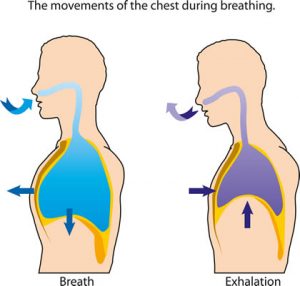
correct deep breathing techniques


Diaphragmatic breathing is characterized by slow, constant ascendance and descent of your abdomen, so make sure to pay attention to this important aspect. After inhaling deeply through your nose, slowly exhale, by pushing out all the air from your lungs. Don’t force anything. Diaphragmatic breathing is steady, slow, and relaxed. You can also put a hand on your belly so that you get tactile feedback.


Guide how to breathe correctly

It is now believed that various yogic breathing exercises achieve their effect thanks to diaphragmatic breathing. One such yogic technique is called pranayama, which is, essentially, a term that designates our ability to control the breath. Prana, life’s vital force, is increased thanks to pranayama exercises. However, these yogic breathing exercises have some special characteristics, like yogic poses.

One of the alternate correct way to breathe is nostril breathing, another yogic technique that has so many psychological and physiological benefits that we won’t even try to mention them all.

We will only give you a guide on proper inhale and exhale techniques through the nose:

1. First, you should place one of your hands on your knee (if you are left-handed, put your right hand on your right knee. The opposite goes for right-handed individuals)


2. Lift one of your hands (left for left-handed, right for right-handed), towards your nose.
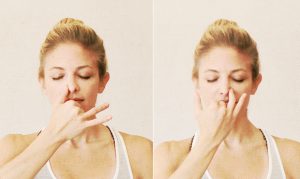
close one of your nostrils

3. After exhaling (make sure to empty your lungs) close one of your nostrils with your thumb (right nostril if you use your right hand… you get the idea).

4. Inhale deeply through the open nostril.

correct breathing

5. Then close this nostril and inhale deeply through the other nostril.

6. Repeat this circle for about 5 minutes (i. e. inhaling through one, then the other nostril).

In conclusion, the proper way to breathe diaphragmic will do wonders for your mental and physical health. Developing it is not rocket science, but a gradual process to move away from shallow patterns to deeper ones. With time, your meditation practice but also everyday life would benefit from better breathing.

Have a very good practice, everyone!

Meditation For Forgiveness

Forgiveness is not easy 

We all carry a lot of grudges and that’s quite natural. Yet this ‘baggage’ is not really healthy. 

We are hurt often and we feel guilty ourselves, but sometimes we also blame others. Well, it is inevitable that someone should be blamed for a failure or a mistake, don’t they?

Funny thing is, it should not be this way.

Hurtful feelings are widespread

Many of us ruminate and hurt ourselves with these distractive thoughts. Some of us direct this blame towards our enemies.  Whilst it is all logical and so on, it is not productive or helpful. 

When you lose someone really close to you, it is unbearably hurtful. And sometimes you can blame yourself for your mistakes or wrongdoings. Yet you can’t change the past and your future simply hasn’t emerged yet. All you can do is just to learn from these experiences and move on.. hopefully, to be a better you. 

Losing someone or experiencing a break-up are those instances when we really feel tender. Forgiveness is a thing that might heal some of the wounds we have. It is definitely important when we turn to ourselves and explore how do we actually relate to ourselves.

Many of us treat ourselves like.. well, awful.. Just sit down and have a five-minute break from everything. Allow yourself some alone time. Can you see how you usually address your own self?

We often start picking on our flaws. We are our own worst critic. But why? Why cannot we just forgive ourselves for being … well, simply ourselves?

Meditation as a tool to practice forgiveness

Meditation teaches us… or frankly speaking, opens our own eyes on who we really are. 

We look into ourselves, we are in ‘being’ mode instead of ‘doing’ and it reveals our true nature. 

Ability to forgive actually increases our well-being. Everyone can increase their self-compassion, self-care (nutrition and activities), practice forgiveness, gratitude, but also realise how connected we all are and that we want ultimately the same thing. We do not need to seek and strive to prove how ‘special’ we are, but rather be kind to ourselves and others. 

Don’t think of forgiveness as a sign of weakness, it is quite the opposite. Forgive and let all those toxic energies leave your body, mind, and emotions. This allows you to start letting go of the emotional traumas of your past. This, in turn, enables you to heal naturally. Forgiveness is a very important step to your freedom and meditation is a tool to help you do just that. See our basic instruction and learn how to meditate today.

‘Putting yourself in an altered state of mind, and tapping into your spiritual energy during a forgiveness meditation can help you quickly and lovingly release your negative thoughts and feelings’ (https://www.wikihow.com/Forgive-Using-Meditation).

meditation for forgiveness

Forgiveness meditation

Jack Kornfield advises that during your regular meditation practice you can decide to start breathing ‘into the area of your heart, let yourself feel all the barriers you have erected and the emotions that you have carried because you have not forgiven – not forgiven yourself, not forgiven others. Let yourself feel the pain of keeping your heart closed. Then, breathing softly, begin asking and extending forgiveness’. 

Try incorporating this forgiveness meditation into your loving-kindness practice. Having a lot of energy drawn from wishing yourself and others well-being, health and peace will also help you to forgive and heal. 

We hope you can look deeper into yourself and heal some of your traumas with forgiveness meditation. 

Evolution and Nonviolence: Meditation Practice and Plant-Based Nutrition

We have never lived better in our humankind history. We enjoy rapid technological progress along with decreased poverty, longer life spans and increased comfort virtually in every aspect of our lives. 

Yet it seems that we are overlooking the quality of life whilst striving to make it longer, i.e. going for quantity. 

Stress and Lifestyle Diseases

It means that we live longer, but we live sicker, humans develop more and more lifestyle diseases. Think of obesity, high blood pressure, heart diseases and type 2 diabetes that are now the major causes of human deaths. 

On top of that, our pace of life, increased stress levels and overstimulation trigger a variety of mental health conditions. These we still do not really know how to address. 

Both physical and mental health issues trigger an increase in violence to yourselves and others, which usually results in drugs use, crime or anti-social behaviour.   

If we go even further from our individual concerns, we see a much bigger picture of our polluted environment, inefficient use of land and resources, growing inequality where rich are getting richer whilst poor people are getting poorer and we still cannot feed over 800 million people on our planet. 

Overconsumption is not only mindless and damaging to everyone one of and the planet, but it also feeds those rich pharmaceutical and big food businesses that employ manipulative marketing techniques to pollute our minds and nature. 

All of these factors contribute to overall mental and physical dis-ease and trigger an increase in violence, crime, armed conflicts and cruelty to one another and nature.

Wanting is lacking. The more we want, the more we drip ourselves away. That’s why this concept of nonviolence evolution is so important. The less we want, the more we can enjoy and be kind to ourselves and others. 

Meditation practice helps us to cultivate nonviolence and therefore is a foundation of the well-being of humans, all living beings and our environment

There is a multitude of studies showcasing benefits to your physical and mental health that come from training your mind by means of meditation.

Meditation practice has the ability to help all of us to:

  • Lessen the anxiety;
  • Overcome past emotional traumas and pain;
  • Deal with attention deficit;
  • Cope with anger and manage the response to everyday stress factors.

Meditation transforms four neural pathways:

  • Reaction to disturbing events, stress and recovery;
  • Compassion and empathy;
  • Attention (retrains our habits of focus);
  • Our very sense of self.

Would you enjoy a more strong immune system, lessen inflammation and blood pressure? Or maybe lower cortisol levels, slower breath rate, and ability to cope with chronic diseases like cancer? Some would be happy to get help to overcome drug or alcohol addictions. 

Evolution Should Work For Us not Against!

Our human progress and development up to date ensure that we have all the possibilities to strive on plant-based whole foods nutrition, live simpler and kinder lives and eradicate hunger and cruelty. It hasn’t been possible before and we appreciate the work and the challenges of our ancestors, but we have a needed capacity and tools for this change now.

We live in an era with its critically important issues of pollution and environmental damage, mental health decline and poor nutrition. Yet at the same time, we enjoy technological progress that allows us to grow and transport food all over the world. It means that we can stop slaughtering animals and enjoy healthier nutrition based on plant foods all year round. Compassion to all living beings extends to communities, cooperation between nations and a humane co-habitation with animals.

Surely, our progress and evolution should work for us and for others too. No one needs to be intentionally killed for food. Have a look at our Nutrition of Nonviolence article to explore how you can switch to plant-based whole foods today.  

Antonia Macaro said: “Our values and ethics are taking us (evolution-wise) beyond animal self-preservation”.   

What is there for you and me? Why do we all need to adopt this compassionate approach to our evolution? 

We can all reap enormous benefits in our physical, emotional, mental and social lives:

  • More peaceful living for all, harmonious communities and understanding between all of us;
  • Lower stress levels of everyone, increase kindness and compassion;
  • Lower crime, pollution, world hunger;
  • Less suffering and eliminate killing of innocent living beings and especially farmed animals;
  • Get healthier, both mentally and physically, regulate your emotional state and enjoy better relationships;
  • Promote and enjoy ethical living and moderate consumption by means of living in an economy of ‘enough’.

We simply increase well-being for all living beings.

Meditation is a practice that helps to train or cultivate our minds

Evidently, it helps you to get back to mindful states more often and you benefit from it by being calmer, more composed and joyful.  

Yet you, of course, fail sometimes, your mind will jump somewhere during meditation and that’s ok too. Be more imperfect. Evolution happens through mistakes. Being kind to ourselves and being kind to the planet is, ultimately, the same thing. Being kind is being selfishly nonviolent. 

You can think of meditation as something similar to attending a gym for your mind. It is a gradual process and the benefits are almost immediate and long-lasting. Meditation is by definition increasingly important on a personal, interpersonal and even global scale.

See more about meditation benefits and start meditating today with our basic instructions on concentration meditation on breathing. 

Benefits of Meditation Practice

Meditation is a training process in training the mind to concentrate and direct thoughts.

Someone uses meditation as a means to better know themselves and their surroundings. For others, meditation is a method to reduce stress and learn to be happy. Meditation offers countless different benefits to your body, mind and spirit. The rest that you get during meditation is much deeper than the rest during the deepest sleep. The deeper you relax, the more dynamic your activity becomes.

Physical benefits of meditation

Learning meditation and mindfulness techniques and regularly practicing it assists our kids ’education and supports their efforts. Students can boost their mental working capacity and they would be able to prepare for the exams more effectively.

Meditation effects on the brain

Meditation tunes brain waves to the alpha rhythm that heals. The mind becomes fresh, refined and in excellent condition.

If you use it on regular practice, meditation benefits for the brain will be as:

  • your anxiety and anxiety are reduced
  • increased emotional stability
  • improving creativity
  • the state of joy prevails
  • intuitive abilities develop
  • you gain clarity and peace of mind
  • problems lose their significance even before they enter your life

Meditation sharpens the mind by focusing on and expanding it through relaxation. Meditation helps you realize that the state of happiness is determined precisely by your inner mood, your position.

Benefits of daily meditation for cerebral hemispheres

One of the important effects of meditation is the balanced functioning of both cerebral hemispheres. Meditation has a great advantage over other types of practices in that with their help you can balance the work of the left and right hemispheres – this will add order to your life.

Usually, the activity of one of the hemispheres predominates. So, for more analytically oriented people, the left hemisphere dominates, which is responsible for logical thinking, verbal processes, and for those who are called artistic natures, the right hemisphere prevails. It is capable of intuitive perception of the outside world, and therefore it is associated, first of all, with creative processes, such as drawing, playing instruments, writing. Classes in energy and spiritual practices also belong to the right-hemisphere, because they are associated with the development of imagination, visualization ability, and other similar abilities.

Mindfulness meditation benefits for emotional background

benefits of daily meditation


Reducing stress is the most common reason people try to meditate. Usually, mental and physical stress causes an increase in the level of the hormone cortisol. This leads to sleep disturbance, depression and anxiety, high blood pressure, fatigue, and clouded thinking.


Chronic stress leads to inflammatory diseases. A study of mindfulness meditation found that regular practice of meditation reduces stress and eliminates the inflammatory processes it causes.

A large drop in cortisol under stress seems to kick in with continuous practice, so it’s easier to handle life’s upsets.

Benefits of daily meditation for the body

Meditation brings changes on a physical level – each cell of your body is filled with prana (vital energy). When the level of prana in the body increases, this leads to an increase in joy, calmness, and enthusiasm.

Physical effects of meditation on the body:

  • lowers high blood pressure
  • reduces the level of lactate (lactic acid) in the blood, eliminating anxiety attacks
  • reduces pain associated with stress, such as headache (tensional), ulcer, insomnia, muscle, and joint pain
  • increases the production of serotonin, which is responsible for good mood and social behavior
  • strengthens the immune system
  • increases energy level, because you get access to an internal energy source

Benefits of morning meditation in sleeping

It is known that meditation helps to regulate sleep and after you begin to meditate, you can get enough sleep in less time. Meditation provides at least short-term improvements, even for beginner meditators. For long practitioners who spend considerable time in meditation, the need for sleep is greatly reduced when compared with people from the same demographic group who do not meditate.

benefits of morning meditation

Studies of the effects of meditation on the human body

Rick Hanson PhD is confident that mindfulness goes very far by changing how your brain operates. He quotes the following in his book “Just one thing”:

“Studies have shown that regular practices of mindfulness:

  • Thicken cortical layers in regions of the brain that control attention (Lazard et al, 2005)
  • Add neural connections in the insula, a part of the brain that supports both self-awareness and empathy for the emotions of others (ibid)
  • Increase the relative activation of the left prefrontal cortex, which helps control and reduce negative emotions (Davidson 2004)
  • Strengthen your immune system (Davidson et al, 2003)
  • Reduce the impact on pain and accelerate post-surgical recovery (Kabat-Zinn 2003; Kabat-Zinn, Lipworth Burney 1985”

Here is a huge list of benefits quoted in a wonderful book “The Science of Meditation” by Daniel Goleman and Richard J. Davidson:

  1. The first rigorous studies of how meditation affects attention were done by Amishi Jha et al., “Mindfulness Training Modifies Subsystems of attention” in Cognitive, affective and behavioral neuroscience. 7:2 (2007)”
  2. After 8 weeks of the Mindfulness-Based Stress Reduction program – better focus and attention. The program consists of mindfulness of breath, body sensations scan, attentive yoga and moment-to-moment awareness of thoughts and feelings. It’s a daily attention practice.
  3. Mindfulness also improves working memory: students up scores by more than 30% (Michael Mrazek et al., “Mindfulness Training Improves working memory capacity and GRE performance while reducing mind wandering” Psychological Science 24:5 (2013): 776-81)
  4. Just 3 x 10 minutes of meditations improve cognitive control. Mindfulness also improves working memory: students up scores by more than 30% (ibid)
  5. Better impulse inhibition went along with a self-reported uptick in emotional wellbeing. Cliff Saron’s study shows meditation improves the ability to inhibit impulse as stated by Bajinder K. Sahdra et al., “Enhanced response inhibition during intensive meditation predicts improvements in self-reported adaptive socioemotional functioning” Emotion 11:2 (2011): 299-312”. The study suggested 10 h of mindfulness over 2 week period.
  6. The brain’s default mode activates when we are doing nothing that demands mental effort -> we are constructing ‘self’. Mindfulness and loving-kindness meditation quiet the default mode circuit. It means that self-focused thoughts and feelings that arise in the mind have much less “grab” and decreasing ability to hijack attention.
  7. Mindfulness practice lessens inflammation day to day (not just during meditation). Benefits show up after just 4 weeks of mindfulness practice (~30hrs) as well as loving-kindness as quoted by E. Walsh “Brief Mindfulness Training Reduces Salivary, IL-6, and TNF-α in young women with depressive symptomatology” Journal of Consulting and Clinical Psychology 84:10 (2016) and T.W. Pace et al., “Effect of Compassion Meditation on Neuroendocrine, Innate Immune and Behavioural Responses to Psychological Stress” Psychoneuroimmunology 34 (2009): 87-98)
  8. A large drop in cortisol under stress seems to kick in with continuous practice, so it’s easier to handle life’s upsets.
  9. Unemployed job seekers showed reduced destructive self-talk that floods us with thoughts of hopelessness and depression -> how we relate to our gloomy self-talk has a direct impact on our health.
  10. Meditation helps with high blood pressure. Just 14 minutes of meditation practice in a group who suffered from kidney disease, cardiac or hypertension lowered the metabolic patterns that lead to these diseases. It was stated by Jeanie Park et al., “Mindfulness in African-American Males with Chronic Kidney Disease”, American Journal of Physiology 307:1 (July 1, 2014)
  11. Meditators have shown the “down-regulation” of inflammatory genes. Such drop, if sustained, might help combat diseases with onset marked by chronic low-grade inflammation. These include cardio disorders, arthritis, diabetes, and cancer.
  12. Loneliness spurs high levels of pro-inflammatory genes. MBSR can not only lower these levels but also lessen the feeling of being lonely, as quoted by J.D. Creswell et al., “Mindfulness-based stress reduction training reduces loneliness and pro-inflammatory gene expression in older adults: a small randomized control trial” Brain, Behaviour, and Immunity 26 (2012).
  13. Mindfulness associated with increased telomerase activity, in the work of N.S. Schutte and J.M. Malouff “A meta-analytic review of the effects of mindfulness meditation on telomerase activity” Psychoneuroendocrinology 42 (2014).

Start your meditation practice today with our simple instructions on concentration meditation (on breathing) or develop your regular meditation practice with our Insight Meditation (vipassana) instructions. Please get back in touch if you want to suggest a piece of research that we’ve missed or you have any questions.

Free Access to Meditation Guide & Courses

You have Successfully Subscribed!