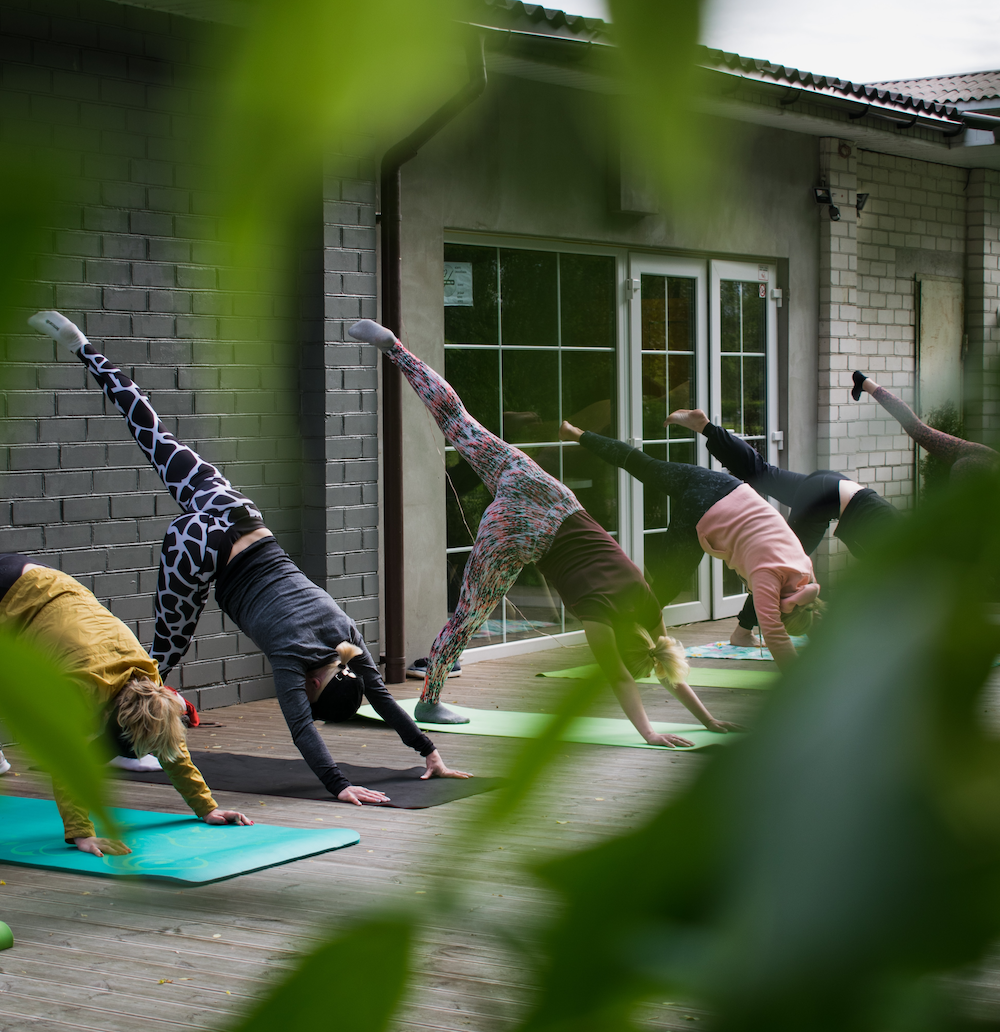
Yoga And Meditation: Complementary Practices For A Healthier Life

Somewhat obscure beginnings of yoga span more than 5 millennia. The East Indian culture is considered as yoga’s cradle, with Patanjali as its founding father (Forfylow, 2011). Yoga was just one part of his philosophical system, which incorporated 6 ways of attaining unity of the body and mind. The word itself, “yoga”, can be roughly translated as “joining the mind and body in harmonious relaxation” (Fortylow, 2011, p.134). This article introduces how yoga and meditation complement your health and well-being.

Pillars of Yoga

Hatha yoga (and its many varieties) is by far the most popular type of yoga in the world. Although there are some differences, all styles of yoga have a set of common characteristics:

  1. Breathwork – this aspect can be regarded as the backbone of all yoga styles. Each yoga exercise or posture starts with steady, concentrated breathing, after which various postures are practiced. The calming effect of breathing exercises has been noticed since yoga’s inception. Breathing exercises can have both energizing and calming effects. The so-called Ujjayi technique is believed to stimulate and energize, while Bhastrika breathing has a calming effect.
  1. Postures are yoga’s “trademark”. Almost all individuals, even the ones who have barely even heard of yoga, know that yoga involves some kind of peculiar postures. The Sanskrit word for postures, asana, also means “flexibility, balance, circulation, and coordination”. There are many asanas in yoga, and each has its purpose- exercising a certain part of the body. Utilization of training tools, such as weights, is fairly uncommon in yoga, especially in its traditional forms.

Mindful Asanas

Postures, while being good for the body, also benefit the mind. The benefits aren’t confined to soothing and calming sensations that are so often associated with Eastern traditions. Just as breathing exercises can be invigorating, many yoga postures stimulate one’s energy. The classification relates specific postures with their respective effects on the mind.

This list shouldn’t be taken for granted, as some individuals might have different experiences with yoga postures:

1. Forwards bends= attaining the state of serenity, and calmness

2. Backbends and inversions= energizing and invigorating

3. Balancing postures= transferring bodily strength and poise into the mind

Yoga and Neurology

It’s easy to say “this breathing exercise is for that”, or “do this posture and you’ll feel this or that”. Scientists with rather diverse backgrounds aren’t satisfied with such statements. So they wanted to empirically test yoga’s effectiveness. They found that yoga has a plethora of health benefits, including “the mitigation of gene expression changes in response to social adversity; reduction in perceived loneliness; decreased inflammation; improved immune regulation; mental flourishing; and decreased all-cause mortality independent of other variables” (Sullivan et al. 2018).

Neuroscientists use a term that encompasses all these health benefits- eudaimonic well-being.

In other words, yoga affects (positively) both the mind and body.

Recently neuroscientists began making various theoretical models, hoping to find out how yoga changes the way we feel (Deshmukh, 2006).

Sullivan and colleagues tried to link yoga with some modern neurological theories, like PVT (Polyvagal theory). These researchers combined a thorough understanding of yoga- of which the concepts of 3 gunas (rajas/tamas/sattva) are the most important ones- and three important neural platforms. But let’s first explain the gunas. Gunas are qualities of Prakriti- material world. Purusha is the spirit that perceives these qualities.

About Gunas

So the the three gunas are:

1.     Sattva is the state of calmness, serenity, and pleasure. Although it may seem that we should focus on this quality, it isn’t necessarily so. Yoga is the balance of all three gunas. You shouldn’t overemphasize one at the expense of the others. If one indulges in joy and pleasure excessively, the balance is lost.

2.     Rajas is a turbulent, invigorating, and energizing state. Activity is rajas’ most important characteristic. Emotions like anger are also linked with rajas. Pain is as well. Just as we mustn’t overemphasize sattva, so we shouldn’t try to completely mitigate the rajas. Balance is the key.

3.     Tamas is situated between sattva and rajas. It is neither positive nor negative. It’s indifferent and linked with inertia. When balanced with other gunas, tamas will bring stability.

As neurology developed, we’ve begun to find special neurological systems with numerous purposes. Of those, three systems are often mentioned as the most important- sympathetic nervous system (SNS), dorsal vagal complex (DVC), and ventral vagal complex (VVC). These systems are crucial for the integration of information received from the body’s periphery. We may even regard them as systems of neurons for the perception of Prakriti- the material world. A balanced integration of information coming from all three systems is crucial for psychological and physiological equilibrium.

Neurologists concluded that gunas are in fact systems of neurons (neural platforms). Sattva (joy, pleasure, etc.) has its basis in the ventral vagal complex (VVC). VVC, in turn, is crucial for interoception and relaxation, allowing the seamless interpretation of facial cues and prosody.

Not surprisingly, rajas is linked with the sympathetic nervous system. This system has a “stimulant” effect on the organism. It is about the so-called “fight or flight” actions. Overactivation of this system results in stress, fear, anxiety, and hostility.

Finally, tamas has its basis in the dorsal vagal complex. It is known to transmit sensations like stability, indifference, and inertia.

Yoga and Meditation: Mindful Integration

Just as all three neural platforms (or gunas) have to work together to attain the equilibrium, so is the combination of yoga postures, breathing exercises, and meditation the best “remedy” for both the body and mind. Sullivan and colleagues don’t think that by saying “yoga postures are for body and meditation is for the mind”, we tend to oversimplify an extremely complex phenomenon.

Meditation is a state of deepest contemplation. Evidently, it comes from the Latin word “meditationem”, which also means “to think, consider, reflect” (Online Etymology Dictionary, n.d). As of recently, it acquired a slightly different meaning that doesn’t incorporate much cognitive work, whereas psychological serenity is emphasized. In the traditional sense, meditation is the highest level of the body/mind integrity. It is the contemplation of the most important principles of life.

You can start your day by a basic concentration meditation (perfect meditation for beginners) or develop your vipassana meditation practice. You can follow it up by a sun salutation yoga sequence and get yourself fully ready for a brilliant day ahead.

If you do a more robust yoga practice like attending a class, it usually finishes with a corpse pose. Surely, it allows you not only to rest well after yoga session but also to meditate a little bit in a very relaxed way.

As you can see, the options are there, not it is your turn – try to establish a meditation routine and follow it up with a simple yet so effective yoga sequence. Your mind and body would thank you for that.

Enjoy!


References cited above:

  • Deshmukh, V.D. (2006). Neuroscience of Meditation. The Scientific World Journal. Vol. 6, pp. 2239-2253. Doi: 10.1100/tsw.2006.353
  • Forfylow, A. L. (2011). Integrating Yoga with Psychotherapy: A Complementary Treatment for Anxiety and Depression. Canadian Journal of Counseling and Psychotherapy. Vol. 45(2), pp. 132-150. Available at: https://files.eric.ed.gov/fulltext/EJ930795.pdf
  • Online Etymology Dictionary (n.d.). Available at: https://www.etymonline.com/word/meditation
  • Sullivan, M.B., Erb, M., Schmalzl, L., Moonaz, S., Taylor, J.N. & Porges, S.W. (2018). Yoga Therapy and Polyvagal Theory: The Convergence of Traditional Wisdom and Contemporary Neuroscience for Self-Regulation and Resilience. Front.Hum.Neurosci. Available at: https://www.frontiersin.org/articles/10.3389/fnhum.2018.00067/full


6 Most Common Meditation Biases | Meditation Is Not What You May Think

Throughout years of meditation practice, you might hear questions and concerns. Most of them are formed because of a lack of knowledge of what meditation is. Some of them are stereotypes that emerged from movies, newspapers and other media. Surely, there is a lot of information on meditation around. It’s easy to get lost and form a meditation bias. Some would call them meditation myths. 

We’ve collected 6 most common pieces of meditation bias around.

1 Meditation is mumbo jumbo crap

This is a summary of plentiful smaller pieces of meditation bias. In an example, it does not work, it’s not possible to just sit without thoughts and so on. All of these comments are caused by ignorance or inability or lack of motivation to try something that cannot be touched. Yoga mat and other props for yoga practice make it quite tangible, specific routines and postures make it so you can follow it by set instructions. Meditation does similar things with your mind – it makes it more agile, something that’s called Neuroplasticity. It means that this method of cultivating your mind is not as visible as stretching your muscles. Yet it does something similar – you come mentally healthier and more flexible to respond to stress factors. 

As for ‘it does not work’ commentary, it is important to bear in mind that meditation requires a disciplined approach and a daily routine, so with time you would be able to feel the results yourself. Make a parallel with gym sessions, you would not expect to achieve your goals after just a few sporadic sessions, would you?

So all people who still think that meditation is a waste of time should probably try to start a regular practice. After all, dedicating just 20-30 minutes a day for yourself and your mental health is not a high price to pay, time-wise!

2 Meditation is for religious people. To meditate is like joining a sect.

Meditation is at the centerpiece of Buddhism and the teachings of Buddha are very simple. He said that you should you own common sense and think every concept through. If you joined a meditation group or center and feel that something ‘smells’ funny, just leave and try another. In fact, if you practice meditation using our simple instructions for concentration meditation on breathing or Vipassana meditation, there is no necessary chanting involved. It is 100% secular and is based on training your attention on your breath or contemplating some questions about yourself or life in general. Vipassana meditation is a precursor to various insights and it may help you with your personal life and relationships, but also with your professional life too. 

3 Meditation is for extremely lazy people. They should just get on with your issues. 

Whilst the second part is something that seasoned meditators approach with skill, namely facing obstacles and issues with increased awareness, it requires training. So it is definitely not laziness that drives meditators. But rather an effective method to stay emotionally composed and ready to respond to problems. As opposed to reacting to stress with even more stress.

4 Meditation is a practice of death. 

This statement has its roots in the fact that Tibetan monks have a piece of works called ‘The Tibetan Book of Living and Dying’. The main idea is to work with your fear of death and accept that it would happen to everyone. One of the authors of a modern edition of this book, Sogyal, said: “Fear of death is fuelling that destruction of our environment that is threatening all our lives”.

This book teaches us to find a happy balance in modern lives in the form of simplicity. Meditation is a practice that cultivates our minds not only to simply accept death. It teaches us to treat all beings at all times with compassion. 

If you want to try our Vipassana meditation, we also offer the following statement to contemplate:

“We may idealize our freedoms, but when it comes to our habits, we are completely enslaved”.

5 Meditation is not for everyone.

It cannot be far from the truth. You do not anything to practice meditation, no props or expensive equipment or clothing. You do not even need a mat or a cushion to sit on. All these things are completely optional. See our basic instructions on how to meditate here.

Moreover, you don’t even need to be in excellent health (though we hope you are!) to meditate. Many clinical practitioners recommend meditation to their patients in order to reduce stress and feel better. Research has shown that meditation speeds up the recovery and lengthens telomeres which slow down the aging of your cells. Kids also benefit from meditation similarly to their parents and the elderly.  

6 Meditation is not good. Meditation is bad for you.

This type of opinion is too negative and generic. We wonder what triggers such an assessment. There is no research that would state that meditation worsens patient’s conditions, physically or mentally. Quite opposite, many studies (please see our extensive collection of scientific research on meditation here) have proven positive and healing effects of meditation practice. Read more on how meditation helps with weight management and weight loss, but also to manage stress and get healthier with whole food plant-based nutrition.    

Wishing you delightful meditation practice, insightful and without any bias!

It Is Too Much | When Enough Is Enough

It is too much…

Let us ask you a quick question.

Have you ever been in a situation when you felt it is just too much of everything?

Surely it can be too much with work, other people, mounting stress, and simply a lot of things going on. You simply cannot go on like this anymore. It is when enough is enough. The awareness of it is the first step. Can you imagine there are millions of people who are subjected to acute stress on a daily basis without actually giving it any thought? They probably think it is simply ok to feel that overwhelmed and have that much on their plate all the time. Sounds crazy, isn’t it?

Yet according to many research studies, our life becomes more and more complex, hectic and full of chores that we need to do. Multitasking is not a skill to learn to be productive, it is a myth. It is actually a very unhealthy one – it really harms our mental health.

What to do and how to cope with this?

It is very important to have a tool at hand because this ‘it is too much’ feeling can arise quickly like a storm and then you are simply smitten.

What does one need to learn to skillfully cope with this?

Let’s get to the very basic semantics here. When we say that ‘it is too much’, we mean that these additional jobs, monies, and tasks are simply way above what we can handle. It is very probable that we do not need to do all that at all. Yes, we might earn less money or have a slightly more frugal lifestyle. Yet we may be a lot happier.

This is where the whole concept of enough comes into play. First, after realizing that it is too much, you simply say that you’ve had enough of this busyness and craziness. Enough is enough.

When is enough enough

Though to actually figure out how to get out of this vicious circle you need to find your own point of enough. It is that point where you are content. Feel that you are enough as an individual (why would you think anything different anyways?) and you have enough (money, place to live, clothes to wear, you name it). You can simply enjoy the present being in a very comfortable sense of enough. You have enough and you are enough. Clearly, you do not lack anything.

To progress further on your journey, you can employ meditation techniques. They will help you to center and feel at peace, they will guide you to the universal truths of impermanence, non-self and unsatisfactory conditions. When you contemplate on these, you cultivate your mind and feel this enormous pressure of constant busyness lifting off your shoulders. That’s when you re-discover your inner values and they start guiding you to your own point of enough. What’s enough for you? It’s very probable that you already have much more than that and you can start serving others instead of engaging in never ending rat race of more and more wealth.

What can you do if you feel that it is enough?

Be kind to yourself. Say that everyone feels like that once in a while. And that’s ok. We live in a very busy world.

Though it is a bit of a lame excuse. We choose how to live our lives. Or at least we should.

So why not you take some time for yourself and start meditating.

First, learn our basic practice of concentration meditation on breathing. Try our loving-kindness meditation (Metta) and see whether you start feeling more at ease with everything and everyone with it. Make progress with your practice with our vipassana meditation instructions. This is where you gain insights and further develop yourself and your mind based on your own intrinsic values.

when is enough enough

That’s how your life becomes a life of enough, a place where you are content, happy and peaceful. You will want others to feel the same. Let us know!

Why It Is Important to Train Attention With Meditation

Let’s talk about attention today, shall we? Our main question is the importance to train attention. We will discuss how to do it by means of mindfulness meditation.

Attention crisis

Have you noticed that many of the job openings advertise the necessity to be good at multitasking? It has been going on for years and many of us think that it is a skill worth developing. It cannot be far from the truth – multitasking is harmful to our brain and it results in attention deficit disorder. 

On top of that, we constantly feel that we lack the time and when we finally get our few hours of ‘me time’, we may fixate on doing things that actually do not matter so much to us. This ‘busyness’ and constant pre-occupation negatively affect our ability to focus and sustain attention.

Something opposite to a development happens afterwards. We are not able to work productively, it becomes more difficult to get things done, and what’s more, we stop taking pleasure from what we are doing. 

Untrained attention becomes a cause of many modern diseases

We stop paying attention to our physical health, what we’re eating and how we are consuming food. As a result, we are getting sicker.

We are not attentive to our mental health and we let stress rule our world. As a result, our anxiety levels are rising.

We do not pay attention to our relationships. As a result, partnerships break up and our world is as single as ever.

We all could be more attentive to our inner values and meaning of our lives. We could live happier simply knowing we are creating a better life for all.

Finally, we could definitely pay attention to wider society and all sentient beings – our world needs better environmental protection and we should care much better for animal welfare. 

The very concept of attention

Attention re-establishes and strengthens the connection. Connection leads to greater regulation, which leads to a state of dynamic order. It is a signature of ease, of well-being, of health (as opposed to disease). For this to take place, attention has to be nourished and maintained by intention. 

Attention Deficit Disorder (ADD) is a serious dis-regulation in the process of attention. We can also see more often people developing attention deficit hyperactivity disorder (ADHD).

Learning how to train and refine our ability to pay attention and to sustain attention may be a lifeline back to what is most meaningful in our lives (taken from Jon Kabat-Zinn “Meditation is not what you think”).

Another great work on attention was carried out by Alan Wallace PhD, who wrote a book called ‘The Attention Revolution’. He said: ‘Investigation into the nature of the mind is meditation and truly effective meditation is impossible without focused attention. The untrained mind oscillates between agitation and dullness, between restlessness and boredom. When we train attention, it has a profound impact on the character and ethical behaviour. Purification of the mind requires training in 3 things: ethics, attention and contemplative insight’. 

Meditation to train attention

We can see that attention and meditation go hand in hand. If you’ve tried our concentration meditation on breathing instructions, it was very difficult to sustain attention whilst counting your breaths. Yet it trains your mind and with time it re-learns how to pay attention. Attention allows us to develop meditation practice too. After we are comfortable with meditation practice for beginners, we can start developing vipassana meditation (insight meditation), which may bring us contemplative insights indeed. You can use elements of insight meditation to help with anxiety, depression and PTSD (you can find our tailored meditation programs on the Courses page).

On a physical level, studies have also confirmed that amygdala shows dampened activity after just 30 hours of Mindfulness-Based Stress Reduction practice. It can be as substantial as 50% down from baseline. It means that lessening of the brain’s stress reactions will eventually result in an improved ability to regulate attention (taken from “The Science of Meditation” by Daniel Goleman and Richard J. Davidson).   

A complex system of attention and our ego

Our health, both physical, mental and emotional, is quite a complex system. 

What happens when we start paying close attention to something or someone is that our own sense of self just vanishes. No fixation on it anymore. This letting go of your ego is very beneficial for your mental health.

This state of awareness, when we are able to pay attention, help us to cultivate curiosity, reflection, honesty and open-mindedness in our life views. 

We at Ahimsa Meditation are convinced that this interconnectedness of mental health and meditation benefits, plant-based nutrition and nonviolence serve us a lot of good when we are attentive to ourselves, but also to our relationships and all sentient beings. This ability to pay attention can energize our ethical action, so we are inclined to act for the benefit of all interconnected lives. 

train attention with mindfulness meditation

Start developing and training your attention with our meditation for beginners

We invite everyone to start your meditation practice and gradually train attention and cultivate your mind. Meditation for kids is another gentle exercise every parent can add to their child routine. Increased attention will make everyone’s life more colourful, full of more harmonious relationships and joy.  

Insight Meditation Practice: Vipassana Meditation

How to Practice Vipassana Meditation 

A big leap in the development of your meditation practice lies with vipassana meditation or, as it is sometimes called, insight meditation practice, which is going a bit further from concentrating on the breath.

The general structure of vipassana meditation practice resembles already familiar meditation practice on concentration on breathing. 

At Ahimsa Meditation we invite to contemplate on nonviolence, its meaning and how it feels inside of the body. With time, this knowledge becomes more comfortable as we invite to approach it with self-acceptance and curiosity. As a result, these contemplations give way to various insights. 

Everyone can deepen their vipassana meditation practice by contemplating such universal truths as impermanence, the importance of letting go of our ego and the existence of never-ending unsatisfactory feelings caused by various desires. These characteristics of our lives are universal because we all experience them. Here at Ahimsa Meditation, we invite everyone to accept them fully.   

Here is our step by step guidance on vipassana meditation:

  • Find a quiet place and set your alarm for an initial 10 minutes (more if you feel comfortable to start with a longer session).
  • Sit cross-legged on a floor (use a mat and a cushion to level your hips with your knees), place your arms on your lap. Only sit on a firm chair if the cross-legged position is very uncomfortable. In general, your posture should be fairly relaxed but not sluggish, so you won’t meditate yourself to sleep. Full lotus is the most stable and firm posture, but you can adopt half-lotus or a simple cross-legged position too. 
  • Take a few really deep breaths as so other people would be likely to hear you breathing. As a result, it should make you feel relaxed fairly quickly.
  • Close your eyes and start paying attention to sounds, smells, your posture, and breathing. Simply make a mental note on what you are observing. No need to judge it or dwell on it.
  • Pay attention to how your body feels. Start doing so by scanning your body from top to bottom and notice how even the smallest parts of your body feel. Don’t try to change anything or judge. It’s all good, you are being attentive, that’s it. 
  • Move the focus of your attention to your breathing. Do not try to change it, just let it be. No judgment, please. Notice where in your body your breathing starts, how it flows and how it ends. To help you settle with this pattern, you can start counting your breaths from 1 to 10 and then revert back to 1. 
  • If your attention shifts to something else, notice the very fact of this happening and then gently get your mind to count the breaths again and again. These ‘jumps’ happen all the time, so be kind to yourself. The more skillful you become, the less monkey-like your mind learns to be. Yet every single time your mind gets back to counting breaths, it also gets stronger. This, in effect, gives your mind a proper training. 
  • When you have established a good concentration on your breathing, ask yourself what nonviolence means to you. Is it the millions of saved lives, is it your own better physical and mental health state or something else? Reflect on your thoughts, do not judge them, just contemplate as it is. Look at these questions with curiosity and acceptance. You can ride the wave of nonviolence when it is a storm in your mind, but equally, you can appreciate when your mind is still. Spend as much time as you feel comfortable contemplating peaceful and nonviolent living for yourself, your family, society and all living beings. As a result, your reflections might trigger some emotions in your body. Can you feel them as physical sensations? Note where you feel them and try to make friends with those feelings, they might be both pleasant or disturbing.
  • Other important themes of contemplation include an understanding of constant impermanence, non-existence of a fixed self and suffering that arises because we cling to things and do not want to let go. Surely, these themes can further enhance our nonviolence values. We understand how interconnected we all are and how harming others we ultimately harm ourselves. This flow of change and the absence of a fixed self is clearly recognized by noticing our fleeting thoughts and emotions. Simply placing a fix note as ‘there is thinking’ or ‘there is feeling’, no need to judge it or to do anything. They will simply pass as you let go. It is all about cultivating an awareness of reality ‘as it is’.
  • Continue for your set amount of time. When finished, allow your mind to rest for 30 seconds with no focus on anything at all. Above all, just observe and let it simply flow. 
  • Finish by making a mental note of how you feel now and open your eyes. You have just completed an insight meditation session.

Vipassana Meditation: Collect Your Insights

Some people find it useful to get a piece of paper and a pen nearby, so they can write down their insights or simply a flow of thoughts after their meditation practice. Yet this is completely optional. Obviously, such a brain ‘dump’ can sometimes help with either letting go or to develop meta-awareness.

Noting technique is very helpful for those who are just developing their vipassana practice. Every time you are being carried away from breathing by your thoughts and feelings, it is beneficial to make a mental note about it and to put a mark whether that was a feeling or thinking and whether it was positive, negative or neutral. In other words, you are not there to evaluate it, but simply be aware of an underlying feeling or thought processes. 

vipassana meditation: insight meditation practice instructions

Why Vipassana Practice by Ahimsa Meditation?

Vipassana meditation enables us to realize a very curious paradox in Buddhist psychology: the more fully we can embrace the unhappiness, the deeper and more abiding our sense of well-being. (from Mindfulness and Psychotherapy” 2nd Edition by C. Germer, R. Siegel, P. Fulton.)                      

In this sense, we are being on the journey for the well-being of ourselves and others through a clearer outlook on reality. Therefore, our meditation practice becomes to look like cleaning the eyes from dust.   

There is no right or wrong in meditation practice and there is no aim either. It is a journey for each one of us to cultivate wholesome seeds in our minds. Quite naturally, these seeds will grow and your life becomes calm, kind, peaceful, full of gratitude and virtue.

Similarly, letting go of our ego, ‘specialness’, realizing how impermanent all things are and that we suffer from time to time, allow us to live in true freedom and at home with ourselves and others. In other words, it is a way to true nonviolence that starts from every one of you. 

Obviously, the beauty of vipassana is in its simplicity. Nonviolence in the world starts with learning how to be more kind to yourself. Be selfish with allocating time for your meditation practice. Use our downloadable vipassana meditation instructions you can get from our Courses page here.

Know that by learning how to practice vipassana meditation you are working towards a bigger goal of self-improvement and self-realization. In conclusion, you can bring kindness and compassion to the world.  

Free Access to Meditation Guide & Courses

You have Successfully Subscribed!