The Practice of Gratitude

This time we are discussing the very important practice of gratitude. We are going to talk about why it is that important, how to practice gratitude, will it work and getting proven results. Stick with us for this short article.

Gratitude

Let’s start with what is expected with gratitude practice:

  • we can re-discover some really good things in life;
  • we recall people who did good to us (so worth it!);
  • we live with increased attention to what is important to us.

We were already discussing how important it is nowadays to re-train our attention. Here is our review on why it is important to train attention with meditation practice.

How to practice gratitude

We have got two options for you, but both of them are equally effective and we recommend you use them both.

Diary: allocate 5 minutes (potentially in the morning whilst you are fresh and not obstructed) for some really freestyle writing. Simply express your thoughts and feelings about who or what are you grateful to. No need to look for grammar mistakes or style, simply offload what you think or how you feel.

Meditation: during your meditation practice simply allocate a few minutes for expressing gratitude to people, events or things. Tibetan Buddhists go an extra mile with their ‘tonglen’ practice as they send warm feeling to the recipients and try to imagine taking their bad feelings or health issues away from them. This is where gratitude is touching our compassion skill and develops it too. You can also re-visit our instructions on loving-kindness practice, as this metta meditation practice also uses a lot of gratitude in its core. During your meditation is essential to spend a bit of time expressing gratitude to people, events and things. Sometimes, if not always, it is also great not to forget ourselves and meditate on being grateful to yourself. Re-visit our materials on meditation for self-love.

Why does gratitude practice work?

If you think about what is going on during gratitude, you shift your focus from ‘you’ to others and express deep feelings of appreciation. Your mind therefore switches from ego, and you can start feeling a deep relief. With time, you might encounter some useful insights as a result of your gratitude practice. It is also a good idea to incorporate gratitude to vipasssana meditation practice. You can learn more about Vipassana here from our article or download our free pdf Vipassana meditation course here.

Proven results with gratitude practice

Gratitude deeply enhances meditation practice, but also your self-discovery and self-development. The main result occurs when you start seeing beyond ‘your self’ and open up to different people, relatives, events and the whole world. It brightens up our life and makes it richer and more colourful.

Not a bad thing to achieve if it only takes 5 minutes a day, isn’t it?

Now the word from Dimitri, our meditation couch: ‘If I write my gratitude journal at this moment of time, I’d add something like that. Personally, I am grateful to my parents for encouraging my love for writing. I am thankful to all my closest friends as they make every day of my life so much better. And I am grateful to my past mistakes and my dog Lucky (who has sadly passed away) for the many lessons learned’.

What or whom are you grateful for/to?

Can you incorporate this question and reflection to your daily meditation?


Meditation: Entrepreneurial Mindset

We have spoken with so many people who are early on their entrepreneurial journey. They are stressed out, report lack of energy and complain about having no time to eat properly.

All these things can negatively affect new businesses and people around small business owners too.

Surely, these symptoms of an overworked person can also describe a modern-day office worker. Pressure for a constant business growth, increased demands from peers and multitude of marketing messages that are stimulating us to consume.

It doesn’t matter whether you are an entrepreneur or an employee, all these triggers lead to feelings of personal deficiency and lowering down our confidence levels.

Tired of your ‘I’m never enough’ feelings?

We’ve teamed up with Peace of Mind School to help entrepreneurs to get enough peace of mind, overcome extreme busyness and stress. They feature a simple but straightforward peace of mind course online and the course book just went live (Kindle format and in print) on Amazon.

Using this course and your free time allocated to some self-discovery, you can learn how to fight excessive business and stress. This course also showcases how to live healthily but without strenuous diets.

It is very useful for business people as when you are stressed out, you can’t focus or pay attention to what matters most. YOu cannot make best possible business decisions. Yet almost all successful people know where exactly to pay attention. As a result, when you are stressed out for a long time, you start hating what you are doing. Prolonged exposure to stress changes your neural pathways. It all ends up with your business or career path to feel like an impossible climb.

Consider enrolling to this course or simply buying this peace of mind coursebook on Amazon (UK version is here) so you can reclaim your feeling of Enough and enjoy your life journey.

Peace of Mind School is on the mission to empower your entrepreneurship, business, body and mind. We love this!

With this course book you can easily create a plan for your peace of mind.


Meditation To Help With Alcohol Dependence 

It has to be emphasized that meditation cannot be the only technique used to treat alcoholics. On the other hand, we may conclude that meditation, especially mindfulness meditation can be a very effective supplementary technique in treating alcohol dependence.

The active ingredient of meditative practices is, most certainly the “be here now” principle. Most addicts tend to crave psychoactive substances in a stressful situation when automatic thoughts overwhelm. In these situations, alcoholics begin to question their own self-worth- we all do this, but people with mental health problems cannot relativize the truthfulness of their thoughts.

People with alcohol dependency take their automatic thoughts and conclusions for granted and then succumb to the detrimental behavioral patterns.

To solve the problem, psychologists have developed various techniques aimed at gaining a patient’s control over their desires and developing motivation for long-term abstinence from alcohol.

Meditation from alcoholism is one of the methods of self-help, which gives positive results, especially when applied simultaneously with other psychological techniques.

What is the essence of meditation to quit drinking alcohol

The task of meditation is to focus on one’s own feelings or thoughts, to enter a state of altered consciousness, which in a sense is related to meditation with hypnosis.

In a state of meditation, a person better understands his feelings and emotions, enters into a dialogue with the subconscious, relieves nervous and muscle tension. Thanks to meditation, it is possible to better understand yourself, your true desires and motives of behavior.

Meditation helps to gain control over alcohol addiction and can significantly reduce the craving for alcohol.

Mindfulness to quit drinking

Guided meditation to stop drinking

The key problem of alcohol dependence is the psychological craving for alcohol, which causes frequent breakdowns and addiction.

For meditation, a person can choose any pose convenient for him: lying, sitting, standing. The most famous is the pose with a straight back and legs crossed in front of you. At the same time, the head is inclined to the chest, the eyes are closed, and the arms are turned with palms up and resting on your knees.

It is important to create an appropriate environment: quiet, comfortable. You can turn on relaxing music or have a session in the lap of nature.

Example of meditation to quit alcohol

Preparation: Assess your drunkenness and the harm it does to your health and life.
Time: If you do not have enough willpower to give up drinking, then do this meditation with the involvement of a higher power that will help stop your addiction.

  1. Sit on a pillow or chair in a meditative space. Light a candle. For five minutes, focus on breathing to calm and clear the mind.
  2. Visualize the warm light of love around your heart region. Feel the heart soften and open.
  3. Visualize the higher power that you believe in. Offer her a prayer. Ask her for help on your difficult journey to get rid of alcohol addiction. Pray that your vision will gain the ability to penetrate beyond the material world into the spiritual and Divine planes of our reality. And finally, ask that you be able to constantly feel sorry for yourself during this difficult journey.
  4. Finish your meditation by imagining that a higher power settles in your heart forever.

During meditation, the task of a person is to free his head from all thoughts, to concentrate on the internal sensations coming from his body. If thoughts arise, it is necessary to concentrate again on the inner sensations. It is permissible to present pleasant pictures during meditation, to “listen” to pleasant music. Gradually, the time of meditation should be increased from 1-2 minutes to 15 or more.

Research On Meditation For Alcohol Addiction

Zgierska and colleagues have conducted a study that sought to test the efficiency of mindfulness meditation in preventing alcohol relapse. Their participants went through an 8-week course revolving around mindfulness meditation.

These are some of the most important aspects of this course:

  1. Craving and automatic pilot: Here, a connection between automatic thoughts and alcohol craving is drawn. Participants learned the basics of what it means to “be, here, now”. For instance, alcohol craving can come as a result of automatic thoughts like “I am not good enough.”, or “People won’t like me if I am not happy and outgoing (drunk).”. Alcoholics are not aware of these automatic thoughts and the first step towards preventing relapse is to become conscious of them. With the help of meditation, participants are anchored in the present moment, which helps them control their craving and automatic thoughts.
  2. Learning to identify barriers: Learning to use meditation when frustration, anxiety, and other negative emotions become overwhelming is the most important part of the second phase. For instance, alcohol addicts learn how to identify the stimuli that trigger them to consume alcohol. When triggers are identified, participants are encouraged to do a short, preventive meditation session.
  3. Learning to employ mindfulness meditation in everyday life: This phase revolves around mini-meditation and walking meditation. Walking meditation is especially interesting because it shows that meditation can be adapted to everyday life and habits.
  4. Acceptance and change: Meditation helps alcohol addicts accept their personal suffering and all the problems they avoided in the past. Alcohol dependence and all substance addictions, in general, are quite often “cover-ups” for other mental health problems like depression, anxiety, personality disorder, PTSD, etc. People often resort to substance abuse as a way to avoid the mental health issues they experienced in the first place. Mindfulness meditation motivates people to accept their innermost vulnerability, and use this acceptance to change their behavior.
  5. The difference between our thoughts and reality: Mindfulness meditation helps people learn to observe their thoughts as they would observe anything else. Instead of acting automatically, participants learn that their thoughts are just a more or less biased representation of reality.

It has been found that adhering to the mindfulness meditation program leads to a reduction of various symptoms linked with alcohol addiction- anxiety, depression, and stress. The intensity of craving also decreased markedly. On the other hand, physiological markers of alcoholism and mental health issues (cortisol levels, and pathophysiological examination of the liver) didn’t show statistically significant improvements. It may be argued that such results are ought to be found, but the study we’re describing here didn’t include that many participants- only 19 alcoholics took part in this research.

Meditation to help stop drinking

Does meditation to stop drinking alcohol work?

A study by the University of Michigan proved that the inclusion of spiritual exercises in the treatment of alcoholism in a shorter time allows you to stop drinking and cure patients of this addiction.

This conclusion was made after studying 154 adult Americans suffering from alcoholism who tried to get rid of their addiction to alcohol. Before starting treatment, drunkards filled out detailed questionnaires in which, in particular, they talked about the degree of their religiosity (for example, they believe or do not believe in God, how often they attend church, how often they read books and spiritual articles, how much they tend to forgive their neighbors And so on). Such questionnaires were periodically filled by alcoholics during and after treatment.

It turned out that for half a year the “religious component” of half of alcoholics has seriously changed – they began to demonstrate views that are more consistent with religious canons. At the same time, the fundamental principles of relations with God did not change (that is, for example, atheists remained atheists, and believers did not disappoint in their religion).

Further analysis showed that those alcoholics who became more religious with each day of treatment more successfully refused an addiction to alcohol than those drunkards whose spiritual life did not undergo any special changes.

Excessive alcohol consumption is among the causes of mortality in the United States in third place – after smoking and malnutrition. Alcohol abuse kills 75,000 Americans every year.

We invite you to have a look at our very simple and straightforward guide on how to meditate, get our Nonviolence Meditation book to support your meditation practice (and also help others), and browse our meditation courses.

Abundance Meditation

Abundance is not only money in a bank account, it is not measured by trophies, it is not the number of people around, an acquaintance or relatives. Abundance is a connection with the soul and the complete accord of the mind and body, in every step of life, in every decision, in its own internal and external space.The feeling of abundance gives you the opportunity to look at life without limits. Feeling the wealth, both internal and external, you begin to see the meaning of things, events, and even the quality of your relationships with others.

What gives meditation for manifesting abundance

Many come into fertility meditation in order to attract money. But in fact, the task of such meditation is to make your life meaningful, to teach you to enjoy your existence and live in harmony. During the practice, your abundance grows and, along with this, you have more peace of mind, confidence not only in yourself but also in the outside world. You lead opportunities where you have not even looked before, you feel a surge of strength and a lack of fear.

Abundance meditation is applicable in various aspects of life:

  • For men and women who are trying to build relationships. Thanks to the abundance meditation, you will feel the flow of love, you can reconsider your relationship from the point of view of a completely satisfied person
  • For those seeking financial growth. Abundance meditation can help you see a new developmental option, exacerbate a sense of affluence and enhance your peace of mind.
  •  For those wishing to overcome internal psychological fears and clamps

For meditation, it is not necessary to attend special groups or go to yoga. Abundance practices are applicable at home. To do this, you just need to familiarize yourself with the general instructions and find a convenient, quiet place for yourself.

Guided meditation for abundance

Find a quiet place where you can absolutely relax and just listen to my voice. Do not take anything except my voice. Let your mind calm down. Let your body relax.

Think of the Abundance that surrounds you. Wherever you look, you will see wealth. For example, trees, leaves, grass, animals, birds – divine Wealth and Abundance are everywhere.

The limitation exists only in our thinking. We set boundaries for ourselves. Stop and look at your life, look at yourself and realize that you are the highest form of God’s creativity.

The biggest mistake of a person is the conviction that for the desired result something else is needed, except for the correct state of Consciousness. Everything that happens to a person, everything that he does, everything that comes from him is the result of the state of his Consciousness.

As you immerse yourself in the abundance meditation, your Subconscious will go on a journey through beautiful places. Realize that you can realize everything that you see on the screen of your Consciousness in the material world.

An Example of guided meditation manifesting abundance

The abundance of Money Meditation

Create a calm cozy atmosphere in the room. You can use a variety of incense for this or include music to help you tune in accordingly.

In most cases, meditation is recommended alone. However, sometimes you can do the Abundance of Money meditation with your family members or business associates. In the second case, you need to meditate where you work, so that the streams of money attracted by you rush there.

When you are comfortable, you need to imagine a rich atmosphere in the room, a table breaking with food, mountains of money, etc. Imagine all this in colors and be filled with a feeling of abundance. Then, while maintaining your emotional state, take a lotus position (padmasana) or a lighter version of this position (sukhasana) and close your eyes.

guided meditation for abundancemeditation for manifesting abundance

Try to relax while doing this. Get rid of extraneous thoughts and imagine that you are very rich. Absorb this image, merge with it together. Feel yourself happy, get the joy of the profits that your money brings to you. Stay in this state for as long as you can receive joy from your imagination. At the end of your meditation, consider the pictures of abundance with which your meditation began.

If you find it difficult to imagine yourself in wealth and abundance, then remember the paintings or movies where famous people are in luxury and put yourself in their place. Feel their energy and absorb it into yourself.

Do meditation daily for 10-15 minutes for 2 weeks. It is especially effective to do this before the full moon.

Following the teachings of Reiki, mantras can be read as a mediation of plenty.

Mantra of Abundance

POSITION: Simple, with legs crossed.

WISE: hands clasped tightly in front of the Heart Center in the Castle of the Bear (left hand pointing palm forward, right hand facing the chest). The forearms are parallel to the ground.

EYES: The eyes are 1/10 open and focus the tip of the nose.

TIME: from 11 to 31 minutes.

Chant the mantra:

Har Har Har Har Gobinda

Har Har Har Har Mukande

Har Har Har Har Udaare

Har Har Har Har Apaare

Har Har Har Har Hariang

Har Har Har Har Kariang

Har Har Har Har Nirnaame

Har Har Har Har Akaame

Make meditation practice your habit. So you will open to the world of Plenty in all its wealth and day after day you will not only see, but also attract all the blessings, from the smallest to the largest, which are already in the Universe.

By meditating regularly, you better learn to see, attract abundance and maintain it throughout your life. In addition, you will have enough time to start practicing all that you have learned at a much deeper level.

The Usefulness of Abundance Meditation

While most of these practices are essentially meditations for financial prosperity, there are also other benefits of abundance meditation. For instance, there are special variants of abundance meditation for sleep. Achieving a lasting peace of mind is a goal for many of us, we also work very closely with Peace of Mind School in order to help everyone on their way to a feeling of more inner peace in their lives.

If you are a fan of mobile apps for training, you’ll most probably like abundance meditation apps. They mostly include various guided exercises, which will especially be helpful for beginners and people who are new to meditation.

How to Breathe Correctly: in Meditation and Beyond

What does correct breathing mean?

Do you think it is a bit of a joke that breathing needs a separate how-to? Our automatic actions, like walking or breathing, by definition, don’t get much attention from our part. But automaticity does not guarantee that an action is carried out in an appropriate (and healthy) way. When something is unconscious, we are unable to assess its appropriateness, and, subsequently, we cannot change the way we act.

How to breathe correctly while meditating

Meditation takes an unconscious act (breathing) and takes it to the surface of consciousness. By focusing on our breath, we also gain control over our thoughts and feelings. Correct breathing exercises are “active ingredients” of meditation. This is why it’s extremely important to learn the difference between unhealthy and healthy ways of breathing. Not only will you be able to meditate properly, but you’ll also learn how to recognize when your “breathing technique” is bad. By regaining control over your breath, you’ll be able to attain the state of peace and tranquility even in the most stressful situations
But let’s first see what are the “trademarks” of bad breathing.

Examples of improper breathing

First of all, bad breathing is almost always shallow. Shallow breathing has numerous detrimental consequences. For instance, when your breath is shallow, chances are that your brain doesn’t get enough oxygen (and, inversely, your body gets too much CO2). Your body recognizes these changes as stress-related signals and initiates numerous compensatory activities that are meant to make up for these detrimental changes. Needless to say, if your body is forced to cope with shallow breathing for too long, at one point the stress will become overwhelming, and compensatory activities (increased activity of the thyroid and adrenal glands) will no longer help. Quite the contrary. Increased activity of adrenal glands is a typical somatic response in almost all stressful situations, and this kind of response usually helps you to overcome the challenge. However, when the stressful situation lasts for too long (or when we are unable to deal with it), the increased activity of adrenal glands puts too much strain on your body. This type of maladaptive reaction is observed in some stress-related psychopathological syndromes like Post-Traumatic Stress Disorder (PTSD). Just so you know, you can check our targeted meditation practice to help with PTSD here.

How improper breathing affects health

Shallow breath is linked with negative emotions like fear, feeling threatened, nervousness, and anxiety. The list goes on and on, but these are the most dangerous (and negative) emotions linked with shallow breathing.

Bad breathing correlates with bad posture, which is, of course, another topic. However, your breathing method is most surely unhealthy if you, for example, have the so-called “forward head”, which is essentially the way you hold your head while you’re using your mobile phone. You can try this for yourself, as a little experiment: Just bend your head forward as much as you can, and you’ll see that it’s extremely hard to breathe in this position.

What is it proper breathing technique

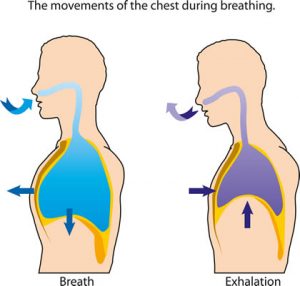
Deep diaphragmatic breathing isn’t only beneficial for the mind. Some studies have shown numerous physiological changes that can be ascribed to diaphragmatic breathing therapy. For instance, diaphragmatic causes a significant increase in O2, while decreasing the amounts of CO2 in the body. In other words, the psychological effect of proper diaphragmatic breathing cannot be analyzed separately from its physiological reactions.

how to breathe correctly while meditating

There are numerous ways to practice diaphragmatic breathing. First of all, you’d want to perform breathing exercises in several positions. The efficiency of supine, lateral decubitus, sitting, and standing positions has been empirically proven (Wellington et al. 2012). After you make yourself comfortable (in one of these positions) take, a slow, deep breath, while paying attention to the movement of your belly.

correct deep breathing techniques


Diaphragmatic breathing is characterized by slow, constant ascendance and descent of your abdomen, so make sure to pay attention to this important aspect. After inhaling deeply through your nose, slowly exhale, by pushing out all the air from your lungs. Don’t force anything. Diaphragmatic breathing is steady, slow, and relaxed. You can also put a hand on your belly so that you get tactile feedback.


Guide how to breathe correctly

It is now believed that various yogic breathing exercises achieve their effect thanks to diaphragmatic breathing. One such yogic technique is called pranayama, which is, essentially, a term that designates our ability to control the breath. Prana, life’s vital force, is increased thanks to pranayama exercises. However, these yogic breathing exercises have some special characteristics, like yogic poses.

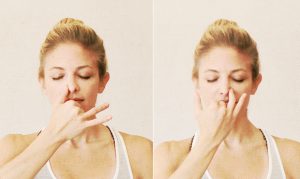
One of the alternate correct way to breathe is nostril breathing, another yogic technique that has so many psychological and physiological benefits that we won’t even try to mention them all.

We will only give you a guide on proper inhale and exhale techniques through the nose:

1. First, you should place one of your hands on your knee (if you are left-handed, put your right hand on your right knee. The opposite goes for right-handed individuals)


2. Lift one of your hands (left for left-handed, right for right-handed), towards your nose.

close one of your nostrils

3. After exhaling (make sure to empty your lungs) close one of your nostrils with your thumb (right nostril if you use your right hand… you get the idea).

4. Inhale deeply through the open nostril.

correct breathing

5. Then close this nostril and inhale deeply through the other nostril.

6. Repeat this circle for about 5 minutes (i. e. inhaling through one, then the other nostril).

In conclusion, the proper way to breathe diaphragmic will do wonders for your mental and physical health. Developing it is not rocket science, but a gradual process to move away from shallow patterns to deeper ones. With time, your meditation practice but also everyday life would benefit from better breathing.

Have a very good practice, everyone!

Yoga And Meditation: Complementary Practices For A Healthier Life

Somewhat obscure beginnings of yoga span more than 5 millennia. The East Indian culture is considered as yoga’s cradle, with Patanjali as its founding father (Forfylow, 2011). Yoga was just one part of his philosophical system, which incorporated 6 ways of attaining unity of the body and mind. The word itself, “yoga”, can be roughly translated as “joining the mind and body in harmonious relaxation” (Fortylow, 2011, p.134). This article introduces how yoga and meditation complement your health and well-being.

Pillars of Yoga

Hatha yoga (and its many varieties) is by far the most popular type of yoga in the world. Although there are some differences, all styles of yoga have a set of common characteristics:

  1. Breathwork – this aspect can be regarded as the backbone of all yoga styles. Each yoga exercise or posture starts with steady, concentrated breathing, after which various postures are practiced. The calming effect of breathing exercises has been noticed since yoga’s inception. Breathing exercises can have both energizing and calming effects. The so-called Ujjayi technique is believed to stimulate and energize, while Bhastrika breathing has a calming effect.
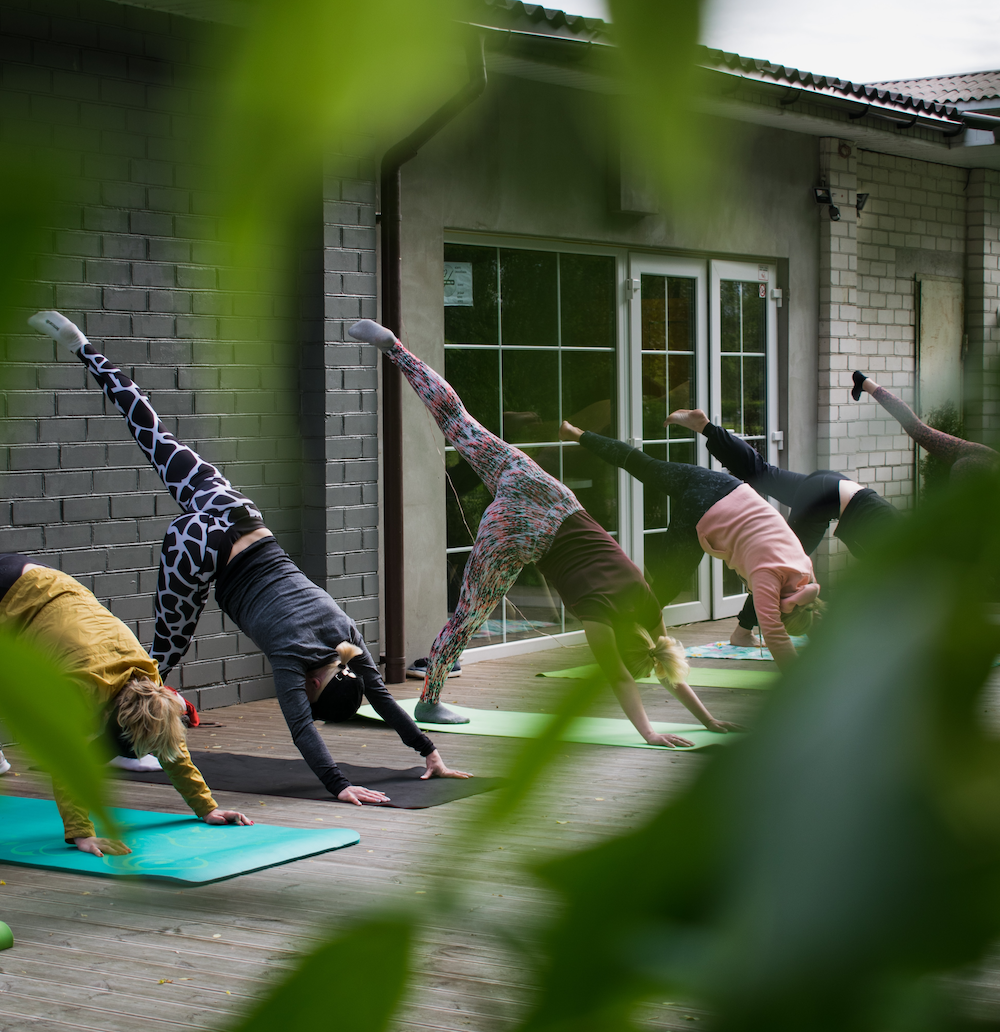
  1. Postures are yoga’s “trademark”. Almost all individuals, even the ones who have barely even heard of yoga, know that yoga involves some kind of peculiar postures. The Sanskrit word for postures, asana, also means “flexibility, balance, circulation, and coordination”. There are many asanas in yoga, and each has its purpose- exercising a certain part of the body. Utilization of training tools, such as weights, is fairly uncommon in yoga, especially in its traditional forms.

Mindful Asanas

Postures, while being good for the body, also benefit the mind. The benefits aren’t confined to soothing and calming sensations that are so often associated with Eastern traditions. Just as breathing exercises can be invigorating, many yoga postures stimulate one’s energy. The classification relates specific postures with their respective effects on the mind.

This list shouldn’t be taken for granted, as some individuals might have different experiences with yoga postures:

1. Forwards bends= attaining the state of serenity, and calmness

2. Backbends and inversions= energizing and invigorating

3. Balancing postures= transferring bodily strength and poise into the mind

Yoga and Neurology

It’s easy to say “this breathing exercise is for that”, or “do this posture and you’ll feel this or that”. Scientists with rather diverse backgrounds aren’t satisfied with such statements. So they wanted to empirically test yoga’s effectiveness. They found that yoga has a plethora of health benefits, including “the mitigation of gene expression changes in response to social adversity; reduction in perceived loneliness; decreased inflammation; improved immune regulation; mental flourishing; and decreased all-cause mortality independent of other variables” (Sullivan et al. 2018).

Neuroscientists use a term that encompasses all these health benefits- eudaimonic well-being.

In other words, yoga affects (positively) both the mind and body.

Recently neuroscientists began making various theoretical models, hoping to find out how yoga changes the way we feel (Deshmukh, 2006).

Sullivan and colleagues tried to link yoga with some modern neurological theories, like PVT (Polyvagal theory). These researchers combined a thorough understanding of yoga- of which the concepts of 3 gunas (rajas/tamas/sattva) are the most important ones- and three important neural platforms. But let’s first explain the gunas. Gunas are qualities of Prakriti- material world. Purusha is the spirit that perceives these qualities.

About Gunas

So the the three gunas are:

1.     Sattva is the state of calmness, serenity, and pleasure. Although it may seem that we should focus on this quality, it isn’t necessarily so. Yoga is the balance of all three gunas. You shouldn’t overemphasize one at the expense of the others. If one indulges in joy and pleasure excessively, the balance is lost.

2.     Rajas is a turbulent, invigorating, and energizing state. Activity is rajas’ most important characteristic. Emotions like anger are also linked with rajas. Pain is as well. Just as we mustn’t overemphasize sattva, so we shouldn’t try to completely mitigate the rajas. Balance is the key.

3.     Tamas is situated between sattva and rajas. It is neither positive nor negative. It’s indifferent and linked with inertia. When balanced with other gunas, tamas will bring stability.

As neurology developed, we’ve begun to find special neurological systems with numerous purposes. Of those, three systems are often mentioned as the most important- sympathetic nervous system (SNS), dorsal vagal complex (DVC), and ventral vagal complex (VVC). These systems are crucial for the integration of information received from the body’s periphery. We may even regard them as systems of neurons for the perception of Prakriti- the material world. A balanced integration of information coming from all three systems is crucial for psychological and physiological equilibrium.

Neurologists concluded that gunas are in fact systems of neurons (neural platforms). Sattva (joy, pleasure, etc.) has its basis in the ventral vagal complex (VVC). VVC, in turn, is crucial for interoception and relaxation, allowing the seamless interpretation of facial cues and prosody.

Not surprisingly, rajas is linked with the sympathetic nervous system. This system has a “stimulant” effect on the organism. It is about the so-called “fight or flight” actions. Overactivation of this system results in stress, fear, anxiety, and hostility.

Finally, tamas has its basis in the dorsal vagal complex. It is known to transmit sensations like stability, indifference, and inertia.

Yoga and Meditation: Mindful Integration

Just as all three neural platforms (or gunas) have to work together to attain the equilibrium, so is the combination of yoga postures, breathing exercises, and meditation the best “remedy” for both the body and mind. Sullivan and colleagues don’t think that by saying “yoga postures are for body and meditation is for the mind”, we tend to oversimplify an extremely complex phenomenon.

Meditation is a state of deepest contemplation. Evidently, it comes from the Latin word “meditationem”, which also means “to think, consider, reflect” (Online Etymology Dictionary, n.d). As of recently, it acquired a slightly different meaning that doesn’t incorporate much cognitive work, whereas psychological serenity is emphasized. In the traditional sense, meditation is the highest level of the body/mind integrity. It is the contemplation of the most important principles of life.

You can start your day by a basic concentration meditation (perfect meditation for beginners) or develop your vipassana meditation practice. You can follow it up by a sun salutation yoga sequence and get yourself fully ready for a brilliant day ahead.

If you do a more robust yoga practice like attending a class, it usually finishes with a corpse pose. Surely, it allows you not only to rest well after yoga session but also to meditate a little bit in a very relaxed way.

As you can see, the options are there, not it is your turn – try to establish a meditation routine and follow it up with a simple yet so effective yoga sequence. Your mind and body would thank you for that.

Enjoy!


References cited above:

  • Deshmukh, V.D. (2006). Neuroscience of Meditation. The Scientific World Journal. Vol. 6, pp. 2239-2253. Doi: 10.1100/tsw.2006.353
  • Forfylow, A. L. (2011). Integrating Yoga with Psychotherapy: A Complementary Treatment for Anxiety and Depression. Canadian Journal of Counseling and Psychotherapy. Vol. 45(2), pp. 132-150. Available at: https://files.eric.ed.gov/fulltext/EJ930795.pdf
  • Online Etymology Dictionary (n.d.). Available at: https://www.etymonline.com/word/meditation
  • Sullivan, M.B., Erb, M., Schmalzl, L., Moonaz, S., Taylor, J.N. & Porges, S.W. (2018). Yoga Therapy and Polyvagal Theory: The Convergence of Traditional Wisdom and Contemporary Neuroscience for Self-Regulation and Resilience. Front.Hum.Neurosci. Available at: https://www.frontiersin.org/articles/10.3389/fnhum.2018.00067/full

The Importance of Nonviolent Communication

What is Nonviolent Communication

Basic principles of healthy relationships rely on nonviolent communication. Being non-violent doesn’t only mean that you don’t want to strangle the person you’re talking with. Nonviolent communication also has to be nonviolent in the verbal sense, meaning that there are no insults, threats, etc. According to some authors, verbal violence can sometimes be equally as bad as physical violence. Bullying is the best example of this possibility- children oftentimes aren’t physically but verbally abused, and this can leave a deep mark in their character.

According to Dr. Marshall B. Rosenberg, who is the founder of the Center for Nonviolent Communication, nonviolent communication (NVC) isn’t only characterized by the lack of violence (The Center for NVC, n.d.). Compassion is the chief ingredient of NVC.

Moreover, Rosenberg believes that values and role-models of a society influence the prominence of violent behaviors. Therefore, we can minimize violent communication by changing the situational factors individuals are exposed to. Later, we will talk about specific interventions that sought to ameliorate communication skills in prison inmates, which is essentially an attempt to violent communication (and violence altogether) by changing situational variables (prison treatment). Most programs seeking to improve people’s communication skills rely on the concepts of empathy and compassion.

Furthermore, Rosenberg believes that we are all inherently compassionate and nonviolent beings. This is true, for most people. But psychologists agree that some forms of psychopathy are caused by a pure lack of anything that could even resemble empathy.

We will talk about this at the end of the text when we’ll give you a quick psychopathy checklist.

Nonviolent Communication In Everyday Life

Communication is a two-way process. A good way to make a neutral dialogue potentially violent is to not listen properly.

Experts who organized programs for the improvement of social skills in inmates and parolees noticed that one of the first things that people learn is the so-called empathic listening (Marlow et al. 2011). By listening empathically, you lay the ground for good, compassionate communication. Moreover, by doing this first, you show that you are ready to “make the first move” in terms of empathy, that you are ready to give (empathy) before others give anything to you.

It is not hard to listen empathically. You simply have to stay silent and listen while the other person is talking. To show that you’re listening, you can sometimes paraphrase what others say to you.

For instance, let’s take an everyday example: your friend comes to you with a mix of sadness and hostility over his recent breakup. Instead of saying to him “oh, just forget about it, you’ll find another girl”, or “come on man, buck up”, you should first stay silent and listen what he has to say. Then you’ll seek the right opportunity to show an emphatic reaction- paraphrasing. For instance, if your friend says “in the past I sometimes felt so indifferent to her”, you can paraphrase it as “So, after all, you know how it is not to care about someone. How does that make you feel?”.

Note that paraphrasing is in itself an act of interpretation. You can never (nor would this be useful) “completely” paraphrase someone’s statements, you can only give your subjective interpretation. By interpreting, you help the other person understand their emotions and thoughts.

A good tool to develop empathy for oneself and others is vipassana meditation (insight meditation) that incorporates principles of loving-kindness.

Principles of Nonviolent Communication

There is one very useful nonviolent communication guide (Lee et al. 2003), which was first used by healthcare providers. According to these authors, there are three basic principles of nonviolent communication:

1. Observing others’ emotions without evaluating them

2. Expressing oneself without judging others

3. Making clear requests, the presenting of which is respectful 

Analogous to these principles, there are three basic principles of emphatic reception of information:

1.     Paying attention to what the other person is observing

2.     Knowing what others feel and need

3.     Knowing others’ requests

We can see the utility of these last three points in a typical situation that is so frustrating to everybody. Imagine that you are trying to find a parking spot in the middle of a big city. As we all know, this is sometimes all but impossible. After a 15-minutes search, you finally find an empty spot and rush to take it. However, just as you prepare to park it, another car rushes in and takes the spot. Needless to say, you are completely furious. Most people would perhaps start an argument over the parking spot, but these kinds of arguments lead nowhere.

How To Apply These Principles

What you can do is analyze the behavior of the person who took your spot, through the prism of the three aforementioned principles- knowing what the other person is observing; knowing others’ feelings and needs; knowing others’ requests. First of all, you might conclude that the other person simply didn’t see you (here, you’re using the first principle). Even if the other individual saw you, it is possible that he is anxious and upset about something, and that he did this automatically, without wanting to do this on purpose (principle 2). And finally, you can suppose that he needed this spot very badly, for some reason (principle 3). Only once you do this analysis can you engage in good, healthy communication. In these situations, even if the other person is nervous and hostile, he or she will most probably see that you are just seeking to have a normal conversation.

Nonviolent Communication At Work

There is one important thing when it comes to communication at the workplace- criticism. Regarding this topic, it should be noted that evaluating other’s performance, and other’s personality traits are two completely different things. We tend to generalize our conclusions far too much, and these generalizations are often linked with the so-called inner attribution– we think that the cause of someone’s behavior lies chiefly in personality traits. For instance, when someone makes a mistake, we might say “oh, he’s stupid”. Needless to say, this is blatant, and most possibly wrong, overgeneralization.

Nonviolent communication refrains from these kinds of generalizations, and only evaluates performance. Instead of saying “he’s stupid”, we can say “sure, he did a stupid thing, but that doesn’t necessarily mean he’s stupid altogether”. In a way, this is the most important thing regarding constructive criticism.

Criticism must not be avoided. Just like empathy, it is an essential part of communication.

Simply do it skillfully by means of nonviolent communication.


A few references cited in this article:

Lee, A.C, Kessler, M.C., Varon, D., Martinowitz, U., Heim, M., Rosenberg, M. & Molho, P. (2003). Nonviolent (emphatic) communication for health care providers. Wiley Online Library. DOI: 10.1046/j.1365-2516.1998.440335.x

Marlow, E., Nyamathi, A., Grajeda, W.T. (2011). Nonviolent Communication Training and Empathy in Male Parolees. Journal of Correctional Health Care. DOI: https://doi.org/10.1177/1078345811420979

The Center For Nonviolent Communication (n.d.). What is NVC? Available at: https://www.cnvc.org/node/6856

6 Most Common Meditation Biases | Meditation Is Not What You May Think

Throughout years of meditation practice, you might hear questions and concerns. Most of them are formed because of a lack of knowledge of what meditation is. Some of them are stereotypes that emerged from movies, newspapers and other media. Surely, there is a lot of information on meditation around. It’s easy to get lost and form a meditation bias. Some would call them meditation myths. 

We’ve collected 6 most common pieces of meditation bias around.

1 Meditation is mumbo jumbo crap

This is a summary of plentiful smaller pieces of meditation bias. In an example, it does not work, it’s not possible to just sit without thoughts and so on. All of these comments are caused by ignorance or inability or lack of motivation to try something that cannot be touched. Yoga mat and other props for yoga practice make it quite tangible, specific routines and postures make it so you can follow it by set instructions. Meditation does similar things with your mind – it makes it more agile, something that’s called Neuroplasticity. It means that this method of cultivating your mind is not as visible as stretching your muscles. Yet it does something similar – you come mentally healthier and more flexible to respond to stress factors. 

As for ‘it does not work’ commentary, it is important to bear in mind that meditation requires a disciplined approach and a daily routine, so with time you would be able to feel the results yourself. Make a parallel with gym sessions, you would not expect to achieve your goals after just a few sporadic sessions, would you?

So all people who still think that meditation is a waste of time should probably try to start a regular practice. After all, dedicating just 20-30 minutes a day for yourself and your mental health is not a high price to pay, time-wise!

2 Meditation is for religious people. To meditate is like joining a sect.

Meditation is at the centerpiece of Buddhism and the teachings of Buddha are very simple. He said that you should you own common sense and think every concept through. If you joined a meditation group or center and feel that something ‘smells’ funny, just leave and try another. In fact, if you practice meditation using our simple instructions for concentration meditation on breathing or Vipassana meditation, there is no necessary chanting involved. It is 100% secular and is based on training your attention on your breath or contemplating some questions about yourself or life in general. Vipassana meditation is a precursor to various insights and it may help you with your personal life and relationships, but also with your professional life too. 

3 Meditation is for extremely lazy people. They should just get on with your issues. 

Whilst the second part is something that seasoned meditators approach with skill, namely facing obstacles and issues with increased awareness, it requires training. So it is definitely not laziness that drives meditators. But rather an effective method to stay emotionally composed and ready to respond to problems. As opposed to reacting to stress with even more stress.

4 Meditation is a practice of death. 

This statement has its roots in the fact that Tibetan monks have a piece of works called ‘The Tibetan Book of Living and Dying’. The main idea is to work with your fear of death and accept that it would happen to everyone. One of the authors of a modern edition of this book, Sogyal, said: “Fear of death is fuelling that destruction of our environment that is threatening all our lives”.

This book teaches us to find a happy balance in modern lives in the form of simplicity. Meditation is a practice that cultivates our minds not only to simply accept death. It teaches us to treat all beings at all times with compassion. 

If you want to try our Vipassana meditation, we also offer the following statement to contemplate:

“We may idealize our freedoms, but when it comes to our habits, we are completely enslaved”.

5 Meditation is not for everyone.

It cannot be far from the truth. You do not anything to practice meditation, no props or expensive equipment or clothing. You do not even need a mat or a cushion to sit on. All these things are completely optional. See our basic instructions on how to meditate here.

Moreover, you don’t even need to be in excellent health (though we hope you are!) to meditate. Many clinical practitioners recommend meditation to their patients in order to reduce stress and feel better. Research has shown that meditation speeds up the recovery and lengthens telomeres which slow down the aging of your cells. Kids also benefit from meditation similarly to their parents and the elderly.  

6 Meditation is not good. Meditation is bad for you.

This type of opinion is too negative and generic. We wonder what triggers such an assessment. There is no research that would state that meditation worsens patient’s conditions, physically or mentally. Quite opposite, many studies (please see our extensive collection of scientific research on meditation here) have proven positive and healing effects of meditation practice. Read more on how meditation helps with weight management and weight loss, but also to manage stress and get healthier with whole food plant-based nutrition.    

Wishing you delightful meditation practice, insightful and without any bias!

5 Easy Steps to Make a Buddha Bowl | Mindful Eating | Ahimsa Nutrition

We are delighted that many of our visitors are trying our Nutrition of Nonviolence, a nutritional regimen that finally makes sense from an ethical perspective, health and mindful living. Though we receive a lot of questions about how to start. Many of you want to sustain and enjoy plant-based eating on a daily basis. Surely, we are all pressed with time, ability to source good ingredients and make the meals exciting and somewhat new. 

There is a very healthy, easy and nutritious way how every person and family can go all-in plant-based and strive on it. 

Imagine you have a bowl and then you can easily personalize it by weight, protein needs, fats, and calories. So depending on whether you are prepping it for your kid or yourself, you can always make it just right. 

There is a fail-safe formula you can use to make mouthwatering Buddha Bowls, full with delicious veggie and whole food products each time. And you can make it on a very strict budget or spend a bit more on something exotic to add to your bowl. 

5 Steps to a Perfect Buddha Bowl

Let’s outline this easy vegan Buddha Bowl formula in 5 easy steps:

  1. Cook grains, so you have 1/4 of your bowl made of either quinoa, faro, brown rice, lentils or freekeh. If desired, you can substitute grans for whole grain noodles too. 
  2. Another 1/4 of your bowl is your favorite protein – think of beans, chickpeas, seitan, tofu, peas and so on. Go back to our recommendations for Nutrition of Nonviolence to reassure anyone – we do not need more protein than 0.8 grams of it per kilogram of your body. Do not overdo on your protein, you may be harming yourself instead. 
  3. There is a very important 1/4 part of any healthy Buddha Bowl – leafy dark greens. Have a go at spinach, kale, collard greens and so on. Remember that they weigh little, so you need to add quite a volume for your 1/4 bowl. 
  4. Finish your bowl essentials with 1/4 amount of starchy vegetables like squash or sweet potatoes. If you want a lighter and healthier option, choose cruciferous vegetables like cauliflower or broccoli. Also, you can add some carrots, mushrooms or leeks. 
  5. Make your Buddha Bowl sing by dressing it with healthy fats – sprinkle with nuts and pour a delicious dressing on top. Asian-inspired bowls are great with coriander (cilantro), soy sauce, olive oil, lemon/lime juice, maybe some hummus and toasted garlic.  

Obviously, it is very simple and what’s more, you do not need to stick to anything in particular. You just mix and match different ingredients or simply decide to make a bowl a day with totally different dressings. Shopping becomes easy too. Simply go for your best local, organic and seasonal produce. You are not just choosing the best options with regards to nutritional contents. You are supporting your local businesses and minimizing carbon footprint. Choose fresh produce that will nourish your body.

Enjoy This Easy Vegan Meal Often

This no-fuss vegan meal is so easy to make. And it can be also fun to make by a whole family – consider a cook-off!

Every time you have come back home and just too tired to cook, do not call your local pizza place. Simply assemble a Buddha Bowl. 

Every time your kid is a bit naughty with their food choices, simply sneak a few of their favorite ingredients, say peanut butter, into a dressing, and they will love this dish as well. 

Experiment with dressings. Try hummus (simply add some extra oil to it), cashew dip or classic pesto. Soy sauce, peanut sauce, and chili sauce are all fantastic options too. Do use fresh herbs or spice it up with homemade guacamole. 

delicious buddha bowl for easy vegan meal

Try one of our favorite Buddha Bowls

Green kitchari: a bowl full of lentils, rice, spices, courgettes, broccoli, kale.

Green quinoa: use 250 g kale, 200 g quinoa, 150 g peas, 2 avocados, tarragon or parsley.

Peanut dressing that all kids crave (and it is healthy too!): mix 150 g peanut butter, 1 garlic clove, 1 ginger, juice of 1 lime, 1 tbsp rice vinegar, 1 tbsp soy sauce, 1 tbsp maple syrup, 1 tbsp sesame oil, 50 ml cold water.

You can now find a lot of inspiration for your bowls and they will make your grocery shopping fun!

Cruelty and the Nature of Violence

The Nature of Cruelty

Sometimes it’s almost inconceivable that so many people are capable of unspeakable acts of cruelty. Some of them are very visible – abandoned pets, beaten up kids and domestic abuse. Yet some are inflicted on us by our own selves: constant negative rumination and beliefs that we are ‘not enough’. This is cruelty. 

Cruelty means showing indifference to suffering. It can also mean actually inflicting it, or in some very clinical cases, taking pleasure in inflicting it.

There are forces that drive this cruelty – unconscious dislikes or just a feeling of being uncomfortable with something. This all inflicts suffering.

We can be all ‘nice people’, but still inflict suffering to ourselves and/or others. 

We need to make conscious efforts to acknowledge our dislikes and see that another person does actually suffer. This awareness or mindfulness of suffering brings understanding and kindness to our own selves and others. You simply cannot move to eliminate cruelty without a better understanding of yourself and others. When you do understand and accept, the unconscious feelings lose the grip over you and do not trigger cruel intentions or actions.

Therefore, cruelty is the enemy of compassion. Any unkind responses are to be avoided. Yet it is very challenging because of the internal and external pressures that actually trigger such responses. 

Why is it important to recognize cruelty!

When are aware of those causes and can look deeper into them, we can befriend them and move on. This brings a lot of generosity to ourselves and others, feelings of compassion and kindness. 

Without a recognition that it is our own discomfort that causes the suffering of others, we cannot escape and eliminate cruelty.
Let’s hear from Ajahn Sumedho, a Buddhist monk, who said the following in his book “Peace is a simple step”.

‘We kill because of basic ignorance, this unreflecting human mind that tells us to annihilate what is in our way. However, with reflection we are changing that; we are transcending that basic instinctual, animal pattern. We are not just being law-abiding puppets of society, afraid to kill because we are afraid of being punished. Now we are really taking on responsibility. We respect the lives of other creatures, even the ones we don’t like’.

Meditation cultivates awareness

Meditation is a tool that helps us to condition our own minds, so we can let go of the ingrained hard-line views and many fixed ideas, but instead, open up to our own selves and the world around us. 

Mindfulness meditation, when practiced in a disciplined fashion, trains our self-control. The latter, on the other hand, helps to deal with short attention span and hatred.

Mindfulness exercise

One great mindfulness exercise that you can employ during your meditation or simply during your day is to feel your emotions in your body. 

What it means, when you feel hate or an intent to be cruel, simply pause and visualize your emotion. Breathe and feel where in your body this emotion ‘lives’. In example, you can maybe feel it in your throat or near the belly button. Turn your attention to it, observe and accept it as it is. This will make it subside and you can exercise your self-control over it. This is how awarenesses and attention to your own self help you to live without cruelty and hatred. 

Violence vs Calmness

Psychologist David Hume long ago tried distinguishing ‘violent’ passions and ‘calm’ passions. When you practice meditation and employ this mindfulness exercise described above, you cultivate calmness and emotional stability. You do not change who you are, you are just living as a better you.

There are countless implications to living with a lot of hatred and cruel intentions. Jon Kabat-Zinn in his ‘Full Catastrophe Living’ writes:

‘high hostility scores predicted not just myocardial infarction and death from high disease but also increased risk of death from cancer and other causes as well’

We at Ahimsa Meditation have also been reporting on multiple studies that link poor nutrition to violent behaviors (Nutrition of Nonviolence), so you can see that it is all interconnected and you need to employ a holistic approach to better your life. 

Paying attention to your nutrition, being mindful about your feelings in your body and living a calmer and kinder life, all this contributes to health and happiness. 

Free Access to Meditation Guide & Courses

You have Successfully Subscribed!