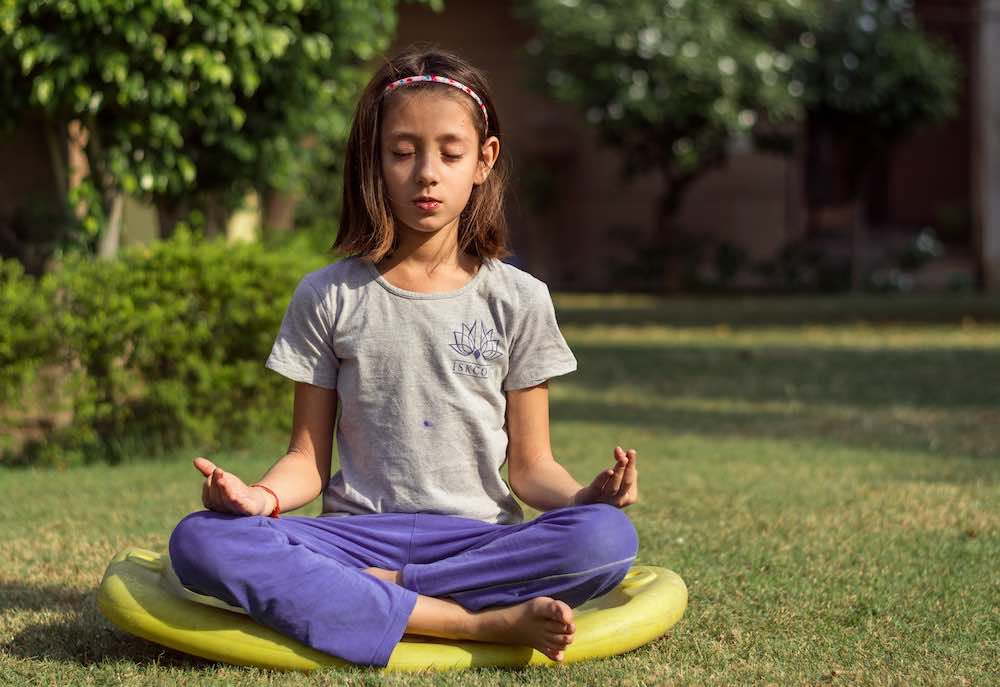
Meditation, Love and Self-Compassion

Many people start on their journeys to meditate and cultivate their minds. It’s awesome!

Yet for a majority of them, their practice of meditation is a sporadic tool or an activity that they need to find time for. 

Surely, in our hectic and always changing world finding time is quite difficult. It is possible though if we get our priorities right.

Do you have 20-30 minutes for yourself a day? Start worrying if the answer is ‘No’

Meditation is in a way an expression of love to your own self. Do you love yourself enough to dedicate 20-30 minutes of your daily time to meditation?

Ones that tend to say that it is difficult to find time simply do not care about themselves enough. Because their routine, that eats all their free time, can be adjusted.  

When you start practicing meditation, it starts to teach you to return to a self-compassionate mode and simply be. When you show some discipline in the beginning and form a habit of daily meditation, you will see that it is not even about loving yourself. But it is about being open and kind to everything and everyone. 

What happens next is truly wonderful – you start bringing the benefits of meditation to your everyday life. Your attentiveness and love for your body will ensure that you eat well. Awareness of your eating patterns will quickly help you to eliminate usual nasties – refined sugars, processed foods, and white flour just to name a few. Kindness to others would help you to realize how awful it is to kill someone for your own food. And you will probably become vegetarian or even vegan.

When it comes to your mind, self-compassion allows you to observe your thoughts and not to cling to the disturbing ones. Remember, you are not your thoughts. 

Similarly, your inner peace will allow you to be compassionate to others. But it is very difficult to be genuinely kind and warm-hearted to others if you nurture hate inside yourself. Loving-kindness then simply spreads to others in your life. 

Meditation. Love. Ego. Compassion.

People think that meditation is being egoistic and spending time frivolously. And it cannot be further from the truth. You indeed develop yourself, listen to yourself clearly and view things from a calm and peaceful perspective. Yet it spreads! You actually let go of your ego’s strong grip and think about others. You wish others to be healthy, happy, safe, free from harm and peaceful. And then it spreads once again. Your own meditation, ability to feel self-compassion and love to yourself is actually important on a global level. No pressure though!

Hopefully, you will find some discipline to practice meditation on a daily basis. There are countless ways how to help you do that easier – establishing rituals and forming habits, creating cues and committing with other people. Yet quite soon you will be able to simply be better off.   

Check out our basic instructions on how to start meditating or if you’re quite comfortable with it already, have a look at Vipassana Meditation guide. We wish you a good daily meditation practice. Much love and self-compassion!

Mindfulness Meditation for Grief

One person said that one cannot teach mindfulness meditation for grief before they have experienced that. 

Dare to believe them?

Well, whether it is true or not it doesn’t really matter. What matters is that it’s really difficult. 

It’s bloody hard, ok? 

It’s almost like torturing yourself with a stick/fire, you name it. 

Tragedy happens…

Simply put, when we lose the loved one, the world is no longer the same. We are shaken. We are torn. There is nothing so much familiar anymore. We think about the reasons. We are torturing ourselves because we’re so hurt. And we are!

Yet what’s different between a seasoned meditator and one who has never attempted to cultivate their mind in this way, is that the former has learned about the pause.

A pause?

Yes! We believe that your ability to take a pause during the time your thoughts attack you with some sh*t and then manage your response is crucial for you to eventually feel better mentally.

We, of course, do not think losing someone is in any way similar to that. It is much more severe and you feel it. Oh, dear, you really feel it. 🙁

Yet there is something you can do. 

Accepting your pain is a first step to begin your healing

You can take this experience and accept it. To be honest with you, there is nothing you can do apart from being in a denial. 

If grief is dealt with effectively, it can become a tool for the development of great insight. If on the other hand it is dealt with unskilfully, it could initiate a whole chain of chronic dysfunction, confusion, depression, avoidance behaviors, and general unhappiness (quoted from Malcolm Huxter in his ‘Grief and Mindfulness Approach’)

Face your loss and feel it

Next step, you feel that loss. You know, it is just never going to be the same way ever again. Sounds like a tragedy? Well, it is! That’s why it is so bloody hard and painful. You feel pain, you experience it and you eventually accept it. It is what it is.

You know, you are already way in front of many people who just prefer to avoid any pain at all costs.

Averill (according to Kalish, 1985) has named three stages of coping with grief:

  • shock,
  • despair,
  • recovery.

So this acceptance and a very deep and painful feeling of your loss comes in the first stages and it is very natural. 

Use mindfulness meditation for grief to move on with your life

Yet we need to recover. Otherwise, this deep unsatisfaction and despair can, unfortunately, turn into a very serious depression. 

We believe that meditation is a tool for how you can get onto a road of recovery effectively. It doesn’t mean it would be quicker or less painful, but it would be a recovery after all. 

Mindfulness meditation helps to heal psychological problems (addictions, unresolved grief or trauma). In order to reap the benefits, it is important to develop a consistent practice, daily if possible.  (From “The Meditation Bible” by Madonna Gauding)

From personal experience, meditation does calm you down but it is not a (or “A”) solution! But it can be a tool for you. Though you can do much more with it. Spiritually, you do not need to be religious, you can simply believe that you benefit from cultivating and developing your own mind.

mindfulness meditation for grief

This is how mindfulness meditation helps to recover from grief

Mindfulness meditation does not teach to avoid your emotions or suppress it, it is about facing them and observing. It is almost like befriending your grief. Your grief needs to be understood, realized and then it can be worked upon.

The main recommendation for anyone coping with grief is to withdraw your emotional energy from your life (deceased) and invest it in social activity (without any uncertainty or guilt).  (see more at buddhanet.net)

Vipassana meditation can complement your mindfulness meditation for grief by providing you with various insights on where you can invest your emotional energy.

For us at Ahimsa Meditation, we invest our emotional energy into teaching people how to meditate and how to be better off by means of mindfulness meditation. Join us.

Let’s talk about our desire to be special

We hope that with this article we would be able to start a conversation with everyone of you about a modern goal that everyone is or needs to be special. 

Do you really need it? Is it OK to be special at all? Is it healthy to strive to be special?

What is it ‘to feel special’?

It seems that this ‘specialness’ comes from our own natural selection. Our feelings of uniqueness and superiority lie in the heart of that value system of survival. Some animals do that too. Unfortunately for other species, killing is the way how the strong ones assert their ‘specialness’. This behaviour is what we can call a very pedestrian one, arrogant and mindless.  

We have been talking about evolution and human progress also to showcase that we have all the means to move past this behaviour and live a life of moral meaning. We have learned how to grow enough food on the planet and cure many diseases. Our progress should ensure we live better. That also means we all live better, no matter of a social status and background. This is how we can inject moral meaning into all aspects of our life. 

Violence to justify that we can feel special?

Killing others for food is simply not an option. We do not need to do that. It is unethical. We are not special compared to a goat or a pig, we do not have any right to kill them. Nowadays our survival does not depend on them. 

Deeply embedded in Buddhist thought is the intrinsic moral value of sentient life. Not just the value of human beings but the value of all organisms that have subjective experience and so are capable of pain and pleasure, of suffering and not suffering. This value in turn imparts value to other things such as helping people, being kind to dogs etc. 

How can we deal with this social notion of ‘specialness’?    

Mindful mediation can help us to examine our stories carefully. We can listen to our inner voices from the ground up. This allows us, if we choose of course, to separate truth from fabrication. We can ditch the need to feeling special and instead live by your own intrinsic values, in synergy with others. 

One of the suggestion from us at Ahimsa Meditation is to look at the concept of non-self, or letting go of your ego. It will help to get rid of the ‘specialness’ feeling. 

Meditation offers us to see clearly that there is a way to live that is not going with the natural selection flow or completely against it. Robert Wright, in his book “Why Buddhism is True” said that there is a concept of Middle Way where you are attuned to the impermanence, non-self and unsatisfactoriness of living and it brings liberation and happiness”.

Clearly, we are so easily inclined to accept the aim of feeling special because we think our life would be better off like that. Yet what it does, is something very opposite – it enslaves us in this rat race of ‘more, more and yet some more’ (it could be money, fame, you name it). You have a moment of feeling ‘special;’ and then it vanes, you need to become even more special. This may never end. It means you are not living your own life, it’s almost like someone programmed it for you. 

Letting go of your ’specialness’ and ego will mean you can listen to what you really need and want. You can start living your life by your own rules. 

How is it to live with an aim of ‘specialness’ for you? 

We’ve all been (or still are) there. Let’s help each other and share our stories of how the aim of being special is actually not helpful at all.

What are your thoughts, contemplation and advice for others? Please leave your comments below or send us a message through Contact form – let’t share. Thank you.

Meditation for Stress | Mindful Stress Management  

Stress: who is to blame?

Without taking much time to introduce the topic, it’s very clear that we all live with much more stress than ever before. We have seen the emergence of Big Food, Big Pharma and other big businesses that make us sicker, poorer and very stressed. What’s incredible, they do it at our expense too!

Yet it should be another way around. Inded, we are developing so many tools and human progress should allow us to live better. See our article on Evolution, Nonviolence, and Meditation if you want to learn more about this.  Meditation for stress should be that ultivate tool how we can combat stress effectively. Let’s dig deeper.

Many so-called biohackers recommend using magnesium supplements to get a better night sleep. It helps to calm down that exhausted nervous system. In many cases, this does work really well. You can start with a very low dosage of magnesium (best to use is in the powder form), say 50 or 100 mg and then slowly increase up to 400-500 mg. It is safe to use but you will see how much is enough for you. 

This is all great, but it falls down to a current healthcare approach. All it does is treating the effects, but not the cause. 

What we need instead is to pay attention to what’s causing your stress and working on it. You sometimes cannot change the circumstances or actual events, but you can change your response to them. 

We can rewire ourselves to be less responsive to everyday stress factors and choose to live a more serene life.

Why are we so stressed?

There are so many reasons why we are increasingly stressed.

A prominent Buddhist monk and author of a vast amount of books on meditation, Thich Nhat Hahn said that ‘having 6 sense organs, toxins can come not only through mouth’. According to him, we feel anxious or worn out being stressed because of devastation, cravings for possessions, sex or advertising – we are in contact with toxins.

Our issues with employment could be a huge stress factor. Unemployed job seekers showed reduced destructive self-talk that floods us with thoughts of hopelessness and depression. It means that the way how we relate to our gloomy self-talk has a direct impact on our health. 

Prolonged exposure to stress hormones (especially cortisol) destroys healthy muscles, bones and cells. It also weakens the immune system. Julian Daizan Skinner and Sarah Blades in their ‘Practical Zen’ book have quoted the American Medical Association: ‘stress is implicated in 60-90% of physician visits’. This has been documented by Avey H. et al., 2003, ‘Health care providers’ training, perceptions and practices regarding stress and health outcomes’, Journal of the National Medical Association 95,9,833, 836-845.

It’s huge! Stress destroys your health and also a reason for the majority of your doctor visits. 

Nutrition and stress

Our nutrition is another cause of stress. Let’s hear from Dr. Dean Ornish, who has conducted a lot of scientific research. He has helped many people to reverse diseases that were triggered by their lifestyle choices. He said that “for the last 36 years my colleagues at the non-profit Preventive Medicine Research Institute and the University of California have conducted research proving the power of a whole-foods, plant-based diet in combination with stress management techniques, moderate exercises like walking and love and intimacy. In addition to preventing many chronic diseases, these comprehensive lifestyle changes can often stop and reverse the progression of illnesses. This includes coronary heart disease, early-stage prostatic cancer, and type 2 diabetes”. 

Have a look for some tips on how you can change your nutrition for the better in our Nutrition of Nonviolence course

Have you also noticed that in this world of connected devices and the ultra-speed Internet, we are being really disconnected with each other? Chinese people actually celebrate Single’s Day. It became a big shopping event for them. 

Loneliness spurs high levels of pro-inflammatory genes. Various stress reduction programs can not only lower these levels but also lessen the feeling of being lonely. (J.D. Creswell et al., “Mindfulness-based stress reduction training reduce loneliness and pro-inflammatory gene expression in older adults: a small randomized control trial” Brain, Behaviour and Immunity 26 (2012).

Is mindfulness meditation for stress effective?

One of the core benefits to meditation and mindfulness is an ability to cope with anger and manage the response to everyday stress factors.

Dan Buettner in his ‘Blue Zones’ book said that there is a theme amongst all people who live longer than 100 years. The key factors are a plant-based diet and effective stress management.

Meditation can also reduce high levels of the stress hormone cortisol and resulting toxic belly fat. See Jennifer Daubenmier et al., “Mindfulness Intervention for Stress Eating to Reduce Cortisol and Abdominal Fat Among Overweight and Obese Women: an exploratory randomized controlled study”, Journal of Obesity (2011): 651936.

One study even found that 8-week meditation class tripled the amount of weight lost by a group of elderly women when compared with those who did not use similar techniques. (Eirini Christaki et al., “Stress Management Can Facilitate Weight Loss in Greek Overweight and Obese Women: A Pilot Study” Journal of Human Nutrition and Dietetics 26, 2 (July 2013): Supplement 132-39). See more at “Meditate your weight” by Tiffany Cruikshank.

Meditation lessens your stress on a genetic level too

In research published in 2013, Benson and his team found that meditation doesn’t just change brain activity, blood pressure and reports of how stressed people feel. It changes the activity of certain genes. And it does it so within minutes. Even first-timers show an increase in the activity of genes involved in the function of mitochondria and secretion of insulin (which regulates blood glucose levels). There is also a drop in the activity of genes involved in triggering potentially damaging inflammation (linked to depression) and stress-related pathways. Benson investigated that the duration of individual meditation should be 10-20 minutes a day. (Taken from Emma Young book called “Sane”)

This is where we are coming to a very trendy topic of genetic research. 

There is evidence that meditation practice even slows the effects of the ageing process. Mindfulness may have an effect on the length of telomeres which are the protective caps at the ends of chromosomes. It reduces stress and stress arousal. Meditation fostering positive states of mind may bring about hormonal changes, which may promote telomere maintenance. See more on this in “The rough guide to mindfulness” by Albert Tobler and Susann Herrmann.

Yet let’s not hide behind our genes. What we can do here and now if to become more compassionate and kind to ourselves. Meditation trains one really important mindfulness skill: loving-kindness and compassion. Just have a look what V. Burcha nd D. Penman wrote in their book “Mindfulness for Health”: “Cultivate self-acceptance and care towards yourself and others. This reveals the similarities and connections between us all, dissolving stress and reactivity so that life becomes warm and wholesome once again”.

How long do you need to practice meditation for stress?

We have shown already in our meditation articles and especially the one that describes the benefits of meditation practice that you will see changes just after a continuous daily meditation practice of just 15-20 minutes.

Doctors Goleman and Davidson insist that it needs to be regular. They said that a large drop in cortisol under stress seems to kick in with continuous practice. It means that it’s easier to handle life’s upsets. 

In their book, “The Science of Meditation”, they have also provided why you should aim to make it a regular practice. They quoted a research paper that said that ‘the long term meditators achieved the best results in the reduction of cortisol levels’. The study observed long term meditators who all practiced vipassana and loving-kindness meditation over a period of at least 3 years. They engaged in a daily practice of at least 30 minutes and a few intensive meditation retreats. Each was matched on age and sex with a non-meditative volunteer to create a comparison group. They also gave saliva samples for cortisol levels. See more in Melissa A Rozenkratz et al., “Reduced stress and inflammatory responsiveness in experienced meditators compared to a matched healthy control group” Psychoneuroimmunology 68.

meditation for stress

Holistic mindfulness to help with stress

Clearly, it is a matter of combining your efforts. You can do your body much better by switching to a plant-based diet. You can cultivate your mind and become more emotionally stable by means of mindfulness meditation. All of this enables you to be kinder and more compassionate to yourself, but also manage your stress better.

Buddhists were writing about it all along. Have a look at the work of Ajahn Amaro “A Holistic Mindfulness”. He said that Buddhism provides guidelines for behavior and speech that might help you to reduce stress and live more comfortably. He talks about holistic mindfulness by means of meditation and ethical living. You do not need to be religious to live like that. Simply extend your circle of compassion to all living beings (including yourself) and become disciplined in your daily meditation practice.

It Is Too Much | When Enough Is Enough

It is too much…

Let us ask you a quick question.

Have you ever been in a situation when you felt it is just too much of everything?

Surely it can be too much with work, other people, mounting stress, and simply a lot of things going on. You simply cannot go on like this anymore. It is when enough is enough. The awareness of it is the first step. Can you imagine there are millions of people who are subjected to acute stress on a daily basis without actually giving it any thought? They probably think it is simply ok to feel that overwhelmed and have that much on their plate all the time. Sounds crazy, isn’t it?

Yet according to many research studies, our life becomes more and more complex, hectic and full of chores that we need to do. Multitasking is not a skill to learn to be productive, it is a myth. It is actually a very unhealthy one – it really harms our mental health.

What to do and how to cope with this?

It is very important to have a tool at hand because this ‘it is too much’ feeling can arise quickly like a storm and then you are simply smitten.

What does one need to learn to skillfully cope with this?

Let’s get to the very basic semantics here. When we say that ‘it is too much’, we mean that these additional jobs, monies, and tasks are simply way above what we can handle. It is very probable that we do not need to do all that at all. Yes, we might earn less money or have a slightly more frugal lifestyle. Yet we may be a lot happier.

This is where the whole concept of enough comes into play. First, after realizing that it is too much, you simply say that you’ve had enough of this busyness and craziness. Enough is enough.

When is enough enough

Though to actually figure out how to get out of this vicious circle you need to find your own point of enough. It is that point where you are content. Feel that you are enough as an individual (why would you think anything different anyways?) and you have enough (money, place to live, clothes to wear, you name it). You can simply enjoy the present being in a very comfortable sense of enough. You have enough and you are enough. Clearly, you do not lack anything.

To progress further on your journey, you can employ meditation techniques. They will help you to center and feel at peace, they will guide you to the universal truths of impermanence, non-self and unsatisfactory conditions. When you contemplate on these, you cultivate your mind and feel this enormous pressure of constant busyness lifting off your shoulders. That’s when you re-discover your inner values and they start guiding you to your own point of enough. What’s enough for you? It’s very probable that you already have much more than that and you can start serving others instead of engaging in never ending rat race of more and more wealth.

What can you do if you feel that it is enough?

Be kind to yourself. Say that everyone feels like that once in a while. And that’s ok. We live in a very busy world.

Though it is a bit of a lame excuse. We choose how to live our lives. Or at least we should.

So why not you take some time for yourself and start meditating.

First, learn our basic practice of concentration meditation on breathing. Try our loving-kindness meditation (Metta) and see whether you start feeling more at ease with everything and everyone with it. Make progress with your practice with our vipassana meditation instructions. This is where you gain insights and further develop yourself and your mind based on your own intrinsic values.

when is enough enough

That’s how your life becomes a life of enough, a place where you are content, happy and peaceful. You will want others to feel the same. Let us know!

Meditation for Sleep | How Meditation Fights The War Within

Sleep issues are on the rise

When I was a teenager it was much more easy for me to feel better when I had no sleep the other night. Nowadays it is simply unbearable. If I did not have a proper 7.5 or better 8 hours of sleep, I feel cranky and tired. When I had only a few hours of rest and that’s it, I become less than a human as I am so irritable, whiny and other quite nasty things.

When I’ve experienced that severe sleep deprivation the last time, I did not abandon my usual morning meditation ritual. Thankfully, this experience was pleasant, even though it was still very hard to concentrate. Yet when I’ve finished, I felt much better. I was more centred, composed and ready to react in a non-violent way towards myself or others. So here is your tip number one – to get on with your meditation practice even though it might be the case of making a much greater effort at the start. Your synergy of mind-body will thank you for that and you will feel better.

Though the main thing is not to get to the point of sleep deprivation, don’t you think?

First of all, we already know about some quick and easy tools on how to prevent bad sleep. We should stay away from blue light. Say no to the LCD screen on tablets, phones and laptops – it suppresses melatonin production. Stay cool – melatonin cools the body by several degrees. Do not overheat your bedroom. Avoid alcohol. For many people, these simple actions would be life-changing. Yet what about those millions of people who cannot get asleep because of internal rumination and worrying?

Meditation for sleep is a proven tool on how to get a night of better sleep and relax into it.

Why meditation is great for sleep?

Prolonged exposure to stress hormones (especially cortisol) destroys healthy muscles, bones, cells, and weakens the immune system. Awareness is important because the unconscious stress can lead to poor sleep, indigestion, chronic head and backaches, heart attacks. When our health deteriorates, we become more fearful and the situation becomes a vicious circle (taken from“Practical Zen” by Julian Daizan Skinner with Sarah Blades)

Ahimsa Meditation would like to serve everyone who is on the journey to eradicate the war within.  Albert Tobler and Susann Hermann explained this “war within” as our difficulties, doubts, irritation, frustrations, distractions. They have stated in their book “The rough guide to mindfulness” that around one in four adults suffers from nocturnal rumination. This means there are so many of us who are not being able to sleep due to worrying. Sleep disorder must be one of the most prevalent endemic diseases of the 21st century. More and more of us find it difficult to switch off.

Meditation is able to help us cultivate our mind and become emotionally stronger and more stable. This means we can cope with difficulties, stress factors, frustration and just that enormous stress on a daily basis much better.

Meditation for sleep

Let’s outline some very straightforward steps on how you can start meditating yourself to sleep.

  • Get yourself ready in bed, preferably lie on your back with your arms on the sides. Do all need preparations in advance, so you can do your 10-15 minute meditation and almost immediately go to sleep without any need to stand up and do some chores.
  • Take a few really deep breaths. You can place your palms on your belly and see how deep breathing makes them go up and down, slowly but deeply. It should make you feel relaxed very quickly.
  • Close your eyes and start paying attention to sounds, smells and breathing. You are relaxing into a state of awareness but also tranquillity.
  • Without making any judgment, make a mental note of how your body feels.
  • As with a basic practice, start performing a body scan. Yet with this meditation for sleep practice, you are going to make it a centre stage. Begin from a very top of your head and very slowly go down by paying attention to the smallest parts of your body. You are just being attentive to all the little details you are never so curious about during the day.
  • If it helps to sustain this body scan, try a visualization technique where you imagine yourself covering your body with a very healthy ointment. You simply visualize applying it on your ears, lips, shoulders, nails and so on. This is completely optional, you can opt for a more basic mental scan. See what will work better for you.
  • You are not doing it just to finish with your toes and stop. You can then go up and see how every little piece of you relaxes into bed, how your arms become just a bit heavier, how your chest relaxes and you feel a lot of calm and relaxation.
  • Continue very slowly until you feel you are ready to drip off. Just observe your meditation, your breathing and your body. Let it simply flow.

Enjoy your sleep.

meditation for sleep: instructions and guide

Still not working: are there other meditation techniques for sleep?

Add concentration on breathing part. If you feel that your body scan isn’t working for you today, simply start focusing and counting your breathing. The monotony of the process and a very simple flow will calm you and aid your sleep. See our basic meditation practice to guide you on how to concentrate on your breathing.

Try Metta or Loving-Kindness practice. It has been also proven to further relax our consciousness that everything will be alright (it is as it is, right?). You can try and incorporate this practice too to help with your sleep. Additional kindness and compassion to yourself and others is just that bit that will make a lot of difference. See our recommendations on how to practice loving-kindness meditation here.

We wish you to have a great sleep today. Continue with your meditation practice, develop it and have better sleep every day.

Meditation for Kids & Mindful Games

Meditation is so simple, it can be practised by children from a very young age. Knowing how many valuable benefits meditation brings, it’s highly recommended for parents to introduce their children to meditation early.

Imagine, meditation for kids could help them to sustain attention better, it helps with their learning efforts. They, in general, become more compassionate and caring. Wouldn’t be awesome to cultivate their minds in this way?

You can also consider meditating together. Working with children is a difficult job and mindfulness can play a valuable role in parent guidance. Parents and caregivers become more compassionate and loving with their children. They also develop their awareness skills, so they see their own behaviour more objectively. Parents can learn how to set restrictions and various limits more skilfully.

Start with Concentration Meditation on Breathing

There is no reason why your child could not master and practice our concentration meditation on breathing. You can help them with guidance and reassurance that it is OK to be distracted. But they can learn to focus better with time. Their life will become richer and more emotionally stable.

Kids could be fidgety and demand variety in order for them to be engaged. That is why there are several books around on how to make their meditation practice less monotonous and more varied.

Here are some of the meditation exercises you can try with your kids: 

Mindful Magician

Ask kids to move attention from different pictures or objects that they visualise. Use imagery that makes them feel safe, happy and peaceful.

When your kids are safe and happy, they want the whole world including animals to live peacefully and happy. 

Magic Body Scan

Our typical body scan can be magical if you ask kids to do it with curiosity and almost as they touch their body parts with a magic wand, almost like they want to feel this magic energy.

Body scan could also be fun if you ask kids to imagine they are slowly smothering their bodies with chocolate. They start with their faces and continue all the way down to the toes. It is fun, they will stop and concentrate on the very small body parts of theirs. This particular body scan method is coming from Zen tradition and it is being used for hundreds of years.

Kids are able to forget their worries and get out of their own selves – this gives their egos a well-deserved rest.

Mindful Carpet

First of all, ask kids to imagine a magical carpet that floats in a blue sky, they can simply relax and feel the air, observe a big lake and a tree from above, land next to it and feel warm. They can imagine playing with their pets and toys on that carpet. Ask them to visualise the journey and feel playful with this exercise.

Happiness ‘Right Here, Right Now’

Ask kids to make a collage of things that make them happy. They can also draw. In case they need prompts, you can suggest sweets, the things that make them happy short term. Or their friends or parents, something more long term. Kids should feel energised and full of warmth.

Group Meditation ‘Wishes’

If you are meditating with your kids, you can form a small group. Suggest visualizing a ball and prompt to fill it with loving and kind wishes for anything or anyone in the world. Ask what would they wish for their pets or friends or teachers. You can connect not only with their creativity but develop kindness as well.

We invite you to try a very simple meditation for kids today and should you have any questions, please shoot us a message.

Why It Is Important to Train Attention With Meditation

Let’s talk about attention today, shall we? Our main question is the importance to train attention. We will discuss how to do it by means of mindfulness meditation.

Attention crisis

Have you noticed that many of the job openings advertise the necessity to be good at multitasking? It has been going on for years and many of us think that it is a skill worth developing. It cannot be far from the truth – multitasking is harmful to our brain and it results in attention deficit disorder. 

On top of that, we constantly feel that we lack the time and when we finally get our few hours of ‘me time’, we may fixate on doing things that actually do not matter so much to us. This ‘busyness’ and constant pre-occupation negatively affect our ability to focus and sustain attention.

Something opposite to a development happens afterwards. We are not able to work productively, it becomes more difficult to get things done, and what’s more, we stop taking pleasure from what we are doing. 

Untrained attention becomes a cause of many modern diseases

We stop paying attention to our physical health, what we’re eating and how we are consuming food. As a result, we are getting sicker.

We are not attentive to our mental health and we let stress rule our world. As a result, our anxiety levels are rising.

We do not pay attention to our relationships. As a result, partnerships break up and our world is as single as ever.

We all could be more attentive to our inner values and meaning of our lives. We could live happier simply knowing we are creating a better life for all.

Finally, we could definitely pay attention to wider society and all sentient beings – our world needs better environmental protection and we should care much better for animal welfare. 

The very concept of attention

Attention re-establishes and strengthens the connection. Connection leads to greater regulation, which leads to a state of dynamic order. It is a signature of ease, of well-being, of health (as opposed to disease). For this to take place, attention has to be nourished and maintained by intention. 

Attention Deficit Disorder (ADD) is a serious dis-regulation in the process of attention. We can also see more often people developing attention deficit hyperactivity disorder (ADHD).

Learning how to train and refine our ability to pay attention and to sustain attention may be a lifeline back to what is most meaningful in our lives (taken from Jon Kabat-Zinn “Meditation is not what you think”).

Another great work on attention was carried out by Alan Wallace PhD, who wrote a book called ‘The Attention Revolution’. He said: ‘Investigation into the nature of the mind is meditation and truly effective meditation is impossible without focused attention. The untrained mind oscillates between agitation and dullness, between restlessness and boredom. When we train attention, it has a profound impact on the character and ethical behaviour. Purification of the mind requires training in 3 things: ethics, attention and contemplative insight’. 

Meditation to train attention

We can see that attention and meditation go hand in hand. If you’ve tried our concentration meditation on breathing instructions, it was very difficult to sustain attention whilst counting your breaths. Yet it trains your mind and with time it re-learns how to pay attention. Attention allows us to develop meditation practice too. After we are comfortable with meditation practice for beginners, we can start developing vipassana meditation (insight meditation), which may bring us contemplative insights indeed. You can use elements of insight meditation to help with anxiety, depression and PTSD (you can find our tailored meditation programs on the Courses page).

On a physical level, studies have also confirmed that amygdala shows dampened activity after just 30 hours of Mindfulness-Based Stress Reduction practice. It can be as substantial as 50% down from baseline. It means that lessening of the brain’s stress reactions will eventually result in an improved ability to regulate attention (taken from “The Science of Meditation” by Daniel Goleman and Richard J. Davidson).   

A complex system of attention and our ego

Our health, both physical, mental and emotional, is quite a complex system. 

What happens when we start paying close attention to something or someone is that our own sense of self just vanishes. No fixation on it anymore. This letting go of your ego is very beneficial for your mental health.

This state of awareness, when we are able to pay attention, help us to cultivate curiosity, reflection, honesty and open-mindedness in our life views. 

We at Ahimsa Meditation are convinced that this interconnectedness of mental health and meditation benefits, plant-based nutrition and nonviolence serve us a lot of good when we are attentive to ourselves, but also to our relationships and all sentient beings. This ability to pay attention can energize our ethical action, so we are inclined to act for the benefit of all interconnected lives. 

train attention with mindfulness meditation

Start developing and training your attention with our meditation for beginners

We invite everyone to start your meditation practice and gradually train attention and cultivate your mind. Meditation for kids is another gentle exercise every parent can add to their child routine. Increased attention will make everyone’s life more colourful, full of more harmonious relationships and joy.  

Evolution and Nonviolence: Meditation Practice and Plant-Based Nutrition

We have never lived better in our humankind history. We enjoy rapid technological progress along with decreased poverty, longer life spans and increased comfort virtually in every aspect of our lives. 

Yet it seems that we are overlooking the quality of life whilst striving to make it longer, i.e. going for quantity. 

Stress and Lifestyle Diseases

It means that we live longer, but we live sicker, humans develop more and more lifestyle diseases. Think of obesity, high blood pressure, heart diseases and type 2 diabetes that are now the major causes of human deaths. 

On top of that, our pace of life, increased stress levels and overstimulation trigger a variety of mental health conditions. These we still do not really know how to address. 

Both physical and mental health issues trigger an increase in violence to yourselves and others, which usually results in drugs use, crime or anti-social behaviour.   

If we go even further from our individual concerns, we see a much bigger picture of our polluted environment, inefficient use of land and resources, growing inequality where rich are getting richer whilst poor people are getting poorer and we still cannot feed over 800 million people on our planet. 

Overconsumption is not only mindless and damaging to everyone one of and the planet, but it also feeds those rich pharmaceutical and big food businesses that employ manipulative marketing techniques to pollute our minds and nature. 

All of these factors contribute to overall mental and physical dis-ease and trigger an increase in violence, crime, armed conflicts and cruelty to one another and nature.

Wanting is lacking. The more we want, the more we drip ourselves away. That’s why this concept of nonviolence evolution is so important. The less we want, the more we can enjoy and be kind to ourselves and others. 

Meditation practice helps us to cultivate nonviolence and therefore is a foundation of the well-being of humans, all living beings and our environment

There is a multitude of studies showcasing benefits to your physical and mental health that come from training your mind by means of meditation.

Meditation practice has the ability to help all of us to:

  • Lessen the anxiety;
  • Overcome past emotional traumas and pain;
  • Deal with attention deficit;
  • Cope with anger and manage the response to everyday stress factors.

Meditation transforms four neural pathways:

  • Reaction to disturbing events, stress and recovery;
  • Compassion and empathy;
  • Attention (retrains our habits of focus);
  • Our very sense of self.

Would you enjoy a more strong immune system, lessen inflammation and blood pressure? Or maybe lower cortisol levels, slower breath rate, and ability to cope with chronic diseases like cancer? Some would be happy to get help to overcome drug or alcohol addictions. 

Evolution Should Work For Us not Against!

Our human progress and development up to date ensure that we have all the possibilities to strive on plant-based whole foods nutrition, live simpler and kinder lives and eradicate hunger and cruelty. It hasn’t been possible before and we appreciate the work and the challenges of our ancestors, but we have a needed capacity and tools for this change now.

We live in an era with its critically important issues of pollution and environmental damage, mental health decline and poor nutrition. Yet at the same time, we enjoy technological progress that allows us to grow and transport food all over the world. It means that we can stop slaughtering animals and enjoy healthier nutrition based on plant foods all year round. Compassion to all living beings extends to communities, cooperation between nations and a humane co-habitation with animals.

Surely, our progress and evolution should work for us and for others too. No one needs to be intentionally killed for food. Have a look at our Nutrition of Nonviolence article to explore how you can switch to plant-based whole foods today.  

Antonia Macaro said: “Our values and ethics are taking us (evolution-wise) beyond animal self-preservation”.   

What is there for you and me? Why do we all need to adopt this compassionate approach to our evolution? 

We can all reap enormous benefits in our physical, emotional, mental and social lives:

  • More peaceful living for all, harmonious communities and understanding between all of us;
  • Lower stress levels of everyone, increase kindness and compassion;
  • Lower crime, pollution, world hunger;
  • Less suffering and eliminate killing of innocent living beings and especially farmed animals;
  • Get healthier, both mentally and physically, regulate your emotional state and enjoy better relationships;
  • Promote and enjoy ethical living and moderate consumption by means of living in an economy of ‘enough’.

We simply increase well-being for all living beings.

Meditation is a practice that helps to train or cultivate our minds

Evidently, it helps you to get back to mindful states more often and you benefit from it by being calmer, more composed and joyful.  

Yet you, of course, fail sometimes, your mind will jump somewhere during meditation and that’s ok too. Be more imperfect. Evolution happens through mistakes. Being kind to ourselves and being kind to the planet is, ultimately, the same thing. Being kind is being selfishly nonviolent. 

You can think of meditation as something similar to attending a gym for your mind. It is a gradual process and the benefits are almost immediate and long-lasting. Meditation is by definition increasingly important on a personal, interpersonal and even global scale.

See more about meditation benefits and start meditating today with our basic instructions on concentration meditation on breathing. 

Mindfulness Meditation for Depression

What is depression?

Depression, or depressive disorder, is a serious mental health issue that causes increased feelings of sadness and loss of interest in activities that were once enjoyed. A person who suffers from depression may have feelings of severe despondency and dejection.

Unfortunately, our current busy lifestyle and manic schedules do create unrealistic expectations, enormous stress and a feeling that we constantly lack something. The latter means that we feel ‘broken’, we seek something in order to fix us, to stop lacking something. This comes back to a so-called ‘rat race’, burnout and sometimes results in severe forms of depression.

Yet it is not just all down to stress, we are being hurt in a physical way too. Our current nutrition patterns are abysmal. Depression is a common symptom of eating disorders, that was confirmed by scientists Thompson and Trattner-Sherman back in 1993.

Let us explore how mindfulness meditation for depression can massively help everyone suffering from mild depression

The benefits of mindfulness meditation for anxiety and depression

A study at the John Hopkins University School of Medicine and published in JAMA Int Medicine showed that meditation can provide a level of relief from symptoms of anxiety and depression similar to that of antidepressant drugs.

When it comes to mental health, mindfulness is an integral part of the treatment of various psychological disorders such as anxiety, depression, post-traumatic stress disorder (PTSD), borderline personality disorder and more (as quoted in “The rough guide to mindfulness” by Albert Tobler and Susann Herrmann).

So, how looks like the mindful way through depression guided meditation practices? You can focus on stress and fatigue, make a connection with activity and the mood, cultivate intention to foster a de-centered perspective, to deepen insight into the nature of the mind (as suggested in ‘Mindfulness-Based Cognitive Therapy book by Rebecca Crane).

Matt Haig suggested a few ideas that can serve you as meditation themes in your contemplative practice.

Here are a few ideas:

  • Awareness and self-observation – ‘Who am I?’
  • Wholeness (we simply fight feelings of lacking something or some kind of deficiency)
  • The world is subjective
  • Less is more
  • You already know what’s significant
  • Acceptance seems to be key. We don’t need to distance ourselves from ourselves.

This is so true, we are not as kind to our own selves as we could be. Let’s try and do so more often!

Guided mindfulness meditation depression

This mindfulness meditation practice that targets depression, in particular. It is based on the principle of ‘egolessness’, or simply the fact that everything changes including your ego and thoughts, so you need to cut yourself some slack.

Mindfulness meditation exercises for depression are aimed to let go of your ego even slightly, and there would be less of ‘me’ and ’my’ in your thoughts. It means you start to learn that your thoughts are just your thoughts, not the reality or even a valid reason to suffer. These two major concepts of impermanence and letting go of your ego are two major meditation themes that will help you overcome depression. Practicing mindfulness meditation for anxiety and depression is really easy and you can try it right now.

Use these simple instructions for a concentration meditation on breathing with elements of vipassana meditation directed at dealing with depression:


  • Find a quiet place and set your alarm for an initial 10 minutes (more if you feel comfortable to start with a longer session).
  • Sit cross-legged on a floor (use a mat and a cushion to level your hips with your knees), place your arms on your lap. Only sit on a firm chair if the cross-legged position is very uncomfortable. In general, your posture should be fairly relaxed but not sluggish, so you won’t meditate yourself to sleep. Full lotus is the most stable and firm posture, but you can adopt half-lotus or a simple cross-legged position too.
  • Take a few really deep breaths as so other people would be likely to hear you breathing. It should make you feel relaxed fairly quickly.
  • Close your eyes and start paying attention to sounds, smells, posture, and breathing. Simply make a mental note on what you are observing. No need to judge it or dwell on it.
  • Pay attention to how your body feels. Start doing so by scanning your body from top to bottom and notice how even the smallest parts of your body feel. Don’t try to change anything or judge. It’s all good, you are being attentive, that’s it.
  • Move the focus of your attention to your breathing. Do not try to change it, just let it be. No judgment please, do not allow to be violent towards yourself. Notice where in your body your breathing starts, how it flows and how it ends. To help you settle with this pattern, you can start counting your breaths from 1 to 10 and then revert back to 1. If your attention shifts to something else, notice the very fact of this happening. Then gently get your mind to count the breaths again and again. These ‘jumps’ happen all the time, so be kind to yourself. The more skillful you become, the less monkey-like your mind learns to be. Every single time your mind gets back to counting breaths, it also gets stronger. This, in effect, gives your mind a proper training.
  • When you have established a good concentration on breathing, invite your mind to contemplate yourself. Ask yourself ‘Who am I?’
  • Be gentle, do not rush things. With time, you will come across manifestations of your own ego and notice some preconceptions that are simply not true. You will learn how to be kind to yourself. What’s more, you will realize that there is no such thing as a constant and non-changing self. As everything changes, and you can contemplate on that too, so do you like everyone else. What it means is that with meditation you can become a better you.
  • No stress though, your first achievement is to realize that you do not lack anything major. Yes, you may want to learn a skill or two, but that doesn’t make you an unwholesome person. Your critical thoughts that are constantly there in your mind are not you. It means you do not need to associate them with you. Your self is constantly changing, so are those thoughts. Note those thoughts. Think about them in as a third person: ‘Ah yes, there are thoughts about uncle Jeff’ or ‘Oh, there is some pain in a left knee’. There is no ‘me’ or ‘mine’ in this noting technique, simply acknowledging the fact. Guess what, if you master this simple thing, everything will come and go easier than before. Your depression will subside too. It is not even ‘your’ depression – those are just thoughts that appeared and then went away. Why do you need to suffer because of that?
  • Continue breathing, contemplating and noting for your set amount of time. When finished, allow your mind to rest for 30 seconds with no focus on anything at all. Just observe and let it simply flow.

Finish by making a mental note how you feel now, what you are going to do next and open your eyes.

It is enough for you to spend 15 minutes a day in the morning or in the evening or even in the afternoon for mindfulness meditation exercises for depression. For complete relaxation, you can also include special meditation music.

Music-video for  mindfulness meditation for depression


You have just completed a session of mind training or cultivation that specifically targeting depression.

The more you become comfortable with this noting technique, the more you will be able to let go of your ego. It is important to overcome your depression. Getting over yourself and realizing an ever-changing nature of things that results in so-called ‘non-self’ is difficult. Yet it is so liberating!

We wish you a good meditation practice. Share this guide with your friends who might need it and we are more than happy to guide you and answer any questions.

Free Access to Meditation Guide & Courses

You have Successfully Subscribed!