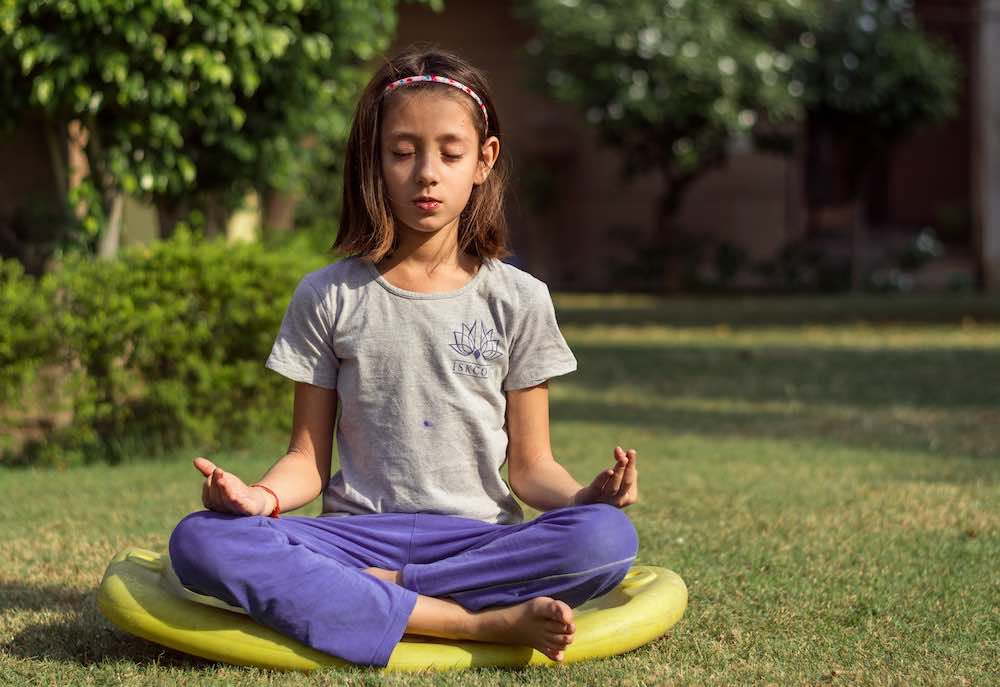
Meditation for Beginners: Just One Thing You Really Need

Meditation is no longer a hype. Even though you can read about it from various magazines, newspapers and online, it is not a trendy thing anymore. It is here and will stay as an effective tool to cultivate one’s mind. Meditation for beginners could be confusing.

Meditation today

Similarly, as with nutrition, it started to accumulate a lot of ‘things’ and ‘stuff’ around. Quite often it is simply commercialised in order to make a profit on you meditating. Think about expensive apps or fancy cushions, music and special clothing, luxury retreats and events. Whereas there is nothing ultimately wrong with all of these, it may pose a problem for a beginner to meditation. Any newbie might start thinking that meditation is just a spiritual tool, but it needs a lot of effort and resources in order to start practicing.

It cannot be further from the truth! 

Meditation happens when you concentrate and observe, you pay full attention to what you are doing and being mindful about it. Meditation can be a sitting one, walking, but also during yoga, cooking or running and so on. 

In order to practice meditation, you do not anything. Well, except for your time to dedicate to it fully. 

You do not even need an enormous amount of time  – research has shown that 15-30 minutes of a daily meditation practice that happens regularly (read, every day) is enough for everyone to start experiencing profound changes in their mood, ability to cope with stress, become calmer and more emotionally stable. For more research and benefits that go beyond calmness and relaxation, but also positively influence your physical and mental health, simply visit our Benefits of Meditation page. We update it with the most up-to-date research on meditation practices and mindfulness. 

Meditation for beginners: first steps

So if you have decided to try meditation, we have also got a very straightforward guide to meditation. You simply sit and concentrate on your breathing.

For the step by step instructions, please visit our How to Meditate page. It is very simple and you do not need anything at all, simply allocate some time to it. 

Time is most probably our most precious resource

Meditation will bring great results for you if you find regular time slots when you simply practice meditation. 

Try to avoid distractions at that time and create some sort of a habit. Many people like to meditate first thing in the morning, it energises them for the whole day and fills with serene, calm and pro-active energy. 

Start avoiding excuses, and even though you may travel that day or have an important errand to run, remember to find an alternative time to practice. Maybe you simply need to set up your alarm 30 minutes earlier that day and you would be totally fine?!

It cannot be stressed enough how important is this regular practice. Think about it the other way – don’t you think that your health and happiness are important enough for you to dedicate just 30 minutes of your time per day?

If a person is not sure, and many of us were there too, it means that the world has sucked him or her in so much that they are no longer masters of their own time. People who cannot allow themselves to get away from their routine for just 30 minutes most probably do not like themselves enough to simply say that their health and happiness are worth it.

It may sound a bit egoistic, but if one is calmer, more composed and feels good about themselves, they are capable of more harmonious relationships with others. They can enjoy whatever they are doing much more. As we are very interconnected, our meditation practice is not only beneficial for us, it allows us to live in a better world. This world is peaceful and joyful. 

meditation for beginners

Meditation for beginners is easy

Have a go at it. Sit for 10 mites to start with. Do the same tomorrow and the day after. Call it a ritual, a habit or simply something how you show some love for yourself and others. Do it for others too. Follow our basic instructions and don’t hesitate to ask questions if something is not super clear. Thanks and have a good start with your meditation practice. 

Meditation, Love and Self-Compassion

Many people start on their journeys to meditate and cultivate their minds. It’s awesome!

Yet for a majority of them, their practice of meditation is a sporadic tool or an activity that they need to find time for. 

Surely, in our hectic and always changing world finding time is quite difficult. It is possible though if we get our priorities right.

Do you have 20-30 minutes for yourself a day? Start worrying if the answer is ‘No’

Meditation is in a way an expression of love to your own self. Do you love yourself enough to dedicate 20-30 minutes of your daily time to meditation?

Ones that tend to say that it is difficult to find time simply do not care about themselves enough. Because their routine, that eats all their free time, can be adjusted.  

When you start practicing meditation, it starts to teach you to return to a self-compassionate mode and simply be. When you show some discipline in the beginning and form a habit of daily meditation, you will see that it is not even about loving yourself. But it is about being open and kind to everything and everyone. 

What happens next is truly wonderful – you start bringing the benefits of meditation to your everyday life. Your attentiveness and love for your body will ensure that you eat well. Awareness of your eating patterns will quickly help you to eliminate usual nasties – refined sugars, processed foods, and white flour just to name a few. Kindness to others would help you to realize how awful it is to kill someone for your own food. And you will probably become vegetarian or even vegan.

When it comes to your mind, self-compassion allows you to observe your thoughts and not to cling to the disturbing ones. Remember, you are not your thoughts. 

Similarly, your inner peace will allow you to be compassionate to others. But it is very difficult to be genuinely kind and warm-hearted to others if you nurture hate inside yourself. Loving-kindness then simply spreads to others in your life. 

Meditation. Love. Ego. Compassion.

People think that meditation is being egoistic and spending time frivolously. And it cannot be further from the truth. You indeed develop yourself, listen to yourself clearly and view things from a calm and peaceful perspective. Yet it spreads! You actually let go of your ego’s strong grip and think about others. You wish others to be healthy, happy, safe, free from harm and peaceful. And then it spreads once again. Your own meditation, ability to feel self-compassion and love to yourself is actually important on a global level. No pressure though!

Hopefully, you will find some discipline to practice meditation on a daily basis. There are countless ways how to help you do that easier – establishing rituals and forming habits, creating cues and committing with other people. Yet quite soon you will be able to simply be better off.   

Check out our basic instructions on how to start meditating or if you’re quite comfortable with it already, have a look at Vipassana Meditation guide. We wish you a good daily meditation practice. Much love and self-compassion!

Mindfulness Meditation for Grief

One person said that one cannot teach mindfulness meditation for grief before they have experienced that. 

Dare to believe them?

Well, whether it is true or not it doesn’t really matter. What matters is that it’s really difficult. 

It’s bloody hard, ok? 

It’s almost like torturing yourself with a stick/fire, you name it. 

Tragedy happens…

Simply put, when we lose the loved one, the world is no longer the same. We are shaken. We are torn. There is nothing so much familiar anymore. We think about the reasons. We are torturing ourselves because we’re so hurt. And we are!

Yet what’s different between a seasoned meditator and one who has never attempted to cultivate their mind in this way, is that the former has learned about the pause.

A pause?

Yes! We believe that your ability to take a pause during the time your thoughts attack you with some sh*t and then manage your response is crucial for you to eventually feel better mentally.

We, of course, do not think losing someone is in any way similar to that. It is much more severe and you feel it. Oh, dear, you really feel it. 🙁

Yet there is something you can do. 

Accepting your pain is a first step to begin your healing

You can take this experience and accept it. To be honest with you, there is nothing you can do apart from being in a denial. 

If grief is dealt with effectively, it can become a tool for the development of great insight. If on the other hand it is dealt with unskilfully, it could initiate a whole chain of chronic dysfunction, confusion, depression, avoidance behaviors, and general unhappiness (quoted from Malcolm Huxter in his ‘Grief and Mindfulness Approach’)

Face your loss and feel it

Next step, you feel that loss. You know, it is just never going to be the same way ever again. Sounds like a tragedy? Well, it is! That’s why it is so bloody hard and painful. You feel pain, you experience it and you eventually accept it. It is what it is.

You know, you are already way in front of many people who just prefer to avoid any pain at all costs.

Averill (according to Kalish, 1985) has named three stages of coping with grief:

  • shock,
  • despair,
  • recovery.

So this acceptance and a very deep and painful feeling of your loss comes in the first stages and it is very natural. 

Use mindfulness meditation for grief to move on with your life

Yet we need to recover. Otherwise, this deep unsatisfaction and despair can, unfortunately, turn into a very serious depression. 

We believe that meditation is a tool for how you can get onto a road of recovery effectively. It doesn’t mean it would be quicker or less painful, but it would be a recovery after all. 

Mindfulness meditation helps to heal psychological problems (addictions, unresolved grief or trauma). In order to reap the benefits, it is important to develop a consistent practice, daily if possible.  (From “The Meditation Bible” by Madonna Gauding)

From personal experience, meditation does calm you down but it is not a (or “A”) solution! But it can be a tool for you. Though you can do much more with it. Spiritually, you do not need to be religious, you can simply believe that you benefit from cultivating and developing your own mind.

mindfulness meditation for grief

This is how mindfulness meditation helps to recover from grief

Mindfulness meditation does not teach to avoid your emotions or suppress it, it is about facing them and observing. It is almost like befriending your grief. Your grief needs to be understood, realized and then it can be worked upon.

The main recommendation for anyone coping with grief is to withdraw your emotional energy from your life (deceased) and invest it in social activity (without any uncertainty or guilt).  (see more at buddhanet.net)

Vipassana meditation can complement your mindfulness meditation for grief by providing you with various insights on where you can invest your emotional energy.

For us at Ahimsa Meditation, we invest our emotional energy into teaching people how to meditate and how to be better off by means of mindfulness meditation. Join us.

Let’s talk about our desire to be special

We hope that with this article we would be able to start a conversation with everyone of you about a modern goal that everyone is or needs to be special. 

Do you really need it? Is it OK to be special at all? Is it healthy to strive to be special?

What is it ‘to feel special’?

It seems that this ‘specialness’ comes from our own natural selection. Our feelings of uniqueness and superiority lie in the heart of that value system of survival. Some animals do that too. Unfortunately for other species, killing is the way how the strong ones assert their ‘specialness’. This behaviour is what we can call a very pedestrian one, arrogant and mindless.  

We have been talking about evolution and human progress also to showcase that we have all the means to move past this behaviour and live a life of moral meaning. We have learned how to grow enough food on the planet and cure many diseases. Our progress should ensure we live better. That also means we all live better, no matter of a social status and background. This is how we can inject moral meaning into all aspects of our life. 

Violence to justify that we can feel special?

Killing others for food is simply not an option. We do not need to do that. It is unethical. We are not special compared to a goat or a pig, we do not have any right to kill them. Nowadays our survival does not depend on them. 

Deeply embedded in Buddhist thought is the intrinsic moral value of sentient life. Not just the value of human beings but the value of all organisms that have subjective experience and so are capable of pain and pleasure, of suffering and not suffering. This value in turn imparts value to other things such as helping people, being kind to dogs etc. 

How can we deal with this social notion of ‘specialness’?    

Mindful mediation can help us to examine our stories carefully. We can listen to our inner voices from the ground up. This allows us, if we choose of course, to separate truth from fabrication. We can ditch the need to feeling special and instead live by your own intrinsic values, in synergy with others. 

One of the suggestion from us at Ahimsa Meditation is to look at the concept of non-self, or letting go of your ego. It will help to get rid of the ‘specialness’ feeling. 

Meditation offers us to see clearly that there is a way to live that is not going with the natural selection flow or completely against it. Robert Wright, in his book “Why Buddhism is True” said that there is a concept of Middle Way where you are attuned to the impermanence, non-self and unsatisfactoriness of living and it brings liberation and happiness”.

Clearly, we are so easily inclined to accept the aim of feeling special because we think our life would be better off like that. Yet what it does, is something very opposite – it enslaves us in this rat race of ‘more, more and yet some more’ (it could be money, fame, you name it). You have a moment of feeling ‘special;’ and then it vanes, you need to become even more special. This may never end. It means you are not living your own life, it’s almost like someone programmed it for you. 

Letting go of your ’specialness’ and ego will mean you can listen to what you really need and want. You can start living your life by your own rules. 

How is it to live with an aim of ‘specialness’ for you? 

We’ve all been (or still are) there. Let’s help each other and share our stories of how the aim of being special is actually not helpful at all.

What are your thoughts, contemplation and advice for others? Please leave your comments below or send us a message through Contact form – let’t share. Thank you.

Meditation for Stress | Mindful Stress Management  

Stress: who is to blame?

Without taking much time to introduce the topic, it’s very clear that we all live with much more stress than ever before. We have seen the emergence of Big Food, Big Pharma and other big businesses that make us sicker, poorer and very stressed. What’s incredible, they do it at our expense too!

Yet it should be another way around. Inded, we are developing so many tools and human progress should allow us to live better. See our article on Evolution, Nonviolence, and Meditation if you want to learn more about this.  Meditation for stress should be that ultivate tool how we can combat stress effectively. Let’s dig deeper.

Many so-called biohackers recommend using magnesium supplements to get a better night sleep. It helps to calm down that exhausted nervous system. In many cases, this does work really well. You can start with a very low dosage of magnesium (best to use is in the powder form), say 50 or 100 mg and then slowly increase up to 400-500 mg. It is safe to use but you will see how much is enough for you. 

This is all great, but it falls down to a current healthcare approach. All it does is treating the effects, but not the cause. 

What we need instead is to pay attention to what’s causing your stress and working on it. You sometimes cannot change the circumstances or actual events, but you can change your response to them. 

We can rewire ourselves to be less responsive to everyday stress factors and choose to live a more serene life.

Why are we so stressed?

There are so many reasons why we are increasingly stressed.

A prominent Buddhist monk and author of a vast amount of books on meditation, Thich Nhat Hahn said that ‘having 6 sense organs, toxins can come not only through mouth’. According to him, we feel anxious or worn out being stressed because of devastation, cravings for possessions, sex or advertising – we are in contact with toxins.

Our issues with employment could be a huge stress factor. Unemployed job seekers showed reduced destructive self-talk that floods us with thoughts of hopelessness and depression. It means that the way how we relate to our gloomy self-talk has a direct impact on our health. 

Prolonged exposure to stress hormones (especially cortisol) destroys healthy muscles, bones and cells. It also weakens the immune system. Julian Daizan Skinner and Sarah Blades in their ‘Practical Zen’ book have quoted the American Medical Association: ‘stress is implicated in 60-90% of physician visits’. This has been documented by Avey H. et al., 2003, ‘Health care providers’ training, perceptions and practices regarding stress and health outcomes’, Journal of the National Medical Association 95,9,833, 836-845.

It’s huge! Stress destroys your health and also a reason for the majority of your doctor visits. 

Nutrition and stress

Our nutrition is another cause of stress. Let’s hear from Dr. Dean Ornish, who has conducted a lot of scientific research. He has helped many people to reverse diseases that were triggered by their lifestyle choices. He said that “for the last 36 years my colleagues at the non-profit Preventive Medicine Research Institute and the University of California have conducted research proving the power of a whole-foods, plant-based diet in combination with stress management techniques, moderate exercises like walking and love and intimacy. In addition to preventing many chronic diseases, these comprehensive lifestyle changes can often stop and reverse the progression of illnesses. This includes coronary heart disease, early-stage prostatic cancer, and type 2 diabetes”. 

Have a look for some tips on how you can change your nutrition for the better in our Nutrition of Nonviolence course

Have you also noticed that in this world of connected devices and the ultra-speed Internet, we are being really disconnected with each other? Chinese people actually celebrate Single’s Day. It became a big shopping event for them. 

Loneliness spurs high levels of pro-inflammatory genes. Various stress reduction programs can not only lower these levels but also lessen the feeling of being lonely. (J.D. Creswell et al., “Mindfulness-based stress reduction training reduce loneliness and pro-inflammatory gene expression in older adults: a small randomized control trial” Brain, Behaviour and Immunity 26 (2012).

Is mindfulness meditation for stress effective?

One of the core benefits to meditation and mindfulness is an ability to cope with anger and manage the response to everyday stress factors.

Dan Buettner in his ‘Blue Zones’ book said that there is a theme amongst all people who live longer than 100 years. The key factors are a plant-based diet and effective stress management.

Meditation can also reduce high levels of the stress hormone cortisol and resulting toxic belly fat. See Jennifer Daubenmier et al., “Mindfulness Intervention for Stress Eating to Reduce Cortisol and Abdominal Fat Among Overweight and Obese Women: an exploratory randomized controlled study”, Journal of Obesity (2011): 651936.

One study even found that 8-week meditation class tripled the amount of weight lost by a group of elderly women when compared with those who did not use similar techniques. (Eirini Christaki et al., “Stress Management Can Facilitate Weight Loss in Greek Overweight and Obese Women: A Pilot Study” Journal of Human Nutrition and Dietetics 26, 2 (July 2013): Supplement 132-39). See more at “Meditate your weight” by Tiffany Cruikshank.

Meditation lessens your stress on a genetic level too

In research published in 2013, Benson and his team found that meditation doesn’t just change brain activity, blood pressure and reports of how stressed people feel. It changes the activity of certain genes. And it does it so within minutes. Even first-timers show an increase in the activity of genes involved in the function of mitochondria and secretion of insulin (which regulates blood glucose levels). There is also a drop in the activity of genes involved in triggering potentially damaging inflammation (linked to depression) and stress-related pathways. Benson investigated that the duration of individual meditation should be 10-20 minutes a day. (Taken from Emma Young book called “Sane”)

This is where we are coming to a very trendy topic of genetic research. 

There is evidence that meditation practice even slows the effects of the ageing process. Mindfulness may have an effect on the length of telomeres which are the protective caps at the ends of chromosomes. It reduces stress and stress arousal. Meditation fostering positive states of mind may bring about hormonal changes, which may promote telomere maintenance. See more on this in “The rough guide to mindfulness” by Albert Tobler and Susann Herrmann.

Yet let’s not hide behind our genes. What we can do here and now if to become more compassionate and kind to ourselves. Meditation trains one really important mindfulness skill: loving-kindness and compassion. Just have a look what V. Burcha nd D. Penman wrote in their book “Mindfulness for Health”: “Cultivate self-acceptance and care towards yourself and others. This reveals the similarities and connections between us all, dissolving stress and reactivity so that life becomes warm and wholesome once again”.

How long do you need to practice meditation for stress?

We have shown already in our meditation articles and especially the one that describes the benefits of meditation practice that you will see changes just after a continuous daily meditation practice of just 15-20 minutes.

Doctors Goleman and Davidson insist that it needs to be regular. They said that a large drop in cortisol under stress seems to kick in with continuous practice. It means that it’s easier to handle life’s upsets. 

In their book, “The Science of Meditation”, they have also provided why you should aim to make it a regular practice. They quoted a research paper that said that ‘the long term meditators achieved the best results in the reduction of cortisol levels’. The study observed long term meditators who all practiced vipassana and loving-kindness meditation over a period of at least 3 years. They engaged in a daily practice of at least 30 minutes and a few intensive meditation retreats. Each was matched on age and sex with a non-meditative volunteer to create a comparison group. They also gave saliva samples for cortisol levels. See more in Melissa A Rozenkratz et al., “Reduced stress and inflammatory responsiveness in experienced meditators compared to a matched healthy control group” Psychoneuroimmunology 68.

meditation for stress

Holistic mindfulness to help with stress

Clearly, it is a matter of combining your efforts. You can do your body much better by switching to a plant-based diet. You can cultivate your mind and become more emotionally stable by means of mindfulness meditation. All of this enables you to be kinder and more compassionate to yourself, but also manage your stress better.

Buddhists were writing about it all along. Have a look at the work of Ajahn Amaro “A Holistic Mindfulness”. He said that Buddhism provides guidelines for behavior and speech that might help you to reduce stress and live more comfortably. He talks about holistic mindfulness by means of meditation and ethical living. You do not need to be religious to live like that. Simply extend your circle of compassion to all living beings (including yourself) and become disciplined in your daily meditation practice.

It Is Too Much | When Enough Is Enough

It is too much…

Let us ask you a quick question.

Have you ever been in a situation when you felt it is just too much of everything?

Surely it can be too much with work, other people, mounting stress, and simply a lot of things going on. You simply cannot go on like this anymore. It is when enough is enough. The awareness of it is the first step. Can you imagine there are millions of people who are subjected to acute stress on a daily basis without actually giving it any thought? They probably think it is simply ok to feel that overwhelmed and have that much on their plate all the time. Sounds crazy, isn’t it?

Yet according to many research studies, our life becomes more and more complex, hectic and full of chores that we need to do. Multitasking is not a skill to learn to be productive, it is a myth. It is actually a very unhealthy one – it really harms our mental health.

What to do and how to cope with this?

It is very important to have a tool at hand because this ‘it is too much’ feeling can arise quickly like a storm and then you are simply smitten.

What does one need to learn to skillfully cope with this?

Let’s get to the very basic semantics here. When we say that ‘it is too much’, we mean that these additional jobs, monies, and tasks are simply way above what we can handle. It is very probable that we do not need to do all that at all. Yes, we might earn less money or have a slightly more frugal lifestyle. Yet we may be a lot happier.

This is where the whole concept of enough comes into play. First, after realizing that it is too much, you simply say that you’ve had enough of this busyness and craziness. Enough is enough.

When is enough enough

Though to actually figure out how to get out of this vicious circle you need to find your own point of enough. It is that point where you are content. Feel that you are enough as an individual (why would you think anything different anyways?) and you have enough (money, place to live, clothes to wear, you name it). You can simply enjoy the present being in a very comfortable sense of enough. You have enough and you are enough. Clearly, you do not lack anything.

To progress further on your journey, you can employ meditation techniques. They will help you to center and feel at peace, they will guide you to the universal truths of impermanence, non-self and unsatisfactory conditions. When you contemplate on these, you cultivate your mind and feel this enormous pressure of constant busyness lifting off your shoulders. That’s when you re-discover your inner values and they start guiding you to your own point of enough. What’s enough for you? It’s very probable that you already have much more than that and you can start serving others instead of engaging in never ending rat race of more and more wealth.

What can you do if you feel that it is enough?

Be kind to yourself. Say that everyone feels like that once in a while. And that’s ok. We live in a very busy world.

Though it is a bit of a lame excuse. We choose how to live our lives. Or at least we should.

So why not you take some time for yourself and start meditating.

First, learn our basic practice of concentration meditation on breathing. Try our loving-kindness meditation (Metta) and see whether you start feeling more at ease with everything and everyone with it. Make progress with your practice with our vipassana meditation instructions. This is where you gain insights and further develop yourself and your mind based on your own intrinsic values.

when is enough enough

That’s how your life becomes a life of enough, a place where you are content, happy and peaceful. You will want others to feel the same. Let us know!

Meditation for Sleep | How Meditation Fights The War Within

Sleep issues are on the rise

When I was a teenager it was much more easy for me to feel better when I had no sleep the other night. Nowadays it is simply unbearable. If I did not have a proper 7.5 or better 8 hours of sleep, I feel cranky and tired. When I had only a few hours of rest and that’s it, I become less than a human as I am so irritable, whiny and other quite nasty things.

When I’ve experienced that severe sleep deprivation the last time, I did not abandon my usual morning meditation ritual. Thankfully, this experience was pleasant, even though it was still very hard to concentrate. Yet when I’ve finished, I felt much better. I was more centred, composed and ready to react in a non-violent way towards myself or others. So here is your tip number one – to get on with your meditation practice even though it might be the case of making a much greater effort at the start. Your synergy of mind-body will thank you for that and you will feel better.

Though the main thing is not to get to the point of sleep deprivation, don’t you think?

First of all, we already know about some quick and easy tools on how to prevent bad sleep. We should stay away from blue light. Say no to the LCD screen on tablets, phones and laptops – it suppresses melatonin production. Stay cool – melatonin cools the body by several degrees. Do not overheat your bedroom. Avoid alcohol. For many people, these simple actions would be life-changing. Yet what about those millions of people who cannot get asleep because of internal rumination and worrying?

Meditation for sleep is a proven tool on how to get a night of better sleep and relax into it.

Why meditation is great for sleep?

Prolonged exposure to stress hormones (especially cortisol) destroys healthy muscles, bones, cells, and weakens the immune system. Awareness is important because the unconscious stress can lead to poor sleep, indigestion, chronic head and backaches, heart attacks. When our health deteriorates, we become more fearful and the situation becomes a vicious circle (taken from“Practical Zen” by Julian Daizan Skinner with Sarah Blades)

Ahimsa Meditation would like to serve everyone who is on the journey to eradicate the war within.  Albert Tobler and Susann Hermann explained this “war within” as our difficulties, doubts, irritation, frustrations, distractions. They have stated in their book “The rough guide to mindfulness” that around one in four adults suffers from nocturnal rumination. This means there are so many of us who are not being able to sleep due to worrying. Sleep disorder must be one of the most prevalent endemic diseases of the 21st century. More and more of us find it difficult to switch off.

Meditation is able to help us cultivate our mind and become emotionally stronger and more stable. This means we can cope with difficulties, stress factors, frustration and just that enormous stress on a daily basis much better.

Meditation for sleep

Let’s outline some very straightforward steps on how you can start meditating yourself to sleep.

  • Get yourself ready in bed, preferably lie on your back with your arms on the sides. Do all need preparations in advance, so you can do your 10-15 minute meditation and almost immediately go to sleep without any need to stand up and do some chores.
  • Take a few really deep breaths. You can place your palms on your belly and see how deep breathing makes them go up and down, slowly but deeply. It should make you feel relaxed very quickly.
  • Close your eyes and start paying attention to sounds, smells and breathing. You are relaxing into a state of awareness but also tranquillity.
  • Without making any judgment, make a mental note of how your body feels.
  • As with a basic practice, start performing a body scan. Yet with this meditation for sleep practice, you are going to make it a centre stage. Begin from a very top of your head and very slowly go down by paying attention to the smallest parts of your body. You are just being attentive to all the little details you are never so curious about during the day.
  • If it helps to sustain this body scan, try a visualization technique where you imagine yourself covering your body with a very healthy ointment. You simply visualize applying it on your ears, lips, shoulders, nails and so on. This is completely optional, you can opt for a more basic mental scan. See what will work better for you.
  • You are not doing it just to finish with your toes and stop. You can then go up and see how every little piece of you relaxes into bed, how your arms become just a bit heavier, how your chest relaxes and you feel a lot of calm and relaxation.
  • Continue very slowly until you feel you are ready to drip off. Just observe your meditation, your breathing and your body. Let it simply flow.

Enjoy your sleep.

meditation for sleep: instructions and guide

Still not working: are there other meditation techniques for sleep?

Add concentration on breathing part. If you feel that your body scan isn’t working for you today, simply start focusing and counting your breathing. The monotony of the process and a very simple flow will calm you and aid your sleep. See our basic meditation practice to guide you on how to concentrate on your breathing.

Try Metta or Loving-Kindness practice. It has been also proven to further relax our consciousness that everything will be alright (it is as it is, right?). You can try and incorporate this practice too to help with your sleep. Additional kindness and compassion to yourself and others is just that bit that will make a lot of difference. See our recommendations on how to practice loving-kindness meditation here.

We wish you to have a great sleep today. Continue with your meditation practice, develop it and have better sleep every day.

6 Types of Meditation to Master | Meditation Techniques

Different types of meditation

Concentration meditation on breathing is a foundation of meditation practice. However, there are a few more techniques or types of meditation you can add to it to make practice your own.

Daniel Goleman and Richard J. Davidson in their amazing book “The Science of Meditation” suggested the following three different types of meditation: attentional (that’s what we suggested as our basic meditation practice), constructive (see our loving-kindness practice) and deconstructive (see our vipassana instructions or tailored practices to help with depression, PTSD and anxiety).

The following tools simply allow you to curiously attend to meditation practice depending on your need at the present moment. For example, for some fidgety types a movement meditation may be needed, for those who are too harsh on themselves – compassionate practice, and so on.

Madonna Gauding in her book “The Meditation Bible” suggested that all techniques could be somehow classified as focusing, thinking, visualizing or experiencing. Clearly, she means our concentration meditation on breathing as a good example of focusing practice, whereas thinking and experiencing are major characteristics of vipassana meditation. You can use a visualizing technique as an additional tool to your own meditation practice.

List of additional meditation techniques

Please have a look at our list of auxiliary meditation techniques and we welcome your feedback. What works for you? How do you combine different elements for yourself?

Body scan – you can incorporate this into your daily practice directly at the beginning of the meditation after you’ve settled your body and mind.

Meditation begins by asking us to rest our minds in our bodies, as we rest our bodies on a cushion. And to pay deliberate attention to, rather than ignore, the shifting sensations of the physical organism.

These sensations can be subtle, but by spending time with them we start to see two important things:

1) the inner experience is changing incessantly;

2) we are driven out of the present moment by our likes and dislikes (taken from “Advice not given” by Dr Mark Epstein).

Noting technique. Every time thoughts and feelings carry you away from breathing, it is beneficial to make a mental note about it. After that, you can non-judgmentally put a mark whether that was a feeling or thinking. Note whether it was positive, negative or neutral.

Movement meditation. You can be mindful not only when waiting and standing, but when walking or extending this practice over a more prolonged time. For that, you need to establish a space outside or a path and make time for an undisturbed waking practice.

Acceptance (of pain) and compassion – it starts from yourself and then extends to your family, friends, acquaintances, people you do not like or indifferent to and then the whole world.

Compassion to yourself is an incredibly valuable skill to train. Many people are resigned to the way they speak to themselves. We can take our stories seriously, but not to take them for granted. “Just because you think it, doesn’t make it true.” (Mark Epstein “Advice not given”)

Breathing anchor helps to train compassion

You realize that you are not your thoughts. They come and go and you don’t nee top push yourself for that.

Dr Epstein in the same book agreed with the above. ‘Meditation suggests that we stay with our raw material of a given experience longer than we used to, and question our secondary add-ons. One’s story never changes if it is simply ignored; it just lies in wait, ready to return with the vengeance. You can take responsibility for the way you are talking to yourself, not to give thoughts a free pass. When one learns to observe the addictive and self-perpetuating nature of many of our thoughts, their dominance diminishes. Refreshed by this discovery, the mind senses relief.’

Eating and drinking meditation – being completely present at the moment you need to fully experience the sensations, realise how you like them and simply be.   

Yoga meditation – combines still poses and also vinyasa practice when you combine it with mindful movement.

6 types of meditation you can master today

Meditation techniques further develop your meditation practice

As you can see, this short list of additional meditation techniques is nothing extraordinary. Yet it offers you a possibility to approach meditation with a different standpoint or even from a beginner’s view. It’s very valuable as you will develop your practice your own way.  It allows you to cultivate your mind how you need it yourself. No-one can do it for you. You will find simplicity and a lot of beauty in this practice and we welcome you to develop it.

Meditation for Kids & Mindful Games

Meditation is so simple, it can be practised by children from a very young age. Knowing how many valuable benefits meditation brings, it’s highly recommended for parents to introduce their children to meditation early.

Imagine, meditation for kids could help them to sustain attention better, it helps with their learning efforts. They, in general, become more compassionate and caring. Wouldn’t be awesome to cultivate their minds in this way?

You can also consider meditating together. Working with children is a difficult job and mindfulness can play a valuable role in parent guidance. Parents and caregivers become more compassionate and loving with their children. They also develop their awareness skills, so they see their own behaviour more objectively. Parents can learn how to set restrictions and various limits more skilfully.

Start with Concentration Meditation on Breathing

There is no reason why your child could not master and practice our concentration meditation on breathing. You can help them with guidance and reassurance that it is OK to be distracted. But they can learn to focus better with time. Their life will become richer and more emotionally stable.

Kids could be fidgety and demand variety in order for them to be engaged. That is why there are several books around on how to make their meditation practice less monotonous and more varied.

Here are some of the meditation exercises you can try with your kids: 

Mindful Magician

Ask kids to move attention from different pictures or objects that they visualise. Use imagery that makes them feel safe, happy and peaceful.

When your kids are safe and happy, they want the whole world including animals to live peacefully and happy. 

Magic Body Scan

Our typical body scan can be magical if you ask kids to do it with curiosity and almost as they touch their body parts with a magic wand, almost like they want to feel this magic energy.

Body scan could also be fun if you ask kids to imagine they are slowly smothering their bodies with chocolate. They start with their faces and continue all the way down to the toes. It is fun, they will stop and concentrate on the very small body parts of theirs. This particular body scan method is coming from Zen tradition and it is being used for hundreds of years.

Kids are able to forget their worries and get out of their own selves – this gives their egos a well-deserved rest.

Mindful Carpet

First of all, ask kids to imagine a magical carpet that floats in a blue sky, they can simply relax and feel the air, observe a big lake and a tree from above, land next to it and feel warm. They can imagine playing with their pets and toys on that carpet. Ask them to visualise the journey and feel playful with this exercise.

Happiness ‘Right Here, Right Now’

Ask kids to make a collage of things that make them happy. They can also draw. In case they need prompts, you can suggest sweets, the things that make them happy short term. Or their friends or parents, something more long term. Kids should feel energised and full of warmth.

Group Meditation ‘Wishes’

If you are meditating with your kids, you can form a small group. Suggest visualizing a ball and prompt to fill it with loving and kind wishes for anything or anyone in the world. Ask what would they wish for their pets or friends or teachers. You can connect not only with their creativity but develop kindness as well.

We invite you to try a very simple meditation for kids today and should you have any questions, please shoot us a message.

Meditation Books, Apps and Centers: Long Read Review

This quite lengthy review covers a vast number of meditation books and apps on mindfulness and meditation, but also some trusted meditation centres and tools you may find useful. 

Before you start, just a quick note that there is nothing you need in order for you to start meditating. Just allocate a certain amount of time and get familiar with a basic meditation practice (you can look up our instructions for meditation that concentrates on breathing here). 

Yet many people find meditation apps useful because they provide guided audio meditation sessions, but also some helpful reminders.

Whether you are a beginner in meditation practice or an experienced one, it is great to have a go at some meditation books written by renowned scientists or simply followers of spiritual traditions. 

As Ahimsa Meditation is completely secular, we do not focus on a particular religion or even Buddhist tradition in this review of meditation books and apps. It means that we urge you to approach meditation practice with your own common sense. 

Meditation Apps:

Headspace

It is very easy to begin your meditation practice with Headspace. Simply choose their easy Take10 program, which is also free, and start on your meditation journey. They have a few really straightforward videos explaining meditation for a novice – from an observing guy sitting on a bench and watching the traffic to a cloudy sky that is blue when the clouds are gone. This, in essence, what makes Headspace truly great, it simplifies the practice and makes it accessible for everyone.

They charge yearly and also for a lifetime subscription for the app. Do your Take10 and then decide! You won’t be disappointed for at least a few years of practice with them – there are great sets of meditation sessions on anxiety, creativity, relationships and focus just to name a few. 

Calm

One of the first ones, together with Headspace, this app went on a huge transformation recently. It was really very basic at the very start, but now it has basic practice (also free, but limited to 5 sessions), some further guidance and then a premium section where you need to be a paid member in order to gain access. It costs under £50 for a year and less than £8 for a month. Pay for this app instead of several cups of coffee and you are sorted. They have sounds and music channel too if that’s what will help you most to advance on your meditation journey. 

Mindfulness 

A varied collection of meditation teachings, sessions, and guidance. It is not as cohesive as Headspace and Calm (with the previous ones to have a clear structure and a unified approach and even the voice-over), but they attracted a few really renowned meditation teachers and authors who are sharing their best practices. You need to pay to gain access to more premium sessions but there is some free content too. 

Oak

A totally free app that offers practices to begin meditating, powerful breathing exercises and to get some help with sleep. It’s just it – very straightforward and easy. There is a progress tracker too, so you know how many hours you’ve dedicated to your practice so far. For a very basic practice and a beginner – these are very helpful guided meditations.

Insight Timer

A vast collection, or shall we call it a marketplace of meditations, music, and guidance. This app incorporates the work of hundreds of teachers who upload their content for you to check and use. You can start with a free course on meditation (7 days), engage in their community and then crack on with 15000 guided meditations available. A bit much? Maybe, but it gives you a very broad perspective on different teachers and schools. You can also sign up for a course, but you’ll need to pay for a full version of the app then (they offer a 7-day trial for you to check it out).

Buddhify

A very basic app, they offer similar structure with some free sessions and then gradually advancing for you to subscribe. It is not very structured or advanced and in our opinion, you’d be better with one of the previous three. 

Omvana

Similar review as for Buddhify, it did not manage to wow us in any shape or form. Most probably it needs some more development and fine-tuning to find its audience. 

10% Happier

Nice app, but unfortunately we found it off-putting to sign up before we can get any idea what’s going on on the inside. This app is made for a NY Times bestselling author Dan Harris and is called the same as his book. 

They do not aim to overexcited anyone’s expectations by saying that meditation will change their lives. Yet just 10% happier would be great, don’t you think? Well, that’s where the focus ends, they did not offer anything new or more convenient, however, it is great to have it as a companion for the book if you are reading it. 

There are more apps that serve as timers, yoga guides, sleep aid, and breathing exercises. They incorporate meditation practices heavily however they lack the depth and focus of the previous 6 we’ve reviewed. 

Meditation Books and Mindfulness Guides:

“Whenever You Go, There You Are” by Jon Kabat Zinn

Written by pioneer and a father of Mindfulness-Based Stress Reduction (MBSR) practice, this book is a concise guide on how to practice and how to get your own ‘home’ in life. It is a bestselling classic, not too wordy and very well-worth your time. 

“The Miracle of Mindfulness” by Thich Nhat Hahn

If you do not know Thich Nhat Hahn, you should remember this name. He is a prominent figure in the world of meditation and even though his Zen tradition has its particular aspects to it, it is simple and very cheerful. He talks about the importance of half-smile in our life and that we can make more and more mindfulness moments in our life. That would be a miracle for all of us. 

“10% Happier” by Dan Harris

An author who wanted to simplify and somewhat de-mystify mindfulness, he decided not to portray it as an impossible task. It is not about nirvana or any kind of magical states of mind, it is about getting at least 10% happier. And it is wonderful. It is written in a very engaging format.

“Meditation for Beginners” by Jack Kornfield

Written by a priest who teaches mindfulness meditation now, it is a great beginner manual to meditation. It is very simple and focuses on the very basics of meditation practice.

“Meditation and Mindfulness” by Andy Puddicombe

Andy is a founder of Headspace and it says a lot! Being an ex-Buddist monk, he knows his stuff. He has got several books published and a very engaging TED talk, so feel free to buy one of his guides, watch his talk or download Headspace app. His first title was called “Get some headspace”

“Full Catastrophe Living” by Jon Kabat Zinn

Coming back to Jon Kabat Zinn, and this time it is his most detailed and descriptive work that can easily intimidate anyone with its over 600 pages. However he writes in a very plain English format, showcases some stories but it is all very down to details on meditation practice and how it is important to look directly into the pains and suffering that everyday life brings. True acceptance of that brings inner peace and that if the essence of Full Catastrophe Living – bold, brave, somewhat fearless, but also compassionate, kind and peaceful.

It is important to change your entire paradigm on how you see wholeness and healing. This book, which is a cornerstone of every MBSR course, explains in detail about how you can look differently into healing your mind and body by means of meditation, but also mindful yoga, consumption, and nutrition as well. The main focus of this book is meditation, but Jon covers it from a very holistic mindset. Highly recommended read.

“How to Meditate” by Pema Chodron

We love Pema and her works. Our favourite, that goes slightly off our meditation topic is ‘When Things Fall Apart’. She talks about how crisis reveals a true character within and how it is all a signal to grow. However, we do recommend reading her meditation guide too, having such a compassionate and warm teacher is truly beneficial. 

“Search Inside Yourself” by Chade-Meng Tan

Now, if you look at the book’s cover you think that it has some connections with Google, it has a very similar colour scheme. You won’t be far from the truth actually. You will be reading a book that is, in a nutshell, a course that is being taught and delivered in Google. The book showcases how it is done and why the results it brings and much more. Delivered by Google employee for other Googlers, it is a good case study on how businesses can benefit from mindfulness meditation too. It is clearly shown that it is easy. 

“Mindfulness” by Mark Williams and Danny Penman

This book is actually a course, you can follow their 8-week program on how to start meditating and form this as your habit. It speaks to people leading very busy lifestyles and in need to slowing down and getting some grips over their own life. It’s a slightly rigid program, that’s what we’ve heard as a feedback, but a very credible resource if you want another perspective on getting into a meditation practice. 

“Why Meditate?” by Richard Matthieu

A scientist turned Buddhist monk, Mr. Matthieu is not a novice to meditation practice. He has also been named as the happiest person on Earth, funny, isn’t it? His approach to teaching meditation for beginners is to fully explain why they need to do it. It is a very straightforward guide, so feel free to flick it. It’s fun and also engaging. 

“Mindfulness” by Joseph Goldstein

A basic guide to mindfulness by Joseph Goldstein who is an expert in mindfulness meditation and runs is own retreats. He is very well known in American meditation centres and people who are practicing for a while. It means you can gain a lot from his experience. 

“Frazzled” by Ruby Wax

Do you remember ‘Ab Fab’ with Pasty and Eddina? Well, you should remember Ruby too, she was mostly behind the scenes but she is a brilliant comedian.

What’s more, she has suffered from her own mental health issues. She then pursued a degree in neuroscience and learned first hand about the most recent research in mindfulness. Her work is hilarious but also very useful.

She covers a 6-week mindfulness course and in her very witty way describes how one approaches meditation for the first time. It’s not a guide per se (though it’s called a Mindfulness Guide for the Frazzled), but a very entertaining read. 

“The Science of Meditation” by Daniel Goleman and Richard Davidson

This is an ultimate scientific guide to meditation. If you want a critical but informative piece of work on mindfulness meditation, this is your book. They have quote Aristotle who said that we are not by nature virtuous but we can become so through the right effort. In his view, that effort is self-monitoring, the ongoing practice of noting our thoughts and acts. It’s the beginning of vipassana practice. 

They’ve also suggested a few practices crucial to facilitate a change to a better, calmer and more emotionally stable you:

  • ethical stance (moral guidelines, inner compass),
  • altruistic intention (practice for the benefits of others),
  • grounded faith (a mindset that a particular path has value and will lead you to the transformation you seek),
  • personalised guidance (a knowledgeable teacher who coaches),
  • devotion,
  • community (supportive circle of friends on the path),
  • supportive culture (recognition of virtues at attention and compassion),
  • the potential for altered traits (liberation). 

We can talk about this book for hours. If you need scientific evidence and guidance, here is your book on meditation. 

“Zen Mind, Beginner’s Mind” by Shunryu Suzuki

It’s one of the most read books on Zen Buddhism, but it doesn’t insist you follow that tradition. In fact, it doesn’t mention it much at all. On the contrary, it is a bible of simplicity and minimalism. It describes a very straightforward meditation practice and underlines frugality. 

Many people found it very easy to get on with meditation with this book. 

“The Miracle of Mindfulness” by Thich Nhat Hahn

If you can picture a man wearing his Buddhist robes, sitting under a plum tree, this would be Thich Nhat Hahn probably. He is a Vietnamese monk, who has established a centre called Plum Village located in France. He since became one of the most prominent authors on mindfulness and the art of living a happy life. His half-smile is infectious, his simple instructions are easy to follow and his dedication is second to none. This book tells a story of him finding his way and helping others to overcome oppression and hardship. 

“Real Happiness: The Power of Meditation” by Sharon Salzberg

You will find Sharon in US retreats and teaching mindfulness. This book is her contribution to the flow of mindfulness meditation. She teaches from her heart and it shows. It is bubbly and engaging, cheerful and enthusiastic. 

“Radical Acceptance” by Tara Brach

A very sharp piece of work that covers compassion, loving-kindness, and acceptance when it comes to meditation practice. Some can say that you need to have a bit of experience meditating in order to fully appreciate this work. Evidently, Tara brings a very warm and hearty attitude and this is infectious. 

“Advice not Given” by Mark Epstein

Here is the work of a medical practitioner who is a long-term meditator as well. He has written a few books before but this one specifically focuses on getting out of your own mind in order to find an increased inner peace. Dr. Epstein emphasizes the importance of paying attention to day to day actions. He urges self-observation, which could be precursors of insight. Treat this book not a piece of advice but rather as a story or a talk that will trigger some interesting insights in you. 

To give you a small preview of what kind of contemplation is available, here are a few quotes:

“Even the most disturbing material loses its hold when successfully observed without attachment or aversion. 

We can meet the challenges with equanimity, not make them go away. 

Awareness and openness manifests in the willingness to be surprised.

Mindfulness gives the freedom to act differently.

Instead of being right, let go! Stop being the prisoner of your ego.”

“Mindfulness for Health” by Vidyamala Burch and Danny Penman

As the title suggests, a health-focused book that is based on the Mindfulness-Based Stress Reduction Program. It is one of the first top-notch programs that were released as a book and an accompanied CD with guided meditations. It has been one of the top mindfulness books and guides for many years. With a rise of apps and more interactive programs, it is losing its modern feel.

“The Meditation Bible” by Madonna Gauding

Mental peace and having less emotional reactivity are mentioned as benefits of meditation practice. This book also focuses a lot on the benefits of meditation. You can learn how meditating on breath lowers your blood pressure, how it slows down your heart rate and eases your anxiety. Meditation is recommended as a complementary practice or alternative medical treatment. It can help to heal from various illnesses such as cancer and heart disease. The author stated that it can help manage pain and prevent illnesses by helping you stay physically balanced and healthy. It creates contentment, peace, and joy. It promotes longevity. 

“Against the stream” by Noah Levine

It is a book for rebels. You won’t find much of the usual calm or tranquillity here, instead be prepared for a straightforward and sometimes blunt truth. He said that ‘The real revolutionary is committed to nonviolence. The Buddha’s radical stance of nonviolence is a wise and practical path to personal and societal change.’

Just to give you a preview of what you can find in this rather short book, here is a 4-fold Manifesto that Noah suggested: defy the lies, serve the truth, beware of teachers and question everything.

“The Heart of the Buddha’s Teaching” by Thich Nhat Hanh

If you want to dig deeper into teachings of Buddha but do it in a rather secular way, so it will have less of rituals and glitter but more of substance, this is your book. 

Thich Nhat Hahn in his usual calm and delicate manner explains the very core of Buddhist teachings. He does it in a way that transcends specific traditions that are present now and sometimes divide Buddhists. 

He says that it is all teaching us to realise suffering as suffering and to transform our suffering into mindfulness, compassion, peace, and liberation.

You can make parallels with lifestyle too: each person should critically assess what’s good for them, do it with awareness and wisdom and take in what’s accepted by them wholeheartedly.

We first aim to understand it for ourselves, listen to “teachers”, engage with similar minded to find our own meaning and fully benefit from it by putting principles into practice. This all awakens a true self.

Meditation “The Buddhist Way of Tranquillity and Insight” by Kamalashila

When you have learned the basics of meditation practice, you can dig deeper with this book. It goes much more in detail about possible obstacles of meditation and how to work with them. There is a particular bit in this book that is beautiful, it tells us how to live in full colour.

We would like to quote:

“The key to deepening, and broadening, our mind is the development of reflexive consciousness or self-awareness. This is the state of being aware that we are aware and of knowing that we know. Reflexive consciousness is what brings colour and depth – and sometimes pain too – into our lives. Sometimes we can feel when this dimension is missing – life lacks its usual colour and interest, and our experience seems to be painted in unrelieved shades of grey.

It may be that at such times we would really prefer not to be self-aware; sometimes we feel that awareness is all too painful, and so we retreat into ourselves or deliberately distract ourselves. But at those times when we do fully acknowledge our own existence, we start living in full, glorious colour. The colours we experience may sometimes be harsh, but they can also be beautiful. It is in these moments of reflexive awareness that we are fully alive and fully ourselves.”

“Notes on a nervous planet” by Matt Haig

Matt Haig has written ‘Reasons to Stay Alive’, ‘Humans’ and more. His recent book showcases how deep we are in the crisis called stress. 

Here is a quote he made in his book “There is only one corner of the universe you can be certain of improving, and that’s your own self”, said by Aldous Huxley. So true, wanting is lacking. The more we want, the more we drip ourselves away.

We also love Matt’s saying “When depression slugs over me I close my eyes and enter the bank of good days and think of sunshine and laughter and turtles. I try to remember how possible the impossible can sometimes be”. 

“Tibetan Book of Living and Dying” by Sogyal Rinpoche

A prominent Tibetan teacher said that “Fear of death and ignorance of afterlife are fuelling that destruction of our environment that is threatening all our lives”. He wants us to know that the key to finding a happy balance in modern lives is simplicity.

This book is not easy to read. It showcases those moments of our lives when we say goodbye to our loved ones, but then this moment will come for every one of us. There are a lot of aspects of this book that showcases specific Tibetan beliefs. Yet apart from that, it is an invitation to realize the truth that we all die. It is a liberating thought, and when fully accepted, it can transform your life. 

It shows then that we may idealise our freedoms, but when it comes to our habits, we are completely enslaved.

“Sane” by Emma Young

In research published in 2013, Benson and his team found that meditation doesn’t just change brain activity, blood pressure and reports of how stressed people feel. It changes the activity of certain genes. And it does it so within minutes. Even first-timers show an increase in the activity of genes involved in the function of mitochondria and secretion of insulin (which regulates blood glucose levels). There is also a drop in the activity of genes involved in triggering potentially damaging inflammation (linked to depression) and stress-related pathways. Benson investigated that the duration of individual meditation should be 10-20 minutes a day. 

This book can teach you to manage your everyday response to stress and aid some relaxation too. Emma suggested that in meditation, you can mentally say ‘peace’ on exhalation and then return to it with ‘oh, well’ when the mind wanders. You accept your imperfections and let go of your self-critique for a while. It is very liberating. 

“The Happy Brain” by Dean Burnett

Consider this quote from this book: “Drinking, smoking or unhealthy foods are bad because they can cause you harm, and so make you unhappy. But if you are unhappy anyway, what have you go to lose?” 

Indeed, people regularly do things that damage their bodies and brains. They are often harming someone else too. This is an important message from Mr. Burnett. This book covers more on neuroscience than just happiness, so be prepared to get some scientific proof o what he says. 

“The Happiness Trap” by Russ Harris

Mr. Harris describes ‘Acceptance and Commitment Therapy’ that was previously developed by Steven Hayes. It is based upon 6 core principles to develop ‘psychological flexibility’: defusion, expansion, connection, the observing self, values, and committed action. 

It is a great book about clarifying and connecting with your values. It’s an essential step for making your life meaningful. Values provide direction for your life and motivate to make important changes. You then take committed with ease – an action that is based on values. You take it, again and again, no matter how many times you fail. 

“Meditation is not what you think” by Jon Kabat-Zinn

Let us quote Mr. Kabat Zinn with his definition of mindfulness first: “Mindfulness is the awareness that arises from paying attention on purpose, in the present moment, and non-judgementally”. 

Jon is a pioneer of mindfulness research and his Mindfulness-Based Stress Reduction program is second to none. He is an author of multiple books which are simply great as they are serving different purposes. What stroke us the most in this book is his contemplation of peace. 

“Peace is not farther than this very moment. Peace is something that we can bring about if we actually learn to wake up a bit more as individuals and a lot more as species. If we can learn to be fully what we actually already are, to reside in the inherent potential of what is possible for us being human. There is no way to peace; peace is the way.”

He wanted to get a very important message across to people who are confused about what meditation is. He said that ‘meditation is a way of being; a way of seeing; a way of knowing, even a way of loving. Meditation is not relaxation spelled differently. It is not a way to control one’s thoughts. Meditation is not about trying to get anywhere else’.

This understanding of meditation is empowering and at the same time gives us a lot of freedom.

If you are thinking about getting your first substantial book on mindfulness meditation, get this one.  

“Get some headspace” by Andy Puddicombe

You have seen our recommendation for Andy’s more recent book, but this one is where his meditation app got hold of thousands of people – it is a very simple introduction to meditation practice. Find his easy similes and guidance here.

On top of that, he has quoted a few pieces of scientific research on meditation such as:

Neuroscientists at the University of Wisconsin found that after 8 weeks of mindfulness practice, participants experienced a significant change in the activity from the right to left. It corresponded with the increased feelings of happiness and well-being. 

University of Massachusetts Medical School: studied the effects of mindfulness-based meditation on a group of people suffering from generalised anxiety disorder. An incredible 90% of the participants documented a significant reduction in anxiety and depression, following just 8 weeks of learning. 3 years after, in a follow-up, they found that these improvements had been maintained. 

“Attention Revolution” by Alan Wallace

Mr. Wallace is a prominent teacher and practitioner and his work on attention is very worth reading simply because we see how many children grow up and develop attention deficit disorder (ADD). This book suggests methods and provides with tools for every adult to start re-learning the attention skill. See more on the benefits to train your attention with meditation in our article here.

“Siddhartha’s Brain” by James Kingsland

Meet Siddhartha, or Buddha to you and me, a teacher for millions of Buddhists around the world. Mr. Kingsland’s book depicts a story how it all began, but he goes further on to showcase why it is important on the global scale right now.

He says that the aim of mindful meditation is to cultivate non-judgemental awareness of the present moment. He insists that a broader programme for promoting happiness and contentment needs compassion, both for oneself and others, and ethical behaviour. 

His book quotes Mr. Jackson who said that ‘we are in the grip of what epidemiologists call “the happiness paradox”: life satisfaction decrease whilst living standards rise, growth in advanced economies’ (“Prosperity without growth”, 2011, Earthscan, p.40).

Research suggests that ahead of physical health, employment and freedom from poverty, mental health is the most important determinant of happiness in the developed countries. Worldwide, nearly a million people commit suicide every year (WHO, 2003 “Investing in mental health”) 

These are very important reasons that you start practicing meditation today.

“Practical Zen” by Julian Daizan Skinner with Sarah Blades

If you want to broaden your horizon in terms of different practices, here is a book that focuses on Zen Buddhism. Yet don’t be alarmed, the authors focus on baseline practices, very secular and targeting health-related topics. Find a few straightforward practices, instructions and get on with your Zen meditation practice easily. 

They have also quoted quite a lot of research down in these areas of mindfulness and health.

American Medical Association noted that stress is implicated in 60-90% of physician visits (Avey H. Et al., 2003, ‘Health care providers’ training, perceptions and practices regarding stress and health outcomes’, Journal of the National Medical Association 95,9,833, 836-845)

Prolonged exposure to stress hormones (especially cortisol) destroys healthy muscles, bones, cells, and weakens the immune system.

Awareness is important because the unconscious stress can lead to poor sleep, indigestion, chronic head and backaches, heart attacks. When our health deteriorates, we become more fearful and the situation becomes a vicious circle.

On the opposite side, avoidance mechanisms include denial, distractions (including ‘busyness’ and workaholism), shopping, alcohol, drugs, gambling, exercise (beneficial and excessive) and food (overeating and undereating). In this away, awarenesses heals. Read more in this book. 

“21 Lessons for the 21st Century” by Yuval Noah Harari

Change is always stressful and the hectic world of the 21st century has produced a global epidemic of stress (A. Williams in New York Times 10/06/17 – “Prozac Nation is Now the United States of Xanax”). He says that the world needs far more effective stress reduction techniques – ranging from drugs through neuro-feedback to meditation – to prevent the Sapiens mind from snapping. By 2050 a ‘useless’ class might emerge not merely because of an absolute lack of jobs or lack of relevant education, but also because of insufficient mental stamina. 

We are building a nasty world. He says ‘the economic system pressures me to expand and diversify my investment portfolio, but it gives me zero incentives to expand and diversify my compassion. So I strive to understand the mysteries of stock exchange while making far less effort to understand the deep causes of suffering”. 

Consider his quote that “we are researching and developing human abilities mainly according to the immediate needs of the economic and political system, rather to our own long term needs as conscious beings”. In a wide-spread example: “My boss wants me to answer emails as quickly as possible but he has little interest in my ability to taste and appreciate my lunch”.

You will love his straightforward explanation of world violence too.

“Every violent act in the world begins with a violent desire in somebody’s mind, which disturbs that person’s own peace and happiness before it disturbs the peace and happiness of anyone else. People seldom steal unless they first develop a lot of greed and envy in their minds. People don’t usually murder unless they first generate anger and hatred.”

We invite you to read his book and especially his chapter on meditation. He practices vipassana insight meditation. He then claims that “I realised that the deepest source of my suffering is in the patterns of my own mind”. We can only hope that all our visitors and supporters can join this prominent historian too. He said that ‘in principle, meditation is any method for direct observation of one’s own mind’.

As he focuses a lot on the power of AI and algorithms, he adds that ‘we had better understand our minds before the algorithms make our minds up for us‘. Powerful stuff and a highly recommended book. 

“Beyond religion” by Dalai Lama

There are dozens of books written by Dalai Lama. We suggest to check the one as it provides guidance on secular ethics:

  • Recognition of our shared humanity and our shared aspiration to happiness and avoidance of suffering
  • Understanding of interdependence as a key feature of human reality, including our biological reality as social animals. 

He quotes a very prominent scientist Charles Darwin: “the love for all living creatures is the noblest attribute of man”.

Dalai Lama says that ‘it’s from compassionate concern for the welfare of others that all our ethical values and principles arise, including justice’. He suggests the following practices to an ethical living: focused attention, present moment awareness, training in compassion and loving-kindness, equanimity and dealing with difficult emotions. In just one example of greed, he invites you to reflect on it, develop an awareness of it, realise how it feels and apply an antidote of generosity.  

E-Books on Meditation and Beyond (Meditation Books in Digital Format Only)

Nonviolence Meditation

This is our first version of a book on meditation, nonviolence, nutrition, and lifestyle that consolidates all the scientific literature on meditation we’ve collected and analyzed. It contains a very straightforward account of what is meditation (meditation definition and meaning). You can find out why everybody should meditate and how to approach meditation for beginners. We have included our tailored practices of meditation for anxiety, depression, and PTSD there as well. You can develop your meditation practice with our insight meditation (vipassana) instructions.

It gives an outline of what we call a Nutrition of Nonviolence – a plant-based whole-foods nutrition approach and framework, which finally makes sense. We finish by discussing our evolution and progress, and how it should all work for us and not against us. Being a non-profit, we will allocate all profits from sales to our promotional activities to get more people to meditate. We help to find an increased inner peace and contribute to a world of nonviolence. Thank you for your support.

You can find it on Amazon.com, Amazon.co.uk, and other local Amazon stores, but also available on iBooks.

Magazines on and around Meditation and Mindfulness:

Breathe

A lifestyle magazine that also has an app, so you can subscribe and read it in a digital format wherever you are. It is all about living a less stressful life, breathing, yoga, meditation and all things hygge. It is sometimes a bit wordy and not very straight to the point, but will suit for a leisurely read during your relaxing weekend.

Mindful

A very targeted magazine about mindfulness meditation with a few guided practices available. Also has an app, so you can subscribe and read articles on your phone and tablet. We loved how detailed but straight-to-the-point they are. Great guidance to meditation practice.

Meditation Centers:

Dhamma.org – find a list of different centers around the world 

Insight Meditation – a very popular and information meditation center in the US

Spirit Rock – another renowned center in the US

Dharma.org –  a center with a busy retreat schedule, Insight Meditation Society with a base in Massachusetts, USA.

Amaravati – a monastery in the UK that provides retreats and also a lot of free literature on Buddhism and meditation practice.

Finally, we hope you have enjoyed this review on meditation books, apps and centres. You are hopefully found it helpful when choosing how to advance or simply learn how to meditate. We invite you to use our own Ahimsa Meditation free instructions on how to meditate and check out our article on the benefits of meditation.

Please join us by subscribing to our news and articles. Support our non-profit by your kind donation. Thank you

Free Access to Meditation Guide & Courses

You have Successfully Subscribed!